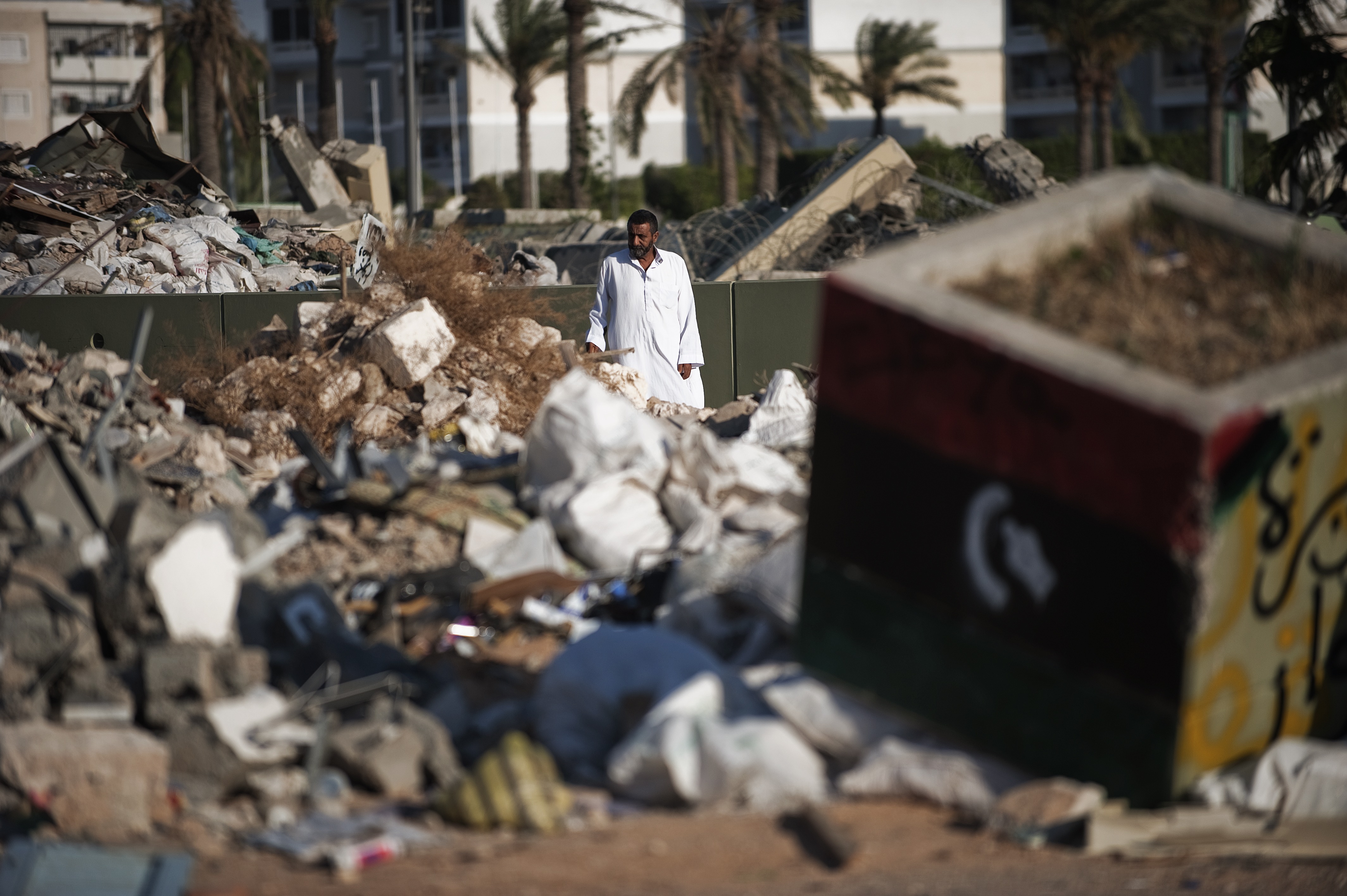
A recent study by Kenneth Vail III and Jamie Arndt found that images of destroyed buildings encouraged people to think of death and to support military action against those hostile to the US. Eric Horowitz scans the bigger picture:
The study’s findings stem from the fact that dealing with death is one of the hardest things our brains have to do. Research on something called "terror management theory" has shown that one way we deal with thoughts about death is by reaffirming our cultural beliefs and worldview. The certainty that we live our lives based on "true" values and beliefs, as well as the knowledge that we’re sure to head to whatever afterlife we believe in, helps mitigate the existential issues posed by death.
So far, so good for our brains. The problem is that when attempting to reaffirm our beliefs, the existence of other worldviews is seen as a threat. To further bolster our own worldview, we see those with different beliefs in an increasingly unfavorable light, and as a result we’re more likely to support military action against them.
Why it can be a dangerous catch-22 for the media:
If they don’t publicize death and destruction, they won’t reveal the true nature of war. But if they do show death and destruction, Americans may respond by increasing support for action against those who threaten their ideology, and that’s most likely to be whatever country is opposing the U.S. in the military conflict.
(Photo: A Libyan walks through the destroyed compound of fomer Libyan leader Moamer Kadhafi, in Tripoli's Bab al-Aziziya on June 2, 2012. By Gianluigi Guercia/AFP/GettyImages)
 The Dish