Still unsolved:
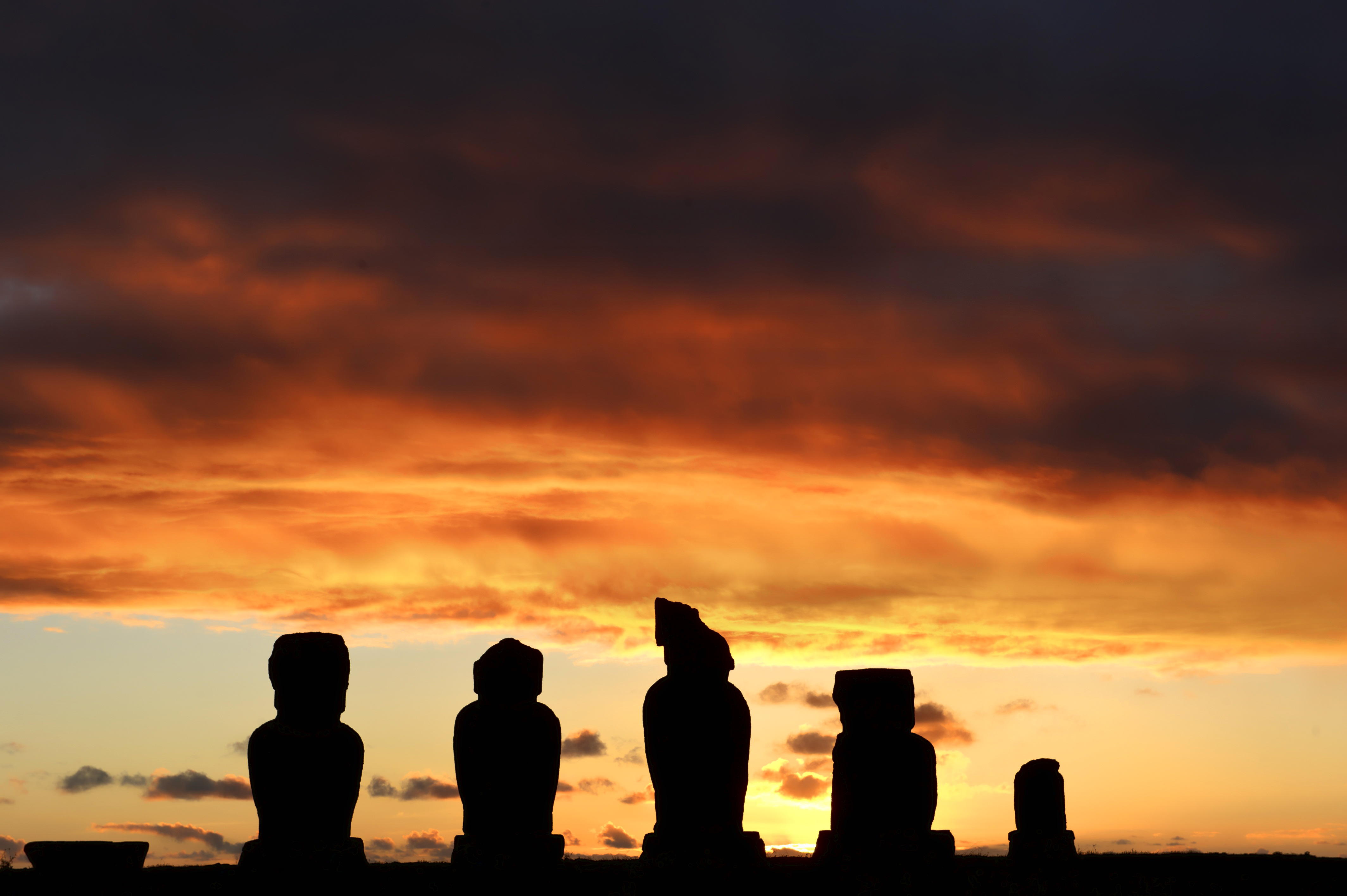
All the energy and resources that went into the moai—which range in height from four to 33 feet and in weight to more than 80 tons—came from the island itself. Yet when Dutch explorers landed on Easter Sunday in 1722, they met a Stone Age culture. The moai were carved with stone tools, mostly in a single quarry, then transported without draft animals or wheels to massive stone platforms, or ahu, up to 11 miles away. Tuki’s question—how did they do it?—has vexed legions of visitors in the past half century.
But lately the moai have been drawn into a larger debate, one that opposes two distinct visions of Easter Island’s past—and of humanity in general. The first, eloquently expounded by Pulitzer Prize winner Jared Diamond, presents the island as a cautionary parable: the most extreme case of a society wantonly destroying itself by wrecking its environment. Can the whole planet, Diamond asks, avoid the same fate? In the other view, the ancient Rapanui are uplifting emblems of human resilience and ingenuity—one example being their ability to walk giant statues upright across miles of uneven terrain.
(Photo: The sun sets behind Moais — stone statues of the Rapa Nui culture — on Easter Island, 3700 km off the Chilean coast in the Pacific Ocean, on July 12, 2010. By Martin Bernetti/AFP/Getty Images)
 The Dish