The History Of Surgery

Amputation_Kit

Before anesthesia it was amazingly quick:

It would take a little while for surgeons to discover that the use of anesthesia allowed them time to be meticulous. Despite the advantages of anesthesia, [British surgeon Robert Liston], like many other surgeons, proceeded in his usual lightning-quick and bloody way. Spectators in the operating-theater gallery would still get out their pocket watches to time him. The butler's operation [the first surgery Liston did with anesthesia], for instance, took an astonishing 25 seconds from incision to wound closure. (Liston operated so fast that he once accidentally amputated an assistant's fingers along with a patient's leg, according to [historian Richard Hollingham]. The patient and the assistant both died of sepsis, and a spectator reportedly died of shock, resulting in the only known procedure with a 300% mortality.)

(Photo by Curious Expeditions)

Paying To Walk

Emily Badger summarizes new research from Brookings:

Looking at the Washington, D.C., region, they've calculated that moving from a Level 1 to a Level 2 walkable neighborhood (from a non-walkable place to a slightly less non-walkable one), you will wind up paying $301.76 a month more in rent for a similar home. If you’re really moving up in the world – from, say, that car-dependent exurb to a Georgetown flat – that means the premium to live in a walkable urban community may run you as much as $1,500 a month.

The Future Of Seeing

Screen shot 2012-05-29 at 11.13.21 PM

Robin Sloan contrasts the photo of Mark Zuckerberg's wedding (1,556,546 likes) with a photo taken while Sebastian Thrun wore Google Glass goggles:

It’s a POV shot taken hands-free: Thrun’s son Jasper, just as Thrun saw him. Thrun also demonstrated Glass on Charlie Rose and it’s worth watching the first five minutes there just to see (a) exactly how weird the glasses look, and(b) exactly how wonderful the interaction seems. This isn’t about sharing pictures. This is about sharing your vision. …

Imagine actors and athletes doing what they do today on Twitter—sharing their adventures from a first-person POV—except doing it with Glass. It’s pretty exciting, actually, and if the glasses look criminally dorky, well, we didn’t expect to find ourselves walking the world staring down into skinny little black boxes, either. So the titanic showdown between Facebook and Google might not be the News Feed vs. Google+ after all. It might be Facebook Camera vs. Project Glass. It might, in fact, be pictures vs. vision.

The Purpose Of Food Stamps

Karina Briski recounts how a stranger berated her and a housemate for considering food stamps:

She got on us about the starving people in the U.S., about the people who live in the projects just down the street from us, about draining resources that are meant for truly needy populations of people.

Our irony had fallen on the wrong ears. “But that’s what this service is for,” my housemate responded, relaying the simple facts of our less than part-time (mine) and nonexistent (his, currently) incomes. “How is it wrong?”

“Because you’re overeducated white people,”  she said. “Just get a job.”

Briski's message:

Being young, privileged, and poor is not a fun twenty-something adventure. I’m not one cheeky fourth of Girls. This is not an audition for the Bohemia life before I return to my family’s house in the suburbs, or get a job at a financial firm owned by my father’s friend. I don’t have a family in the suburbs, and my father doesn’t have those friends. Moving in with my mom or dad is less an option than it is a death sentence for my professional life, barely existing as is. For me, my need is simple numbers. It’s not the social poverty we know from textbooks and nightly news. It’s transitional and temporary, though there is no guarantee I won’t again find myself in a similar spot.

Quote For The Day

Depression-signified

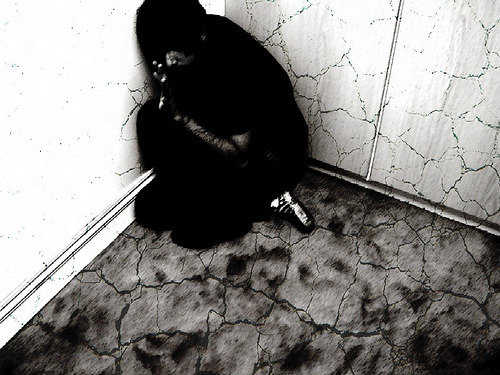
"Depression is the flaw in love. To be creatures who love, we must be creatures who can despair at what we lose, and depression is the mechanism of that despair. When it comes, it degrades one's self and ultimately eclipses the capacity to give or receive affection. It is the aloneness within us made manifest, and it destroys not only connection to others but also the ability to be peacefully alone with oneself.

Love, though it is no prophylactic against depression, is what cushions the mind and protects it from itself. Medications and psychotherapy can renew that protection, making it easier to love and be loved, and that is why they work. In good spirits, some love themselves and some love others and some love work and some love God: any of these passions can furnish that vital sense of purpose that is the opposite of depression. Love forsakes us from time to time, and we forsake love. In depression, the meaninglessness of every enterprise and every emotion, the meaninglessness of life itself, becomes self-evident. The only feeling left in this loveless state is insignificance," – Andrew Solomon.

(Illustration: Wikinut.)

Faith As Disposition, Not Ideology

Conor Williams makes the case:

The first option looks to religion for substantial political content. Call it “Ideological Religion.” People who approach politics in this way troll their sacred texts, papal encyclicals, past sermons, and other religious documents in search of specific policy Adulteresspreferences. They try, in other words, to build the content of their political convictions from the content of their faith tradition. What, they ask, does the Pope tell us about how to treat criminals? What does the Bible teach about homosexuality? Or our relationship to the environment? Or eating shellfish? Or growing facial hair? Ideological Religion reduces a faith tradition to an encyclopedia of moral information—to find out how to govern, we need only dig up the (purportedly obvious) right positions and bring them to our public arguments. Problem(s) solved, neat and clean! This is, I think, largely what [Amy] Sullivan and many other religiously-minded leftists have in mind when they talk about resuscitating the Social Gospel tradition, etc.

The second option takes religion as a stance for approaching the world. Call it “Dispositional Religion” (an ugly term that I’d happily replace—suggestions?). Instead of looking to their faith for crisp ideological positions, people who approach politics in this way ask a different set of questions: How should a person of faith understand urban poverty? Or God’s Creation? Or the facts of human sexuality? They do not expect that religion provides specific and conclusive solutions to political problems, but they shape their attitude towards human social life in reference to their faith.

Restoring An American Balance

E.J. Dionne has written a fascinating book, Our Divided Political Heart: The Battle for the American Idea in an Age of Discontent, which you can buy here. A taste:

At the heart of this book is the view that American history is defined by an irrepressible and ongoing tension between two core values: our love of individualism and our reverence for community. These values do not simply face off against each other. There is not a party of "individualism" competing at election time with a party of "community." Rather, both of these values animate the consciousness and consciences of nearly all Americans. Both are essential to America's story and to American strength. Both interact, usually fruitfully, sometimes uncomfortably, with that other bedrock American value, equality, whose meaning we debate in every generation.

I tried to make this interview sharper and more focused than my last extended conversation with Ross Douthat. And I'm always eager for feedback as I learn how to do this interview thing.

The Danger Of Distraction

Joe Kraus worries about it:

Numerous brain imaging studies have shown that what we call “multi-tasking” in humans, is not multi-tasking at all. Your brain is merely trying to rapidly switch it’s attention between two tasks. Back and forth, as quickly as it can. It’s shown not only that we’re dumber when we do this (an average of 10 IQ points dumber – that’s the same as pulling an all-nighter.), but that we’re also 40% less efficient at whatever it is we’re doing. But, my favorite part about multi-tasking is that it’s proven that the more you do it, the worse you are at it. Check that out. It’s one of the only things where the more you practice it, the worse you get at it.

The reason why that’s the case is that when you practice distraction (which is what multi-tasking really is – paying attention to something that distracted you from what you were originally paying attention to), you’re training your brain. You’re training your brain to pay attention to distracting things. The more you train your brain to pay attention to distractions, the more you get distracted and the less able you are to even focus for brief periods of time on the two or three things you were trying to get done in your ‘multi-tasking’ in the first place. How’s that for self-defeating.

(Hat tip: Nicholas Carr)

Face Of The Day

Vhils1

Katie Hosmer admires recent work by Portuguese street artist Vhils aka Alexandre Farto:

In a matter of days, the amazing artist used hammers to chip away at the wall, creating this exceptionally detailed portrait. He says his motivation for removing layers of walls in order to create his artwork is based on a deeper idea: “Our social system is the product of this same process of layers, and I believe that by removing and exposing some of these layers, in fact by destroying them, we might be able to reach something purer, something of what we used to be and have forgotten all about.”

The Name Game

Andrée Seu Peterson recounts what convinced her to take her husband's name:

When nothing else was working my true love said to me, “Andrée, ultimately I’m not that important to you.” It was the last resort in a drawn out drama and it did the trick.

Libby Anne gags:

Why should Andree’s fiance expect her to change her name to his without ever considering changing his name to hers? How is her refusing to change her name a sign that she is uncaring while his not even considering changing his name means nothing of the sort? … It reminded me of how glad I am that my decision to change my name was really my decision -– and one made without pressure.

Relatedly, The Last Name Project is a collection of accounts of men and women explaining why they did or didn't choose to change their name.