The View From Your Window Contest

Vfyw_6-2

You have until noon on Tuesday to guess it. City and/or state first, then country. Please put the location in the subject heading, along with any description within the email. If no one guesses the exact location, proximity counts.  Be sure to email entries to VFYWcontest@gmail.com. Winner gets a free The View From Your Window book. Have at it.

The Most Reliable Birth Control We’re Not Using

A study in this week's New England Journal of Medicine points to the IUD:

The results were striking: women using pills, patches, or rings "had a risk of contraceptive failure that was 20 times as high as the risk" among those using IUDs." And, much as the authors had hypothesized, women younger than 21 who chose to use a pill, patch, or ring—rather than an IUD—were twice as likely to become accidentally pregnant than older women. … The study’s conclusion runs a single, unequivocal sentence: the effectiveness of IUDs is simply superior to other contraceptives. "If there were a drug for cancer, heart disease, or diabetes that was 20 times more effective," said [senior author Jeffrey Peipert], "we would recommend it first."

Most of the rest of the world has caught on, compared to the 1 in 20 American women who use it:

A 2011 study from the World Health Organization reports that, in China, a full third of married Chinese women use so-called "long acting" devices. In Scandinavia, nearly 20 percent do. The highest users? Vietnamese and Egyptian women, at around 35 percent. Only in sub-Saharan Africa are IUDs less popular than in the Americas.

Previous Dish on female birth control herehereherehere, hereherehere and here.

Shadiness In The Sunshine State

Florida's at it again:

Back in 2000, 12,000 eligible voters – a number twenty-two times larger than George W. Bush’s 537 vote triumph over Al Gore – were wrongly identified as convicted felons and purged from the voting rolls in Florida, according to the Brennan Center for Justice. African Americans, who favored Gore over Bush by 86 points, accounted for 11 percent of the state’s electorate but 41 percent of those purged. Jeb Bush attempted a repeat performance in 2004 to help his brother win reelection but was forced to back off in the face of a public outcry. Yet with another close election looming, Florida Republicans have returned to their voter-scrubbing ways.

The latest purge comes on the heels of a trio of new voting restrictions passed by Florida Republicans last year, disenfranchising 100,000 previously eligible ex-felons who'd been granted the right to vote under GOP Governor Charlie Crist in 2008; shutting down non-partisan voter registration drives; and cutting back on early voting. 

The method:

1638 people in Miami-Dade County were flagged by the state as "non-citizens" and sent letters informing them that they were ineligible to vote. … If recipients of the letter do not respond within 30 days — a deadline that is mere days away — they will be summarily removed from the voting rolls. The voters purged from the list, election officials tell ThinkProgress, will inevitably include fully eligible Florida voters. In short, an excess of 20 percent of the voters flagged as "non-citizens" in Miami-Dade are, in fact, citizens. And the actual number may be much higher.

Minority voters are again bearing the brunt:

[B]lack and Hispanic voter registration has declined 10 percent in Florida relative to 2008, according to the Washington Postwith 81,000 fewer voters registered during a comparable period in ’08, says the New York TimesAfrican Americans also made up 54 percent of early voters in 2008; early voting has subsequently been cut from 14 to 8 days, with no voting on Sunday before the election, when black churches historically mobilize their constituents. (The Department of Justice has objected to the changes under Section 5 of the Voting Rights Act, which prohibits discrimination against minority voters.)

This week the Justice Department demanded that Florida stop the purge.

“Polish Concentration Camps” Ctd

Some remaining thoughts from readers:

As a historian of modern Central Europe, I've been following your discussion of President Obama's unfortunate use of the term "Polish death camps," a widely-used term that understandably infuriates Poles.  As other readers have already pointed out, there existed no collaborationist government in occupied Poland as there did in other European countries (and not just in Eastern Europe; see Vichy France and the Quisling government in Norway); there was no Polish division in the SS; there existed in the Polish Underground State a resistance movement of a kind not seen elsewhere; and there were many Poles who did help their Jewish neighbors, resulting in more Poles being recognized as "righteous Gentiles" than any other nationality. 

At the same time, the Polish resistance did relatively little to assist Jews.

There were Poles who hunted Jews and turned them over to the Nazis; there were Poles who profited from the round-ups of Jews by seizing their property; there were Poles who exploited Jews on the black market and/or by demanding payment not to denounce them; and there were Poles who murdered their Jewish neighbors, both during the war (e.g., Jedwabne) and after (e.g., Kielce).

In assessing all this, though, it is worth remembering that Poland was subjected to a far harsher Nazi occupation regime than France, the Netherlands, or other Nazi-occupied territories.  It also worth remembering that for the first two years of the war, the Poles were subjected to two different occupation regimes, with the Soviets occupying eastern Poland and subjecting the Poles there to Soviet brutality.  Indeed, understanding that experience of occupation and its effects on the fabric of social life is necessary for understanding the Jedwabne massacre; as Jan T. Gross himself points out, far more than simple antisemitism was at work.

Finally, our memory of the Holocaust is complicated by the fact that the Nazis located the death camps in occupied Poland.  As a result, when we visit those sites of genocide – those cemeteries – we travel not to Germany, but to Poland.  That, combined with Poland's own troubled history of antisemitism (not unique in Europe, by the way), often leads people to ascribe to Poles far greater responsibility for the Holocaust than is ascribed to other Europeans. 

I wonder what the response would have been had President Obama referred to the concentration and transit camps in Nazi-occupied France and the Netherlands as "French concentration camps" and "Dutch concentration camps."  That people don't use such terms speaks to the ways in which we often associate the Holocaust with Poland, which only then strengthens the Poles' own (defensive) tendency to view their wartime history as a heroic story of national resistance.  We need to complicate both of those narratives.

Another reader:

I am the son and grandson of Holocaust survivors from Poland, and I’d like to give you a bit of family history. My pregnant grandmother and her entire family were not initially interred by Nazis, but by the local Poles – THEIR NEIGHBORS – who handed them over to the Nazis. After the war, when they tried to return to Poland, my grandmother’s younger brother was killed – again, by the Polish neighbors – and the rest were chased away to a displaced persons camp.

Just to be clear: my great uncle survived Auschwitz and was murdered by an angry mob of his own neighbors. The Poles who did help and hide Jews were also singled out for punishment. While this was going on, the Church, perhaps the only institution that could have stopped the mob, did nothing.

To me, it is obvious that the outsized reactions from Poland is a manifestation of societal guilt and a desire to whitewash their past.

The Weekly Wrap

Friday on the Dish, Andrew previewed his Sunday column on Mormonism and the campaign, examined the politics of sex-selective abortion, and marvelled at Europe's reductions in carbon emissions (follow-up praising the US approach here). We surveyed the reax to the terrible jobs numbers, bet that the campaigns would decide the elections given the economic circumstances, hoped the Fed would act to make them better, cautioned against overinterpreting polls, disproved the "Obama wasn't vetted" meme, and gaped at Romney on Solyndra. The right continued to attempt to rehabilitate its record on civil rights, a new account of the Cato-Koch battle emerged, a young reader defended Jonah Goldberg on "milliennials," and Bloomberg played the soda nanny.

Andrew also kept up scrutiny on Archbishop Dolan's lying and the Church's response, endorsed a certain sort of Israeli unilateral withdrawal, and discovered "dog bites man" news from Britain. We surveyed America's options on Syria, counselled inaction with respect to Egypt, worried about Libya's future, bet democracy would survive in Europe, and explained Southern Europe's economic travails. Comics moved the needle on gay equality and there weren't as many gays as most people thought.

Finally, Andrew shared some awesome home news and implored you to Ask Tina Brown Anything. Print journalism faced a real ad problem, robots failed, blockbusters busted, and TV needed an internet "minor league." Men dealt with eating disorders, attachment parenting may hurt women, weddings changed everyone's brain chemistry, and drugs did not create face-eating zombies. Credit cards prefigured the debt problem, living at home pained many, landfills damaged the world, and Happy June! Ask Bruce Bartlett Anything here, Yglesias Award Nominee here, VFYW here, MHB here, and FOTD here.

6a00d83451c45669e20163060356ab970d-550wi

By Mark Ralston/AFP/Getty Images

Thursday on the Dish, Andrew celebrated the ruling against DOMA, reiterated his support for a federalist approach to marriage equality, despaired at the GOP's cynicism on spending, figured the party would control President Romney, and called Mitt out on cronyism. We compiled reax to the Republican judge's pro-equality ruling, linked you to the ruling, and rounded up our thoughts on the matter. We also found another Romney lie, speculated that supporting drug reform might help Democratic candidates, gagged on Bloomberg's nanny-statism, and enjoyed a good rant. Americans consumed American news online, readers sounded off on the Poland contretemps, and Polish Holocaust history fell under the microscope. Ad War Update here.

Andrew also called out Cardinal Dolan for blatanly lying about his role in enabling sexual abuse (follow-ups here and here), challenged the liberal understanding of patriotism, decried "conservative" indifference to the destruction of the environment, endorsed Edwards' acquittal, wanted you to Ask Tina Brown Anything, and qualified his remarks on "internet money." We aired Matt Labash's critique of internet culture, listened to reader pushback, and then let Labash give a response to the readers' critiques. Web surfing felt slower, television cycles came from radio rather than cars, and pop darkened. Libertarianism had an odd explanation of the wrongness of homosexuality, theories of happiness shaped our worldview, wheelchairs seemed like accessories to some, and wedding songs struck a reader the wrong way. Trees fought crime and quicksand didn't kill alone. Ask Eli Lake Anything here, Yglesias Award Nominee here, Cool Ad here, VFYW here, MHB here, and FOTD here.

Wednesday on the Dish, Andrew continued his examination of Mormonism's role in shaping Romney's worldview (follow-up here), pointed out the confluence of "marriage, marijuana, and millenials," took insights from social psychology to explain partisanship and equality polling, and declared Fox and the RNC to be one. He also jumped all over the "Polish death camps" controversy: first, he was shocked that it was a such a big deal; second, he assessed the blogosphere's reaction; third, he pushed back against Frum's "hyperventilation;" and, he finally issued a call for some perspective on the matter. We explained why Obama wasn't Carter, trumpeted the beginning of the general election in North Carolina, surveyed the arguments for dumping Trump, made room for an anti-Wall Street Romney campaign, celebrated a drug warrior's defeat, used incentives to explain why there weren't more anti-drug war politicians, saw climate change advocates Heartland collapse, flagged a gutsy, honest gambit by Dan Savage, and wondered if the President should decide who lives and who dies. Ad War Update here.

Andrew further fretted over the "neocon' terrorists" MEK and, in keeping with the Poland theme, flagged an instance of disgusting contemporary Polish anti-Semitism. We dove into the politics of the Eurovision contest, checked on another intra-European status contest, and listened to William on Elizabeth. Women stopped getting raises after a certain age and readers debated the male body and objectification. Lobbyists disrupted rational health care, religious rattlesnakes posed health risks, and Skinner made you skinny. Teens didn't fall for absurd drug crazes and humans acted like ants. Angry blogging was epistemically defective, Facebook's value divided tech experts, and Kardashians measured your internet worth. Readers sounded off on Southern Idol winners and we built a whole test city. Ask Bruce Bartlett Anything here, Yglesian Award Nominee here, Quotes for the Day here and here, VFYW here, MHB here, and FOTD here.

6a00d83451c45669e20168ebd725f8970c-550wi

Helena, Montana, 9 am

Tuesday on the Dish, Andrew demanded an analysis of Romney's foreign and domestic policies in light of Mormonism's stated doctrines on the topics, wrote a message playbook for the Obama team, put a torture apologia under the microscope, found Mitt willing to say anything to win, and noted an irony in Jonah Goldberg's anti-Millenial rant. We waded into the Chris Hayes heroism controversy, examined Romney's support among veterans, kept up with Paul and the Paulites, watched Mitt sink in Michigan, tracked supporter Trump's birther tendencies, wondered how he could possibly buck the right once in office, compared the challenger to the incumbent on job creation, reframed the spending debate, discovered GOP Keynesianism, and debated Obama's hypocrity on drugs. Ad War Update here.

Andrew also worried about the future of journalism, confessed his no-deoderant rule, and was appalled by the West Bank road system. We memorialized the Syrians killed in the Houla massacre (follow-up here), asked Obama to think about saving the euro, looked to one idea for the Europeans to do it themselves, and saw some signs of doom. Farrakhan bashed equality, young Mormons started to embrace it, a writer championed the wedding complex, a reader sounded off on 50 Shades of Grey's protagonist, American women worked super-hard, a business card invited you to "call me maybe" (sidebar: does anyone not love that song?), and Facebook provoked family infighting. The flag's meaning spawned much discussion, assault weapons slipped through a loophole, schools diminished biking rates, and backpackers carried too much. The South provided American Idol winners, time challenged doctors, cars shaped television, and mold fascinated (follow-up here). Ask Eli Lake Anything here, Quotes for the Day here and here, Creepy Ad here, Yglesias Award Nominee here, Map of the Day here, VFYW Contest Winner here, VFYW here, MHB here, and FOTD here.

Z.B.

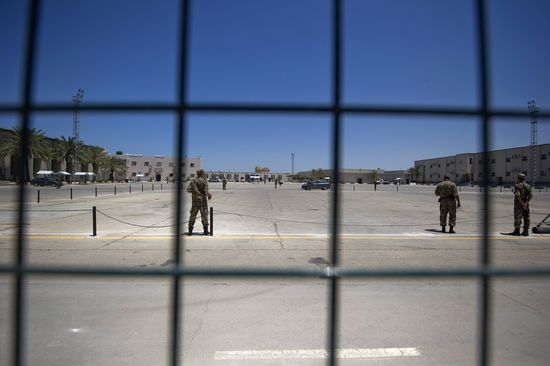
Libya’s Fraught Future

GT_LIBYA_120601

Robert Perito goes in-depth on one of Libya's most serious problems:

The principal security challenge facing Libya today is the thuwar, the revolutionary fighters that defended their communities and then joined together to defeat Qaddafi’s forces and liberate Tripoli. In the wake of their victory, the thuwar were regarded as heroes by a grateful populous. Nearly a year on, gratitude has been replaced by growing impatience as the thuwar have remained in the capital, occupied ‘turf’ and refused to surrender their arms.

Isobel Coleman hopes problems like these don't delay the upcoming elections:

A potential delay adds to the likelihood that ongoing civil unrest will continue to foment. Moreover, risk-averse companies will continue to sit on the sidelines of Libya’s economy until a government is formed. Already, talk of delay has Libyans grumbling about a possible power grab by the NTC, whose legitimacy as a governing body is declining by the day.

(Photo: Libyan security personnel secure the perimeter as Interim Libyan Justice Minister Ali Hamiada Ashour (not in picture) visits the newly built al-Hadba prison and special tribunal facility on May 26, 2012, in Tripoli. The prison which has room for 100 VIP political prisoners, will host trials for pro-Moamer Kadhafi high profile personalities. By Gianluigi Guercia/AFP/GettyImages.)

Quote For The Day

"I believe that if we're successful in this election, when we're successful in this election, that the fever may break, because there's a tradition in the Republican Party of more common sense than that. My hope, my expectation, is that after the election, now that it turns out that the goal of beating Obama doesn't make much sense because I'm not running again, that we can start getting some cooperation again," – Barack Obama

Why Our Robots Suck

Blame the "Valley of Death":

[A]ll innovation begins with basic research, which aims to increase understanding and is undertaken out of curiosity rather than a specific commercial application. While basic research doesn’t generate revenue on its own, it is typically well funded by universities looking to advance knowledge and government initiatives which recognize its vital role in advancing technology. Research only begins to turn profitable on its own during commercialization, when new discoveries become products and can be monetized. Between these stages, however, there is a point where government funding tapers off but risk remains too high and rewards too obscure for private funding to kick in.

While various iterations of this progression have been proposed from different perspectives, this point in research is considered the "Valley of Death" because so many potential innovations fail here, no longer cutting edge enough for university and government support but not yet sufficiently viable for profit-maximizing corporations. In many ways, this is where robotics is floundering… [T]he only way to develop robots that are functional and cost effective is to keep developing ones that aren’t, which government, academia, and industry are rarely willing to fund.

(Video from a collection of "21 signs we should give up on robots")