Jay Ulfelder conducted an exhaustive two–part survey of the evidence on the question. His hopeful conclusion:
I expect that democracy will survive the current crisis in Europe, even if the politics sometimes takes ugly turns in response to the disruptions of a deep recession and the structural changes that will have to ensue. Consideration of the base rate for democratic breakdown among rich countries and my beliefs about the incentives facing European parties and militaries today leads me to guesstimate the odds of democratic breakdown in even the most troubled countries—Greece and Spain for now, but maybe Italy or Portugal soon, too—at less than 1:50 (and you can hold me to that if you like).
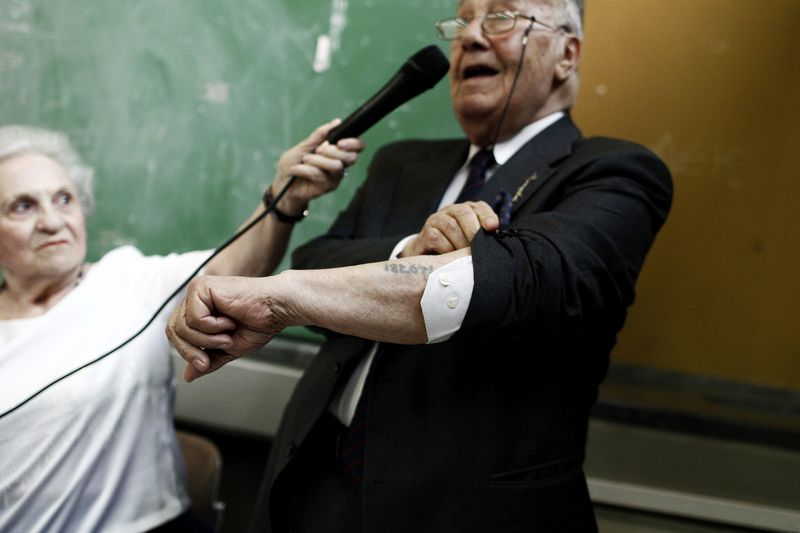
(Photo: Isaac Mizan (R), a survivor of the Holocaust, shows his tattooed serial number to university students in the Philosophical department at the University of Athens, May 29, 2012, in Athens, during an event dedicated to the remembering of the Holocaust. Greek Holocaust survivors made a rare public appearance today to challenge a neo-nazi party whose leader has cast doubt on the genocide and which won its first seats in parliament this month. They told of their ordeals during the killings and deportations by the Nazis that decimated the Greek Jewish population during World War II, a part of wartime history that is little talked about in Greece. By STR/AFP/GettyImages.)
 The Dish