
Monument, Colorado, 12.55 pm
Monument, Colorado, 12.55 pm
We posed the question recently. A reader responds in line with our It's So Personal series:
Abortion is legal for the time being, as repugnant as many people find that legal reality to be. People can sit around and try to think up all the awful reasons that a woman might have an abortion – fine. It all amounts to believing that a woman – somewhere, at some time – will choose to have an abortion for the wrong reason. That risk – that a woman may have an abortion of the wrong reason – is one society must bear if it chooses to keep abortion legal. Period. There is no way to finesse this. There is no effective way to prove motivation or intent for a having an abortion and it would to my mind be a waste of time to try to enforce for it.
There is no risk-free proposition. If we permit people to have particular liberties, they will to some extent be used in a way that most people find immoral, disagreeable, repugnant, etc. That is reality. Nothing is risk-free. Not voting, not gun ownership, not home ownership, not pornography, not political speech, not freedom of the press. None of it is risk free of bad behavior, bad outcomes, bad motivation, etc.
I find this topic very, very upsetting. I had an abortion. I am 42. I am the mother of two beautiful girls. I terminated a pregnancy at 12 weeks of a child I wanted to have between my two girls. The baby had significant chromosomal abnormalities, which meant:
1) she had a 50% chance of surviving birth; 2) if she survived birth, she had a 10% chance of making it to her 1st birthday and 3) for however long she survived, she would need skilled nursing facility care because her poor body and brain would be extremely atypical and her needs would be so great.
She would never improve, she would only live until her malformed organs couldn’t work anymore. All I ever saw for her was a life of certain suffering and pain that would end in an early death. I acted in a way to keep her from suffering and to protect my older daughter from the experience of having a sibling who dies. I did what I believed to be best for the child I was carrying and for the child I already had. That I had the legal option of ending this pregnancy, and hopefully avoiding needless suffering of my children, is a risk that must be borne in a context in which abortion is legal.
I am sure there are many people who would find my decision to be the wrong one – perhaps just as wrong as gender selective abortion, or a vacation abortion, or whatever awful reason some woman somewhere may have had for ending a pregnancy. The point is, if the state permits abortion, it has to permit it in fairly broad contexts. And if we start to go down this road of, "well, it can’t be for this reason or this reason," who becomes the arbiter of all of those impermissible or repugnant reasons and where does that list stop? I’ll tell you where it stops. It stops only when all abortion is illegal and when my choice would have been illegal.
I am not glad to have had an abortion. I do not celebrate it. I am grateful to have legally and safely avoided the further pain I believed I was inflicting on the baby and my older daughter. I still wonder what God will say about my decision. I still mark the date of when I made my choice and what would have been her birthday. And I am deeply grateful for the second beautiful daughter we have been given. I may have done wrong. And if I have, I will answer for that when I meet my Maker.

The color blindness that affects men corresponds with their mothers or daughters having a mutant cone that allows them to see a spectrum the rest of us can't:
Vision is complex, but the calculus of color is strangely simple: Each cone confers the ability to distinguish around a hundred shades, so the total number of combinations is at least 1003, or a million. Take one cone away—go from being what scientists call a trichromat to a dichromat—and the number of possible combinations drops a factor of 100, to 10,000. Almost all other mammals, including dogs and New World monkeys, are dichromats. The richness of the world we see is rivaled only by that of birds and some insects, which also perceive the ultraviolet part of the spectrum.
Researchers suspect, though, that some people see even more. Living among us are people with four cones, who might experience a range of colors invisible to the rest. It’s possible these so-called tetrachromats see a hundred million colors, with each familiar hue fracturing into a hundred more subtle shades for which there are no names, no paint swatches. And because perceiving color is a personal experience, they would have no way of knowing they see far beyond what we consider the limits of human vision.
Previous Dish on how we perceive color here. A reader recommends a recent Radiolab episode on rainbows.
(Image: Covenant Under Question? by Matt McVeigh via Collabcubed)
Jonathan Bernstein defends the justices:
The truth is that (as the decision in the Arizona case should remind us) the current Court is certainly not simply the legal equivalent of the Sean Hannity, no matter how many crazed partisan rants Scalia might indulge himself in. We might get there in the future (or not), and we might get some decisions that sure look very partisan, but that's not where we are now. It's simply not true that there are five solid votes (or even four solid votes) for whatever wacky, ad-hoc legal theories GOP spinmeisters come up with.
Yes, four of those Justices are strongly conservative by all measures, but there is a real difference between supporting a long-standing judicial program and simply doing whatever the short-term partisan preferences of the Republican Party might be, even though those things will naturally (and quite legitimately) overlap much of the time. I do believe that Bush v. Gore was decided on ad-hoc partisan grounds…but that's 12 years ago already, and I don't think that anything since then shows that the Court's conservatives are merely partisan hacks.
Fallows had a much different view.
The Obama campaign dubs Romney "outsourcer-in-chief" in three state-specific ads based on a recent WaPo article. Here's Iowa:
Watch Ohio here and Virginia here. Jamelle Bouie parses the approach:
To paint Romney as an “outsourcer-in-chief” is to damage his credibility with the non-college-educated whites who will form the basis of a Romney victory in states like Ohio, Iowa, and Wisconsin. After all, these are voters whose lives have been most affected by the outsourcing pioneered by Bain-owned companies and who have been hit hardest by the relentless profit-seeking of companies like Bain. If the Obama campaign can identify Mitt Romney with outsourcing, then they can blunt his appeal with these voters and keep him from breaking the threshold for white support—around 60 percent. Romney can’t just dismiss the Bain criticism as an “attack on free enterprise.”
Greg Sargent adds:
Obama's best hope may be to define Romney’s economic credentials in not just a negative light, but a threatening one. In this telling, banking on Romney’s economic know-how becomes a risk: Sure, Romney knows how to make money for himself and his friends, but he’s the walking embodiment of the very trends that enriched the wealthy while causing the bottom to fall out from under the middle class — and you were the loser. Why would things be any different under President Romney this time around? Obama may not have turned the economy around as quickly as you’d like, but at least you know he’s on your side. The Obama camp is banking heavily on the revelations about offshoring, an easy-to-grasp, emotionally potent issue, to render Romney as unattractive an alternative as possible.
Meanwhile, Chris Good fact checks Crossroads Generation's spot from the previous update:
Crossroads Generation includes some partially misleading information on the 25-year-old coverage provision. “Actually…many states already allowed young adults to stay on their parents’ insurance before Obamacare,” the ad states, and Crossroads Generation pointed to 2010 research by the National Conference of State Legislatures (NCSL) to back up its claim. The group’s claim is true, but only because it omitted a reference to age. While 12 states allowed young people to remain covered by their parents’ plans at age 25 or beyond as of 2009, in most cases that policy did not apply if young adults were married or not enrolled as full-time students. No state allowed coverage until age 26 without those or other conditions attached, according to NCSL’s study. As of 2014, the Democratic health law will make all young people eligible for coverage on their parents’ plans, regardless of student, marital, or state-residency status, according to HealthCare.gov, the administration’s website dedicated to promoting the law and its implementation timeline.
Previous Ad War Updates: June 25, June 22, June 21, June 20, June 19, June 18, June 15, June 14, June 13, June 12, June 11, June 8, June 6, June 5, June 4, June 1, May 31, May 30, May 29, May 24, May 23, May 22, May 21, May 18, May 17, May 16, May 15, May 14, May 10, May 9, May 8, May 7, May 3, May 2, May 1, Apr 30, Apr 27, Apr 26, Apr 25, Apr 24, Apr 23, Apr 18, Apr 17, Apr 16, Apr 13, Apr 11, Apr 10, Apr 9, Apr 5, Apr 4, Apr 3, Apr 2, Mar 30, Mar 27, Mar 26, Mar 23, Mar 22, Mar 21, Mar 20, Mar 19, Mar 16, Mar 15, Mar 14, Mar 13, Mar 12, Mar 9, Mar 8, Mar 7, Mar 6, Mar 5, Mar 2, Mar 1, Feb 29, Feb 28, Feb 27, Feb 23, Feb 22, Feb 21, Feb 17, Feb 16, Feb 15, Feb 14, Feb 13, Feb 9, Feb 8, Feb 7, Feb 6, Feb 3, Feb 2, Feb 1, Jan 30, Jan 29, Jan 27, Jan 26, Jan 25, Jan 24, Jan 22, Jan 20, Jan 19, Jan 18, Jan 17, Jan 16 and Jan 12.
Skews female:
I went to the National Library of Medicine’s PubMed online database—the most comprehensive collection of published medical studies on earth—to compare breast cancer and prostate cancer, two diseases that are diagnosed in almost equal numbers each year in the U.S., and take a similar emotional as well as physical toll. As of May, published, peer-reviewed studies on "breast cancer and support" outnumbered those on "prostate cancer and support" by 56,000.
But here’s the rub: when researchers from the University of Cologne pooled the results of 37 well-designed studies of psychosocial support from cancer centers around the world, they found that men, when they did participate, benefited more. Much more. Nearly twice as much more, showing measureable reductions in symptoms of distress and a return to psychological well-being.
Today on the Dish, Andrew 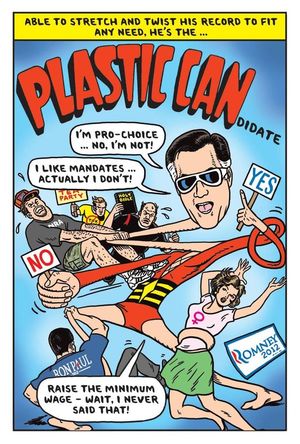 by campaign marketing, readers sorted through the more cultish aspects of Mormonism, and a reader alerted us to a story of actual voter fraud. Sorkin fans grappled with Newsroom, Americans misunderstood the ACA, and constitutional law is usually dishonest.
We grasped the incoherence of Indonesia, reviewed the status of spaceships, and anticipated the liberation of drones. The Fox News correspondent in Rome officially joined the Vatican, GOProud officially endorsed Romney, and incumbents in Congress centralized governance. Maliki consolidated power in Iraq, one Syrian rebel turned to an American boy band, and Scott Horton discussed Obama's record on whistleblowers. Food aid often breeds violence, the narcotics trade propagates violence in Guatemala, and most serious crimes in Mexico go unpunished.
Readers remembered the plague years, a husband wrote in praise of monogamy as the tightest teamwork, and long-duration astronauts will need comfort food. American kids ran the show, "traditional" men resist therapy, and even American license plates are now divisive. We envisioned health care reform post-ACA, reexamined home birth, and delved into the history of splitting arrows.
Christianism watch here, creepy ad watch here, quotes for the day here and here and here, tweet of the day here, self-parody alert here, FOTD here, MHB here, VFYW here, and VFYW contest winner #108 here. Ad war update here.
—M.A.
(Cartoon by Ward Sutton of the Boston Globe with the artist's approval.)

"The efforts of governments are concentrated not on defending the living Earth from destruction, but on defending the machine that is destroying it. Whenever consumer capitalism becomes snarled up by its own contradictions, governments scramble to mend the machine, to ensure – though it consumes the conditions that sustain our lives – that it runs faster than ever before.
The thought that it might be the wrong machine, pursuing the wrong task, cannot even be voiced in mainstream politics. The machine greatly enriches the economic elite, while insulating the political elite from the mass movements it might otherwise confront. We have our bread; now we are wandering, in spellbound reverie, among the circuses," – George Monbiot.
Elizabeth Kolbert ponders the spoiling of American children:
It’s not just that they’ve been given unprecedented amounts of stuff—clothes, toys, cameras, skis, computers, televisions, cell phones, PlayStations, iPods. (The market for Burberry Baby and other forms of kiddie “couture” has reportedly been growing by ten per cent a year.) They’ve also been granted unprecedented authority. “Parents want their kids’ approval, a reversal of the past ideal of children striving for their parents’ approval,” Jean Twenge and W. Keith Campbell, both professors of psychology, have written. In many middle-class families, children have one, two, sometimes three adults at their beck and call. This is a social experiment on a grand scale, and a growing number of adults fear that it isn’t working out so well: according to one poll, commissioned by Time and CNN, two-thirds of American parents think that their children are spoiled.

Children wearing homemade paper crowns look on amongst a crowd of wellwishers as Queen Elizabeth II and Prince Philip, Duke of Edinburgh arrive to visit Macartin's Cathedral on June 26, 2012 in Enniskillen, Northern Ireland. The Queen and Duke of Edinburgh, on a Diamond Jubilee visit to Northern Ireland, are due to meet with former IRA leader and NI's Deputy First Minister Martin McGuinness. By Jeff J Mitchell/Getty Images.
 The Dish