Face Of The Day

Screen shot 2012-06-29 at 9.39.43 AM

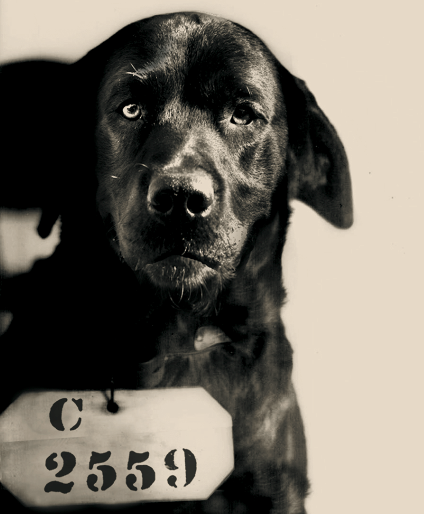
Cyriaque Lamar wonders about "Pep, The Cat-Murdering Dog," admitted to Pennsylvania's Eastern State Penitentiary in 1924:

Prison folklore tells us that Pennsylvania Governor Gifford Pinchot used his executive powers to sentence Pep to Life Without Parole for killing his wife's cherished cat. Prison records support this story: Pep's inmate number (C-2559) is skipped in prison intake logs and inmate records.

The Intellectual Guild

The case against the university:

Over the last thirty years, the university has replaced the labor union as the most important institution, after the corporation, in American political and economic life. As union jobs have disappeared, participation in the labor force, the political system, and cultural affairs is increasingly regulated by professional guilds that require their members to spend the best years of life paying exorbitant tolls and kissing patrician rings. Whatever modest benefits accreditation offers in signaling attainment of skills, as a ranking mechanism it’s zero-sum: the result is to enrich the accreditors and to discredit those who lack equivalent credentials.

Perishable Ink

A clever way to get that new book off the shelf:

The book, "El Libro que No Puede Esperar" (The Book That Can't Wait), comes sealed in a plastic wrapper. Once the wrapper is removed and the book is cracked, the ink begins to age; it's got a lifespan of less than two months. Just months after being opened, The Book That Can't Wait is filled with nothing but blank pages. That makes the book unputdownable in an entirely new way.

Who wants a book that will self-destruct in 60 days? Turns out, Argentine readers do. Eterna Cadencia sold out of its entire first disappearing-ink printing in a single day.

The Role Of The Critic

Pointing out that Spin magazine recently replaced full album reviews with 140-character tweets, Johann Hari mourns the critic's decline:

When something new and startling comes along, it often baffles us, and we are tempted to drop it, pained, for easier cultural lifting. A great critic can help us to figure out what it going on, and to appreciate it in a richer way. When I saw Terrence Malick's The Tree Of Life, I was sure I had seen something extraordinary, but I felt I had barely begun to understand it. It was reading the body of criticism by terrific writers, such as Dana Stevens and Peter Bradshaw that led me deeper in. As film critic Pauline Kael put it: "We read critics for the perceptions, for what they tell us that we didn't fully grasp when we saw the work."

Think back over the 20th century to see how often this happened. Many readers were bemused by Marcel Proust and James Joyce until Edmund Wilson wrote about them. When Samuel Beckett's Waiting For Godot opened, the audience was puzzled until Harold Hobson's famous review came out. The first audiences for Osborne's Look Back In Anger were nonplussed, until Kenneth Tynan's review appeared. Arthur Penn's 1967 film Bonnie And Clyde was regarded as a repellent flop until Kael's words alchemised it. More recently, Zadie Smith's writing about Tom McCarthy's novel Remainder alerted us to something new and mind-stretching. If they had not been there, our artistic world – our inner lives – would have been more anaemic.

The View From Your Window Contest

Vfyw_6-30

You have until noon on Tuesday to guess it. City and/or state first, then country. Please put the location in the subject heading, along with any description within the email. If no one guesses the exact location, proximity counts.  Be sure to email entries to VFYWcontest@gmail.com. Winner gets a free The View From Your Window book. Have at it.

The Origin Of Lunch

Learn about it at the New York Public Library's new exhibit, Lunch Hour NYC:

[I]t is a former snack that only became the day’s third fixed meal as society urbanised and industrialised, and workers were unable to return home for dinner (always the main meal of the day) until late at night. As [Laura Shapiro, culinary historian] explained:

Lunch came into its own — it really acquired the size and shape and substance that it has in America today — in New York. New York is emblematic, arguably, of large North American manufacturing cities — it has all the conditions that make America different from the Old World in terms of speed and work and the arrangement of life. In New York, the focus of people’s lives is work, and lunch is the meal that was just made to fit into the industrial, urban work day.

Liberating The Ritz

Hemingway

A history of the legendary Paris hotel contains an amazing anecdote:

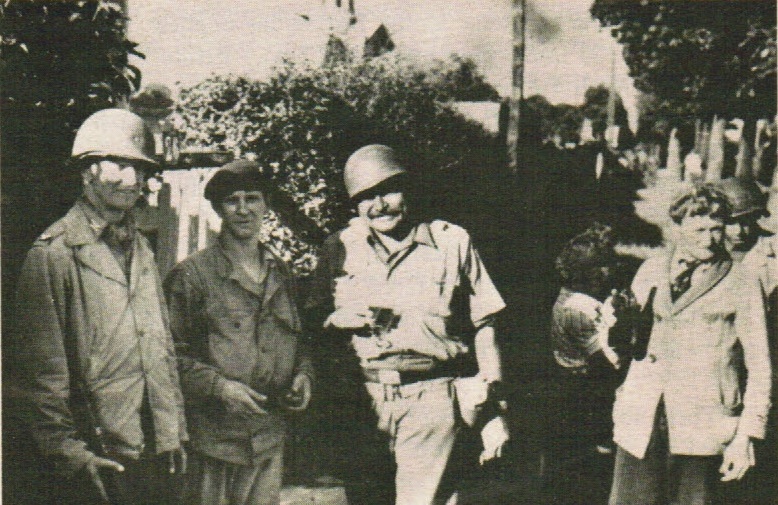
As World War II ended in Europe, Hemingway personally liberated the bar as the Nazis were retreating. It was expected that General Leclerc, in command of the Allied troops, would be first on the scene, marching up the Avenue de la Grande Armée with a full panoply of tanks, artillery, flags, and bands. But well before Leclerc could get there, a jeep came careening up the avenue, zipped under the Arc de Triomphe, down the Champs-Élysées, and across the Place de la Concorde, then skidded to a stop in the Place Vendôme at the entrance of the Ritz. Hemingway was in command of that jeep. Ostensibly a war correspondent, but with a gun slung in the crook of his arm, he had taken charge of the motley group in the vehicle, most of them stragglers who had become separated from their units. Hemingway called them his "Irregulars."

He led them into the Ritz, proclaimed its liberation, took command of the bar, and ordered champagne for everyone. Soon the renowned combat photographer Robert Capa—later killed in Indochina—came tooling up to the Ritz, thinking he was miles ahead of anyone else, but he was amazed to find that Hemingway had beaten him to it. Archie Pelkey, Hemingway’s driver, was standing guard at the entrance. "Hello, Capa," Pelkey said. "Papa took good hotel. Plenty good stuff in cellar. Go on up."

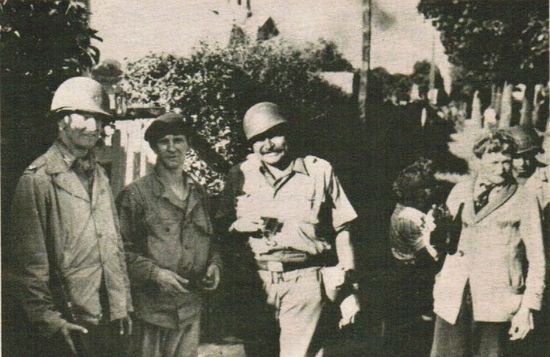
(Image: OSS Col. David Bruce and NANA newspaper correspondent Ernest Hemingway shortly before entering Paris and liberating the bar at the Hotel Ritz, from the book OSS by Richard Harris Smith, via Bill Kelly)
Yglesias Award Nominee

"[W]hile a vote to blow up ObamaCare would have felt good today, it’d also spell trouble for valued institutions in the long run. In response to SCOTUS pushback in the ’30s, FDR attempted to pack the court (and newly succeeded). And today, the calls are back to get rid of the filibuster, which stands with the Electoral College as the last barriers between our Founding Fathers’ vision and popular democracy. And trust me. In popular democracy, responsibility and liberty don’t prevail. Ask the Jacobins.

So despite the temptation to hammer ObamaCare with budget reconciliation, cool your jets. Lose the battles if it means you may win the war," – Justin Green, The Daily Caller.