“The Borat Of Philosophy”

A few weeks ago, Decca Aitkenhead profiled wellknown pseud Slavoj Žižek:

To his critics, as one memorably put it, he is the Borat of philosophy, churning out ever more outrageous statements for scandalous effect. "The problem with Hitler was that he was not violent enough," for example, or "I am not human. I am a monster." Some dismiss him as a silly controversialist; others fear him as an agitator for neo-Marxist totalitarianism. But since the financial crisis he has been elevated to the status of a global-recession celebrity, drawing crowds of adoring followers who revere him as an intellectual genius.

John Gray savages Žižek's collected corpus and explains his rise:

With the prevailing capitalist order aware that it is in trouble but unable to conceive of practicable alternatives, Žižek’s formless radicalism is ideally suited to a culture transfixed by the spectacle of its own fragility. That there should be this isomorphism between Žižek’s thinking and contemporary capitalism is not surprising. After all, it is only an economy of the kind that exists today that could produce a thinker such as Žižek. The role of global public intellectual Žižek performs has emerged along with a media apparatus and a culture of celebrity that are integral to the current model of capitalist expansion.
All For One And One For All?

Steven Pinker contemplates group selection theory:

Human beings live in groups, are affected by the fortunes of their groups, and sometimes make sacrifices that benefit their groups. Does this mean that the human brain has been shaped by natural selection to promote the welfare of the group in competition with other groups, even when it damages the welfare of the person and his or her kin? If so, does the theory of natural selection have to be revamped to designate "groups" as units of selection, analogous to the role played in the theory by genes?

Several scientists whom I greatly respect have said so in prominent places. And they have gone on to use the theory of group selection to make eye-opening claims about the human condition. They have claimed that human morailty, particularly our willingness to engage in acts of altruism, can be explained as an adaptation to group-against-group competition.

Pinker disagrees. For example, he takes issue with "the normative moral theory in which virtue is equated with sacrifices that benefit one's own group in competition with other groups":

[E.O. Wilson] apparently wanted to contrast individual selfishness with something more altruistic, and wrote as if the only alternative to benefiting oneself is contributing to the competitive advantage of one's group. But the dichotomy ignores another possibility: that an individual can be virtuous by benefiting other individuals (in principle, all humans, or even all sentient creatures), whether or not he enhances the competitive prowess of the group to which he belongs.

The Mystery Of Easter Island

GT_RAPANUI_120618

Still unsolved:

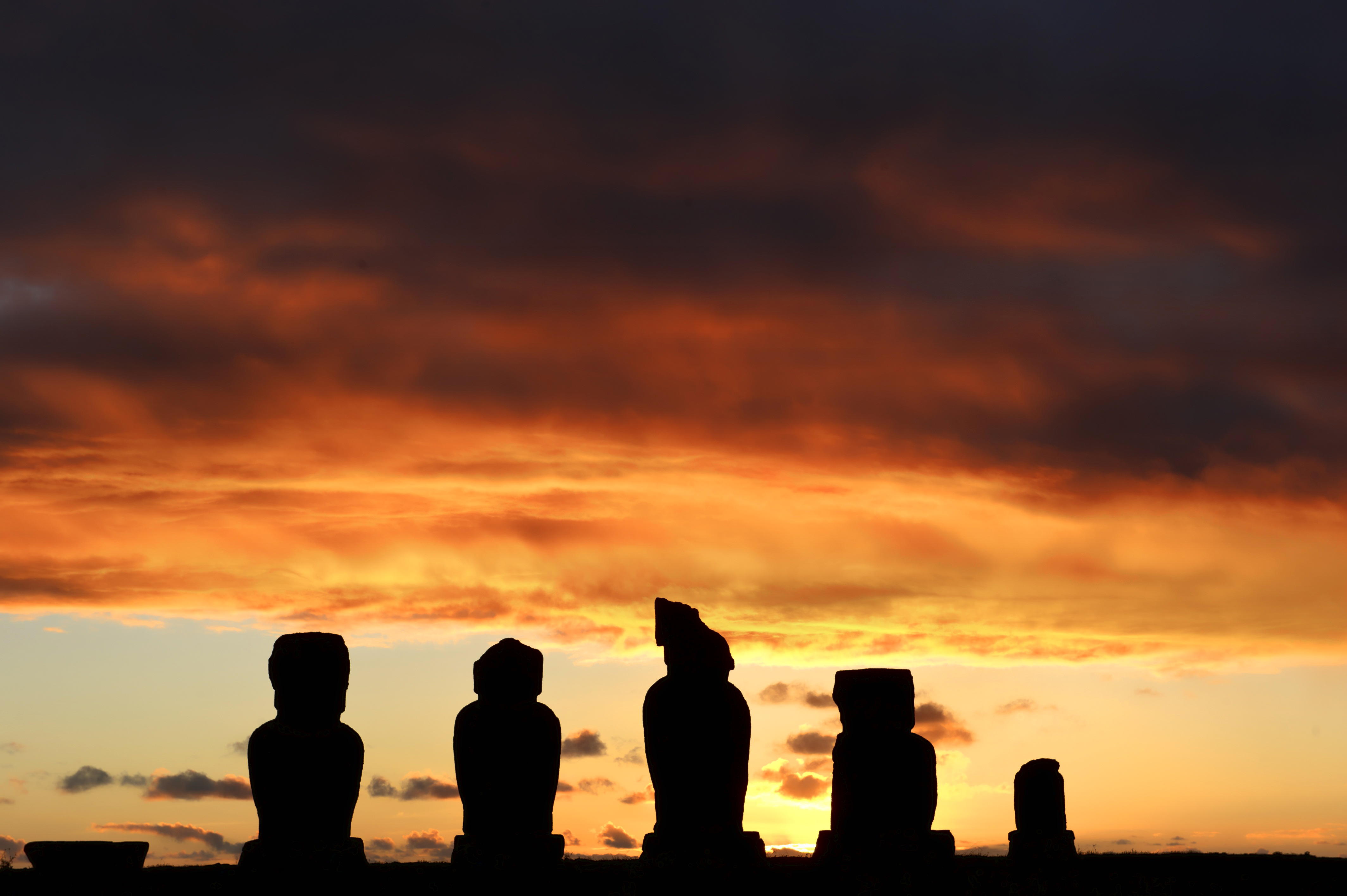
All the energy and resources that went into the moai—which range in height from four to 33 feet and in weight to more than 80 tons—came from the island itself. Yet when Dutch explorers landed on Easter Sunday in 1722, they met a Stone Age culture. The moai were carved with stone tools, mostly in a single quarry, then transported without draft animals or wheels to massive stone platforms, or ahu, up to 11 miles away. Tuki’s question—how did they do it?—has vexed legions of visitors in the past half century.

But lately the moai have been drawn into a larger debate, one that opposes two distinct visions of Easter Island’s past—and of humanity in general. The first, eloquently expounded by Pulitzer Prize winner Jared Diamond, presents the island as a cautionary parable: the most extreme case of a society wantonly destroying itself by wrecking its environment. Can the whole planet, Diamond asks, avoid the same fate? In the other view, the ancient Rapanui are uplifting emblems of human resilience and ingenuity—one example being their ability to walk giant statues upright across miles of uneven terrain.

(Photo: The sun sets behind Moais — stone statues of the Rapa Nui culture — on Easter Island, 3700 km off the Chilean coast in the Pacific Ocean, on July 12, 2010. By Martin Bernetti/AFP/Getty Images)

A Biotech Afterlife

Ari N. Schulman reviews The Immortal Life of Henrietta Lacks, a book about a poor Baltimore woman who discovered she had cervical cancer in 1951. Tissue samples collected from her (without her knowledge) are still being used today:

Henrietta Lacks, without question, should have been asked for permission for scientists to take, culture, and profit from her cells, and we are rightly indignant that she was not. But what would they have told her to help her make a decision that we could consider adequately informed? They could not have possibly conceived at the time of the things that would be done with her cells. And if they somehow could have, if they had been able to foresee the future — at least what has come of it so far — at best they could have told her something like the following: Your cells will help cure polio. Your cells will help sequence the genome and develop treatments for cancer. One rogue researcher will inject your cells into the healthy bodies of other people to see if they will contract the same disease that killed you. (They will.) Millions of people could be saved or helped using therapies created from your cells, and billions of dollars will be made from those treatments and your cells.

Your cells will be tinkered with in labs for decades or centuries by tens of thousands of scientists, fused with cells from animals, infected with all manner of diseases. One day men will travel into space, and pieces of you will go with them. And they will be used to test weapons that could destroy the world. Eventually, your cancer cells will multiply outside your body to far exceed the mass of healthy cells in your own living body. The cells that killed you will make you famous and, in a way, immortal.

A Poem For Sunday

Firefliesweb_600

"Oneness" by Pablo Neruda, translated by Stephen Kessler:

There's something dense, united, sitting in the background, 
repeating its number, its identical signal. 
How clear it is that stones have handled time, 
in their fine substance there's the smell of age, 
and water the sea brings, salty and sleepy. 

Just one thing surrounds me, a single motion: 
the weight of rocks, the light of skin, 
fasten themselves to the sound of the word night: 
the tones of wheat, of ivory, of tears, 
things made of leather, of wood, of wool 
aging, fading, blurring, 
come together around me like a wall. 

Continued here. In 1971, Neruda spoke to the Paris Review:

My poetry has passed through the same stages as my life; from a solitary childhood and an adolescence cornered in distant, isolated countries, I set out to make myself a part of the great human multitude. My life matured, and that is all. It was in the style of the last century for poets to be tormented melancholiacs. But there can be poets who know life, who know its problems, and who survive by crossing through the currents. And who pass through sadness to plenitude.

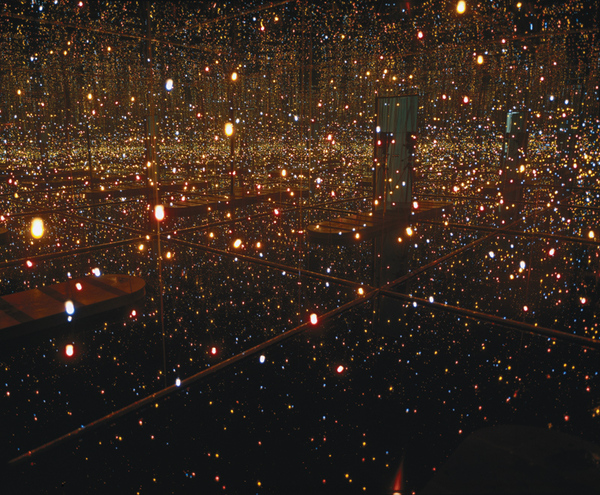
(Yayoi Kusama's installation Fireflies on the Water via My Modern Met)

You Contain Multitudes, Ctd

The trillions of microbes in your gut could be influencing your emotions as well as your health:

Gut microbiota appear to alter gene activity in the brain and the development of key regions involved in memory and learning. These denizens of our intestines could help explain why psychiatric symptoms vary among individuals, as well as their responses to medications. Gut microbes could also account for some of the differences in mood, personality and thought processes that occur within and among individuals.

A recent study found that babies “may be sharing their gut bacteria with the environment and vice versa.” Nicola Twilley glimpses the future:

In other words, just as the colour of your walls has been shown to affect your heart rate and blood pressure, your home’s bacterial biome may be making you obese and anxious — or, of course, healthy and happy. Forget yogurt or fecal transplants — it seems to be only a matter of time before we are able to intentionally inoculate our homes with custom blends of bacteria in order to redesign our gut flora. Designer dust will take its place alongside formaldehyde-free furniture polish and low VOC paint for the responsible homeowner.

The Purpose Of Play

Charles Mathewes reviews Robert Bellah's Religion in Human Evolution and ponders his "bold claims":

Most interesting perhaps is the role [Bellah] ascribes to “play” in human affairs, the seemingly non-functional part of human existence. On his account, the things we call “religions” today originated not only around gathering groups together, á la Wade, to make war and keep social order, but also around exercising certain human energies through various modes of play. Indeed, the importance of play is a core conviction of the book. Here Bellah is less an empiricist than a philosophical anthropologist, using Romantic philosophers like Friedrich Schiller, but also philosophically minded scientists such as Gordon Burghardt (author of The Genesis of Animal Play (2005)). This tradition proposes that humans are a playful species, and we are most fundamentally ourselves when we are not functional. Play is not the antithesis of seriousness but the antithesis of work, of sustaining the general scheme of the everyday in which we spend so much of our time.

In contrast to work’s anxious drudgery of constantly reinforcing social structures and hierarchies, of reestablishing who gets to be a parent and who a child, who the boss and who the employee, and so on, play is what we do when we “log off” from the grid of social structures. Play involves a dialectic of freedom and constraint, or better, freedom within constraint. This is obviously so in games, but equally so in any form of play. The boundaries of play, the delimiting and the defining of the conditions of play, themselves can stand in a kind of dream-like state of critical assessment, a kind of Habermasian reverie. In short, play nourishes us, makes us fully human, equips us for reflective agency and enables us to understand that behind (or above) the routines of the everyday there can be a carnival of an altogether different sort.

Previous Dish discussions of Bellah's work here, here, and here.

Face Of The Day

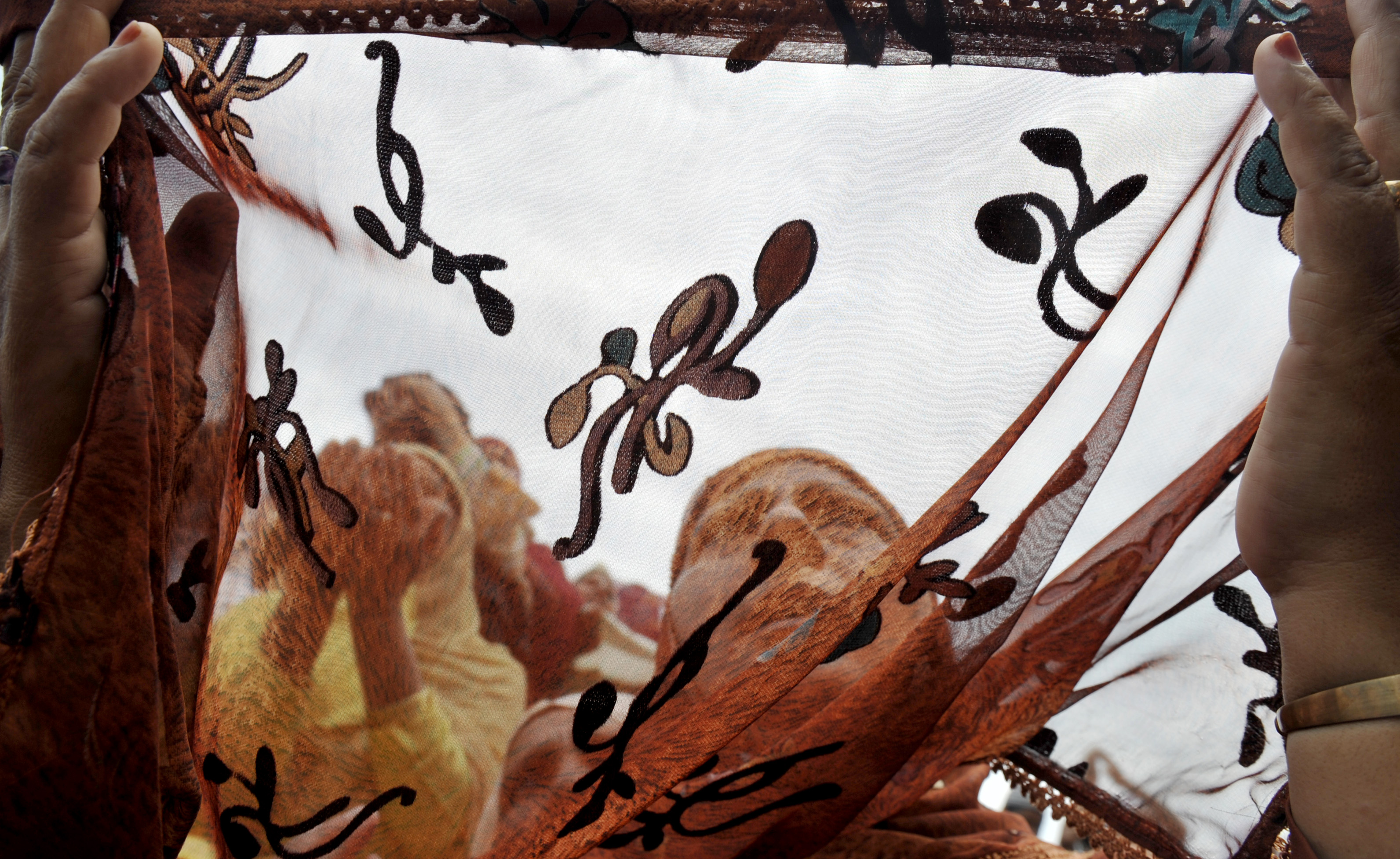
GT_MUSLIMRELIC_120622

Kashmiri Muslims pray as an unseen custodian displays a holy relic, believed to be a hair from the Prophet Muhammad's beard, at Kashmir's main Hazratbal Shrine in Srinagar on June 22, 2012, during the last Friday of celebrations for Miraj-Ul-Alam (Ascension to Heaven). Thousands of Muslims converge annually for celebrations at the shrine near the summer capital of the state of Jammu and Kashmir. By Tauseef Mustafa/AFP/Getty Images.

The Intra-Catholic Fight Over Marriage Equality

Casey Michel reports on Archbishop John Nienstedt's campaign against marriage equality in Minnesota and his opposition:

[Bob Beutel, a member of Concerned Catholics for Church Reform (CCCR)] is planning more gatherings, more vigils. He's planning to write more op-eds, and will be trying, against the odds, to finally discuss with Nienstedt why the archbishop carries such a preoccupation, such an obsession, with the idea of same-sex attraction.

"I think this whole issue of homosexuality is the last one the bishops still have any sort of control over, and they see that going,"  Beutel says. "And that's why they're putting up such a huge fight. Because after that's gone, there's nothing left in the realm of sexuality that people will listen to them about."