Why Not Forecast The Future? Ctd

A reader writes:

As a former policy modeler myself (in the energy sector), I think that Ken Knight's point about the "complexity bias" is a big part of the reason we don't use models. But another problem with these complex models is the fact that because they are so complex, it can often be hard to tease out the various assumptions that went into generating the results. This is a problem because for many of these models, an irresponsible modeler could make the model say whatever they want, and figuring out whether or not this was done is like looking for a needle in a haystack.

In my experience, even when my old firm used Excel so that anyone could open, run, and tweak the model and avoided using any macro code to increase the simplicity and transparency, there is no one who understands the model like the modeler themselves. This means that it can be nearly impossible to distinguish a good model from a bad model: critics of a model's results can easily cast doubt on those results by criticizing the process and inputs.

Some areas may have more flexibility than others, but when a model has to go through a public process, the end product can often diverge wildly from the initial model though attempts to balance the interests of various groups. This balancing is influenced by the "expected outcomes" that various people have in mind, so that even when you start with a good, objective model, you might end up with a model that primarily serves to support preexisting notions of what the model should say.

Another writes:

Isaac Asimov beat everyone to the punch on this - it's called Psychohistory. If you're not familiar with the Foundation novels, a mathematician named Hari Seldon develops psychohistory as a means of predicting the future path of the Galactic Empire.  Of course, it relied upon a massive sample size. On the idea of future-forecasting, Asimov himself had this to say in an interview with Terry Gross (quoted on the afore-linked Wikipedia page):

Gross: Do you think that would be good if there really was such a science?

Asimov: Well, I can't help but think it would be good, except that in my stories, I always have opposing views. In other words, people argue all possible… all possible… ways of looking at psychohistory and deciding whether it is good or bad. So you can't really tell. I happen to feel sort of on the optimistic side. I think if we can somehow get across some of the problems that face us now, humanity has a glorious future, and that if we could use the tenets of psychohistory to guide ourselves we might avoid a great many troubles. But on the other hand, it might create troubles. It's impossible to tell in advance.

The Daily Wrap

Dina by Ewa Nogiec

Today on the Dish, Andrew talked with readers about the AIDS plague, heard some harsh words from Larry Kramer, threw up his hands at Romney's entirely unworkable budget, discovered Mitt ruined your hit count, and corrected himself on a certain 33 page form. We found the race "basically [still] tied," saw Romney position himself as a generic Republican, explained why the press started taking his stump style more seriously, took one of his positions literally, ignored the Pawlenty chatter, suggested Obama needed to get his advertising hands dirty, connected a vote for the President with a vote for the party, and projected the political implications of health care reform repeal by SCOTUS. The poor and unhealthy in America suffered, the mini-DREAM seemed pretty reasonable, Obama also shifted on immigration with respect to gay couples, the kill list may have become the new normal, and a horse stampeded into political conversation. Ad War Updates here and here.

Andrew also celebrated the mundaneness of the new Arab Spring protests, gave a theological take on Prometheus, and reupped the call to Ask Veronique De Rugy Anything. The gay reader whose mother sang Puccini wrote in and religious liberty got (questionably) redefined. We debated whether cyber weapons necessited a new ethical approach to war, wondered why policymakers failed to properly predict the future, and explained why people don't respond to tornado warnings. Writing apps failed, readers raked David Lowery over the coals for his arguments on file sharing, Microsoft's tablet heralded a new computing era, technology acted like "electric cocaine," and Girls succeeded. Ask Sister Gramick Anything here, Cool Ad here, Quotes for the Day here and here, Yglesias Award Nominee here, VFYW here, MHB here, and FOTD here.

Z.B.

Prometheus And Faith

Engineers_behindthescenes23

John O'Sullivan blurts out the obvious about Ridley Scott's new film:

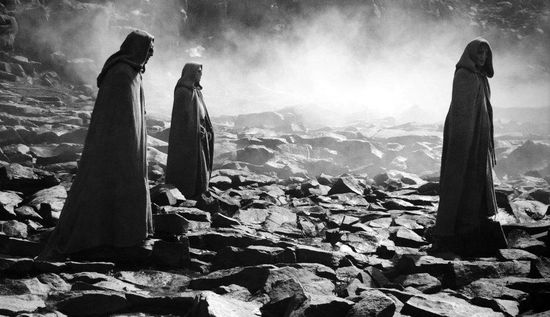
What really caught my attention was its quietly insistent religious theme. This is never stated boldly. It would hardly be a major topic of conversation among a group on scientists on an inter-galactic mission towards the end of this century. And this is not a talkative Shaw play. But it emerges in key scenes in odd and unexplained ways, disappears behind the action again, and then recurs later, notably in the final scene.

One main character uses the phrase “In the year of Our Lord,” quite without irony, in a sentence that tantalizingly promises us a sequel. A Christian cross is taken from one character and then, at a moment of grave crisis, seized back. The apparently malicious actions of an android raise a question with ultimate implications: Is it a case of bad programming? Or does it/he possess a soul? If so, what is his relationship to the Fall? Maybe I am drawing implications too heavy for the script to bear; but I don’t think so.

Me neither. I was enthralled by the film's spectacle (and we went to a 2D screening), entertained by its action sequences and, unlike my companions, unfazed by several loose plot ends. This was an epic story, using myth and symbols to dramatize some truly great questions: the relationship between man and God, the amoralism of nature and the salvation that only comes from grace. It's also a grand re-telling of the Tower of Babel – the deep mythical truth that we and our knowledge can be our undoing, that the fruit in the Garden of Eden was most definitely from the Tree of Knowledge. It was like The Tree of Life combined with 2001: A Space Odyssey. I quickly forgot the plot issues and marveled at its grand sweep.

The film admits of several interpretations. Mine – surprise! – sees it as a Christian film about the necessity for human humility in the face of creation, the easy temptation of evil that appears good, and the irrational faith in grace that springs paradoxically from our reason as well as revelation. It is about becoming Gods. And why that is, in fact, a nightmare.

More online discussion of this here, here and here. To see what has happened to the Christian imagination in America, read this review. And weep.

(Photo: a deleted scene featured here.)

Running As The Generic Republican

Douthat wishes Romney's campaign were bolder:

Romney may be able to win [working class white] voters by playing it safe and hoping the economy has done his work for him. But sometimes the best way to win a bloc of voters is to actually try to win them. In this case, that would probably mean offering a policy agenda more attuned to the ways in which recent Republican economic policy hasn’t always delivered for middle-income voters – a health care agenda that promises more to the uninsured, say, or a tax agenda that’s more family-friendly than the current Romney proposals.

Nate Cohn likewise takes a look at the working-class white vote and finds "evidence that most of Obama's losses among working class whites have come outside of the South, where Obama has further to fall."

Who Pays For Music? Ctd

A reader writes:

I saw your post on David Lowery's response to the controversial NPR piece on paying for music and I felt compelled to point out he's not just a lecturer at the University of Georgia. He was the leader of two beloved bands – Camper Van Beethoven and Cracker.  His post earlier this year is a terrific introduction to the issues.

Another writes:

David Lowery makes some good points, but notice on that chart that peak CD sales was around 1999 and digital sales were not even offered until around 2004 – and then almost as an experiment. How much self inflicted damage did the industry do to itself by entering the 21st century almost a decade late? Imagine if CDs were held back by the industry until the 1990s, out of fear that the audio quality was too good. Lowery and others in the industry would love to blame 20 year olds like Emily White, but they never seem to find fault in themselves for completely misreading their market when it mattered most.

Another goes for the jugular:

I speak as a music journalist, and someone who has been covering music file-sharing and its effects on the industry over the past few years. Every music journalist I've spoken to has an opinion on Ms. White's article, not a lot of it good.  I myself think NPR made a poor and lazy hiring decision.  But I think it deserves special mention that David Lowery is pulling quite a few of his claims out of his ass, perhaps out of sense of his own failure as a musician.  For example, in the case of concert revenue, if no money has ever been made on the road anyway, then why is it that major labels now take a cut of concert revenue as part of their contract deals with new artists?  Wouldn't it be pointless to ask for that?

More importantly, though, Mr. Lowery really did something heinous in his response to Ms. White:  He exploited the memory and legacy of revered musicians Mark Linkous and Vic Chesnutt to his own benefit by claiming that their suicides were due to them not earning enough off record sales.  Not only are these claims far-fetched at best and downright false at worst – especially in the case of Mr. Chesnutt, a quadriplegic who had a history of suicide attempts – but he also flouts the related issue of inadequate health-care for musicians by claiming that this wouldn't be a problem if they were earning more, which I think this site has gone a long way of showing otherwise.  It is not Ms. White's, or anyone's, fault that these tormented musicians are no longer with us, and to blame someone's tragic end on someone's downloading habits is preposterous.  In addition, guilt-tripping people into donating to the American Heart Association because another musician (Alex Chilton of Big Star) died of a heart attack is very poor form under any circumstance. 

We do need an honest discussion on the moral and ethical implications of file-sharing, and the chatter amongst the journalists I'm seeing right now seems to indicate that it's now happening.  But we're not getting it from a bitter, washed-up musician whose attempts at calling for an "ethical" Internet seem more intended for his selfish ends than towards balancing out the benefits and handicaps of new technology.

Another goes into the weeds:

I am a 24 year old, who recently underwent the same transition that Emily White describes. Around my senior year in college I realized that completely free music is not a sustainable model. This was precipitated by several things: my transition into the work force (and paid labor), a more complex understanding of the world from 4 years of university study, and personally knowing struggling musicians. So while I'll admit to illegally obtaining music during my youth, now that I have disposable income I get all my music legally. Considering this I have a lot of empathy for Ms. White, and understand her original post to boil down to a question. What will resolve the old business with the new technology so that we all benefit?  

That brings me to David Lowery's response. It's was called "compassionate" by the LA Times music blog, and is generally being described as a well reasoned response to an unapologetic miscreant. And going into the article I was quite prepared to be on Mr. Lowery's side. But then every single paragraph just piled on the condescension.

He wants to personalize the story for us by giving specific examples, and he turns to Mark Linkous and Vic Chestnutt. Two men who have a history of addiction and depression. And Mr. Lowery wants us to believe that filesharing caused their tragic suicide. Doesn't he know of any sound engineers who have been laid off? Or great musicians who left the game because there wasn't any money in it? Those kinds of stories have a direct link to the decline of the recording industry. Instead we get the biggest guilt trip imaginable based on unfounded assertions. May I ask why Kurt Cobain died? Perhaps Van Gogh was concerned about art forgery.

After this Mr. Lowery presents us with a pretty shoddy mathematical analysis from which he concludes that Ms. White "owes" musicians over $2000, or about $18 a month over 10 years. Then he discusses other things that college students spend their money on. Stuff like smartphones and MacBooks, which he seems to think are exclusively tools for consuming music. Never mind that a $1000 laptop is a very serious investment, and that it is virtually impossible for a young person to even apply to a job without internet access now.

One item he gets pretty tremendously wrong is tuition at American University. He claims its about $2086 a month. I think this is based on this site from American University. He takes the tuition of $18,777 and divides by 9 months of school. However, it pretty clearly states that rates are listed per semester, and a typical semester at college is 4 month long. That means that the monthly cost of tuition is actually $4695! Additionally, a single year of tuition is $37,554. Merely by attending college Ms. White is in the hole for one average musician's earnings. Many college students have to take out loans to buy lunch. Paying for niceties like music winds up pretty far down the list. A bit surprising considering he teaches at a college, but Mr. Lowery has NO CLUE what decisions about spending a college student makes.

You did not stake a position on this one, so I guess thanks for listening to me rant.

More ranting from readers on this topic at our Facebook page.

Ad War Update

The RNC tries to change the subject with Latinos (Spanish version here):

The Obama campaign hits Romney on taxes: 

And outsourcing:

Alex Burns has more

Both commercials show clips of Romney making promises during his campaign as governor — that he would cut taxes and create jobs — that the Obama camp says he later broke. One ad targets a raft of revenue-raising fees that Romney increased. The other slams him as a “corporate raider” who’s fond of outsourcing work. … The dual attacks represent a challenge to Romney’s national brand as a small-government businessman who knows how to create jobs, and each of them is a blunter, more straightforward hit than, say, the one Obama’s campaign has delivered on Bain Capital.

The Koch-funded group Americans for Prosperity issues its own "doing fine" hit, part of a $5.5 million campaign: 

Matt Taylor notices a pattern: 

This follows Romney's Super PAC Restore Our Future putting out an ad with the Obama private sector gaffe yesterday. Though these outside groups can't take official marching orders from the campaigns, they're essentially acting as megaphones, picking up on the same lines of attack as the official TV spots approved by Mitt Romney and Barack Obama and ensuring more voters are exposed to them.

Previous Ad War Updates: June 19June 18June 15June 14June 13June 12June 11June 8June 6June 5June 4June 1May 31May 30May 29May 24May 23May 22May 21May 18May 17May 16May 15May 14May 10May 9May 8,  May 7May 3May 2May 1Apr 30Apr 27Apr 26Apr 25Apr 24Apr 23Apr 18Apr 17Apr 16Apr 13Apr 11Apr 10Apr 9Apr 5Apr 4Apr 3Apr 2Mar 30Mar 27Mar 26Mar 23Mar 22Mar 21Mar 20Mar 19Mar 16Mar 15Mar 14Mar 13Mar 12Mar 9Mar 8Mar 7Mar 6Mar 5Mar 2Mar 1Feb 29Feb 28Feb 27Feb 23Feb 22Feb 21, Feb 17, Feb 16, Feb 15, Feb 14, Feb 13, Feb 9, Feb 8, Feb 7, Feb 6, Feb 3, Feb 2, Feb 1, Jan 30, Jan 29, Jan 27, Jan 26, Jan 25, Jan 24, Jan 22, Jan 20, Jan 19, Jan 18, Jan 17, Jan 16 and Jan 12.

The Veepstakes Game

Pawlenty is being talked up as a possible running mate. Bernstein recommends ignoring the chatter:

[W]hy should we believe any of this? Oh, I’m not blaming the reporting. It’s just that there’s a long history of nominees who do plenty of spinning and misdirection on their way to selecting and announcing a running mate. Most of that is with good reason; it's generally good politics to appease various party factions by pretending that their favorites are serious Veepstakes players, even if it isn't actually true. Don't forget, also, that there's actually a reason for the vetting, and it's certainly possible that things could turn up that disqualify a candidate.

Vetting the Republican veep would be a nice change of pace this time around.

Did Girls Succeed?

The show just finished its first season. Matt Zoller Seitz celebrates its accomplishments:

I fear that a lot of anti-Girls hoopla came from the fact that it's about, well, girls, and is set in a comically exaggerated version of reality, by which I mean that it isn't a genre show: There are no gangsters, no spies, no vengeful socialites, no vampires, no cops or lawyers, just young women (and a few men) having relationships and losing jobs and moving in and out of apartments and hurting each other without thinking. Such stories have historically been devalued: witness "chick lit" and "chick flicks." Critics (male and female) often embrace the thinking behind these condescending labels even if they avoid using the labels. A lot of the same gripes about Girls could have been lodged against The Catcher in the Rye, The Graduate, Harold and Maude, Risky Business, The Royal Tenenbaums, or any number of very white tales of young men with money and no sense of direction, but weren't.

John Cook, by contrast, still can't stand Girls:

The 'artist' and the character are virtually identical, and you valorize the artist for skewering the character. Besides, [creator Lena Dunham is] not skewering the character. These people are meant to be loved, to be understood and explained. It's a celebration, not a satire.

Dish commentary on the show compiled here.