A Poem For Saturday

Screen shot 2012-06-13 at 12.51.21 PM

"Love Is Not All" by Edna St. Vincent Millay:

Love is not all: it is not meat nor drink
Nor slumber nor a roof against the rain; 
Nor yet a floating spar to men that sink 
And rise and sink and rise and sink again; 
Love can not fill the thickened lung with breath, 
Nor clean the blood, nor set the fractured bone; 
Yet many a man is making friends with death 
Even as I speak, for lack of love alone. 
It well may be that in a difficult hour, 
Pinned down by pain and moaning for release, 
Or nagged by want past resolution's power, 
I might be driven to sell your love for peace, 
Or trade the memory of this night for food. 
It well may be. I do not think I would. 

Tracy L Seffers explains how the poem sums up her love life:

[I]n the end, in that quiet space between lovers imagined by the poet, we have only ourselves to offer for "the healing of harms", as C. S. Lewis put it—the hurts that come from living in this world—the hurts we inflict on ourselves—most especially the pain we give each other. Within the embrace of that flawed and beautiful reality, this poem teaches me, love grows, wounds heal. May we find that, at the right time, it will have been enough.

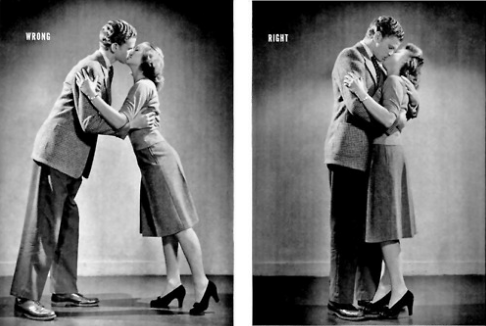
("How to Kiss, 1941" via Exp.lore)

Chipotle’s Revenge

Gustavo Arellano argues that Americans have already lost the immigration battle – by losing the dinner table:

Food is one of the first things a conquering group demonizes when trying to repress a smaller group. The Spaniards tried to wean the Aztecs off tortillas and into bread, to no avail. During the Mexican-American War, urban legend had it that animals wouldn't eat the corpses of fallen Mexican soldiers due to the high chile content in the decaying flesh. Similar knocks against Mexican food can be heard to this day in the lurid tourist tales of "Montezuma's Revenge" and in the many food-based ethnic slurs still in circulation: beaner, greaserpepper bellytaco benderroach coach, and so many more. … But that's all an undercurrent in the larger story of Mexican food's conquest of this country to the tune of billions of dollars: tacos, tequila, hot sauce, chili, Chipotle, Rick Bayless, and so much more. If America had truly been successful in its anti-Mexican campaigns over the past 150 years, it would have eradicated our cuisine à la the dishes of all the Native American tribes we exiled to permanent ethnic curiosity.

The Lucrative World Of Faux Bordeaux

Michael Steinberger reports:

Beginning in the early 2000s, demand and prices for the rarest wines shot up rapidly, as did the potential payoff from selling fakes. In 2000, wine auctions worldwide grossed $92 million; by last year, that figure had quintupled, to $478 million. The buying frenzy was driven in large part by young collectors in the United States. In contrast to the more buttoned-down Thurston Howell types who had once dominated the auction scene, these new players were distinguished by their insatiable acquisitiveness and eagerness to flaunt their trophy bottles.

On a related note, a recent blind tasting found that New Jersey wines held their own against France's best:

Clos des Mouches only narrowly beat out Unionville Single Vineyard and two other Jersey whites, while Château Mouton Rothschild and Haut-Brion topped Heritage’s BDX. The wines from New Jersey cost, on average, about five per cent as much as their French counterparts. And then there’s the inconsistency of the judges: the scores for that Mouton Rothschild, for instance, ranged from 11 to 19.5. On the excellent blog Marginal Revolution, the economist Tyler Cowen highlights the analysis of the Princeton professor Richard Quand, who found that almost of all the wines were "statistically undistinguishable" from each other. This suggests that, if the blind tasting were held again, a Jersey wine might very well win.

Webs Of Reading

Alexis Madrigal is absorbing Kenneth C. Davis' Two-Bit Culture: The Paperbacking of America, published in 1984. The popular historian describes the prevalence of bookstores in 1931:

In the entire country, there were only some four thousand places where a book could be purchased, and most of these were gift shops and stationary stores that carried only a few popular novels," Davis writes. "In reality, there were but five hundred or so legitimate bookstores that warranted regular visits from publishers' salesmen (and in 1931 they were all men). Of these five hundred, most were refined, old-fashioned 'carriage trade' stores catering to an elite clientele in the nation's twelve largest cities.

Madrigal's takeaway:

It's my contention – and I've made this point in other ways – that when people look at the sprawling mess of Internet publishing and decide that the quality of writing has declined, they are comparing apples to oranges. They're taking the most elite offerings that could be imagined, which were based on the tastes of the most educated people in 12 cities, and comparing them to the now-visible reading habits of everyone on the Internet.

Relatedly, Tom Standage argues that 17th century coffeehouses inspired the same level of fear that social media does today:

With the promise of a constant and unpredictable stream of news, messages and gossip, coffeehouses offered an exciting and novel platform for sharing information. So seductive was this new social environment — you never knew what you might learn on your next visit, or who you might meet — that coffeehouse denizens found themselves whiling away hours in reading and discussion, oblivious to the passage of time.

The Ebb Of National Novels

Book-1-640x428

Tim Parks wonders what globalization will do to literature:

About 56 percent of Europeans speak a second language, and for 38 percent of them that language is English. In Scandinavia and the Netherlands, where it’s fairly common to find university courses taught in English, the figure is more like 90 percent. … In 1946 only 5 percent of Holland’s book production was made up of translations; by 2005 it had reached 35 percent and in the area of prose fiction the share had grown to 71 percent. Of those translations, 75 percent now come from English.

The danger:

The politically-engaged social novel many European writers (Moravia, Calvino, Sartre, Camus, Böll) were celebrated for writing up to about the 1970s continues in the Anglo-Saxon world, but is fast disappearing in many European countries for the simple reason that people are reading and now perhaps writing rather less about their own societies, and hence novels are less likely to take on national issues.

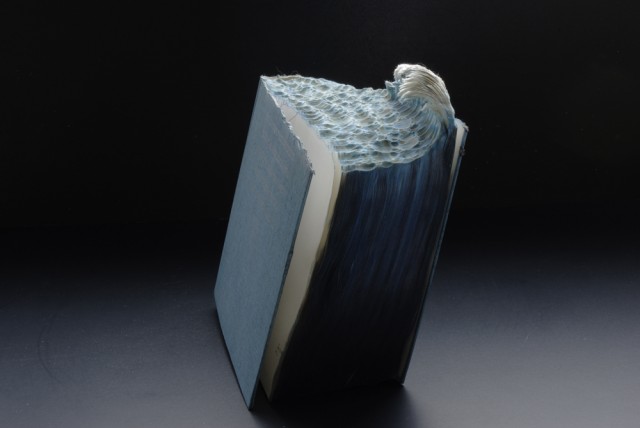
(New carved book landscapes by Guy Laramee via Colossal)

Face Of The Day

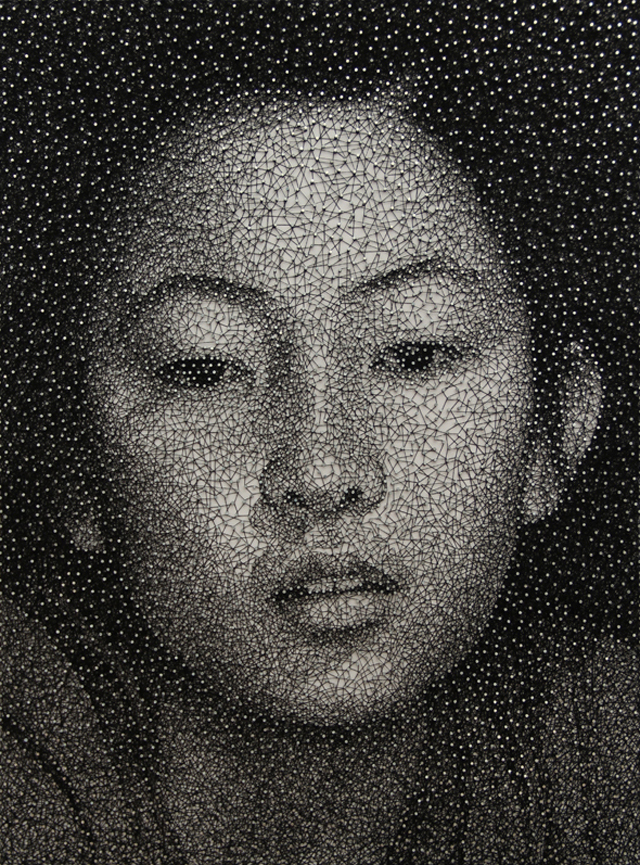
1-CONSTELLATIONMANA_KUMI-YAMASHITA

Christopher Jobson's jaw drops:

Constellation is an ongoing series of portraits by New York artist Kumi Yamashita known most prominently for her innovative light and shadow sculptures. Each image is constructed from a single unbroken black thread wound through a dense array of galvanized nails mounted on a painted white board, meaning that the darker areas within the portrait are formed solely from the density of the string.

Advice From The Underground

David Denby reconsiders Dostoevsky's classic, Notes from Underground:

Predictors of human behavior, as the underground man says, generally assume we will act in our own best interests. But do we? The same question might be asked today, when "rational-choice theory" is still a predictive model for economists and sociologists and many others. When working-class whites vote for Republican policies that will further reduce their economic power—are they voting in their best interests? What about wealthy liberals in favor of higher taxes on the rich? Do people making terrible life choices—say, poor women having children with unreliable men—act in their best interests? Do they calculate at all? What if our own interest, as we construe it, consists of refusing what others want of us? That motive can’t be measured. It can’t even be known, except by novelists like Dostoevsky. Reason is only one part of our temperament, the underground man says. Individualism as a value includes the right to screw yourself up.

The View From Your Window Contest

Vfyw_6-16

You have until noon on Tuesday to guess it. City and/or state first, then country. Please put the location in the subject heading, along with any description within the email. If no one guesses the exact location, proximity counts.  Be sure to email entries to VFYWcontest@gmail.com. Winner gets a free The View From Your Window book. Have at it.