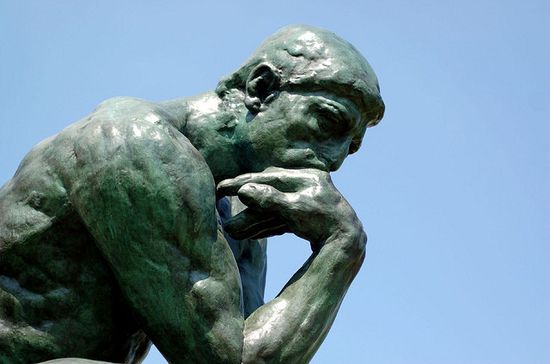
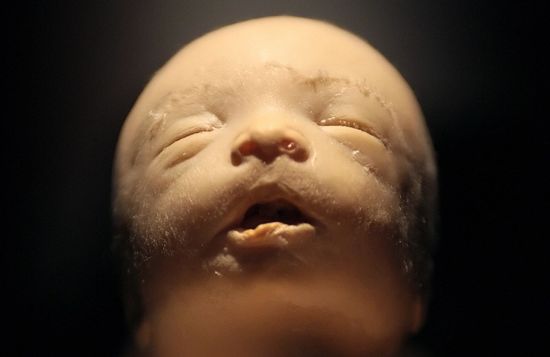
What would the trial of Dmitri Karamazov have looked like in a world of DNA testing, security cameras, or cellphone records? What would it have looked like even two decades later, as fingerprinting came into widespread use? Absent such hard evidence, a court would have to focus on "softer" variables: questions of character, psychology, relationships, and memory. Not coincidentally, these are exactly the kinds of questions that interest literary novelists — and a trial was once an ideal forum for exploring them. In a world before modern forensic evidence, a criminal trial was much more like a novel: it was more likely to be an exploration of personality, a contest between two different theories of a human being.
Month: June 2012
Literature For The 99%
Christian Lorentzen examines how fiction will address our fiscal moment:
If money is a matter of possible futures, the book with the most to tell us about the present moment is one in which money hardly figures at all: Kazuo Ishiguro’s Never Let Me Go (2005), a novel that dispenses with a realist depiction of society as a theater of individual striving and instead shows that we live in a world where character, creativity, and love cannot save us. In this respect, Never Let Me Go, as Nancy Fraser has recently suggested in New Left Review, suggests a literature for the 99 percent. It follows three young people from a dreamy adolescence in what seems to be a privileged boarding school into a truncated adulthood that expires as they donate their organs to the barely glimpsed society that has created them—these children are clones—to exploit them. Their only assets are their very bodies, over which they have no control. It doesn’t take much of a leap to see in Ishiguro’s scenario the lifetimes of debt paying and service employment that await dreamy children at a time when college tuition swells at twice the rate of inflation.
The View From Your Window Contest

You have until noon on Tuesday to guess it. City and/or state first, then country. Please put the location in the subject heading, along with any description within the email. If no one guesses the exact location, proximity counts. Be sure to email entries to VFYWcontest@gmail.com. Winner gets a free The View From Your Window book. Have at it.
The End Of Cheap And Easy STDs?
The World Health Organization sounded the alarm this week over antibiotic-resistant gonorrhea:
More than 700,000 people in the United States probably get gonorrhea each year. I say "probably" because the Centers for Disease Control doesn't know for sure. It's an estimate, because a lot of those cases go untested, unreported, and untreated. The good news is that, since the 1940s, getting people to get themselves tested has been the hard part. Once you know the gonorrhea is there, antibiotics have made it both easy and cheap to treat. The (more) bad news: That's changing.
Maryn McKenna has details:
One thing that it particularly calls for — as the CDC did in the New England Journal last February — is for physicians to start applying a "test of cure," actually checking microbiologically to see whether a patient who was prescribed an antibiotic for gonorrhea is clear of infection, or harboring a resistant strain.
The problem, of course — you can see this coming — is that once you start bringing patients back and giving them additional and different tests, STD control becomes more costly. (That’s not even to mention the additional, distributed costs of developing new education efforts, surveillance systems or drugs.) In my read, that’s the real news in the WHO’s decision to sound a global alarm: a tacit admission that the era of cheap STD control may be over.
Ask Bartlett Anything: What’s A VAT And Why Do We Need It?
Poseur Alert
"Remember when everybody was reading "The Sound and the Fury" in their gingham dresses and wife-beaters? (Take that, Steinbeck, you hack screenwriter.) But now that Faulkner Ultra-Lite "The Help" fever has morphed into "Hunger Games" Young Adult zeal, now is as good a time as any to remind folks of what may be the greatest winning streak in literature. The six works represented—eight if you count "Snopes" as a trilogy—is quite simply an unassailable fortress of literary perfection, positively reeking with excellence, and shining like a beacon of human enlightenment into the icy cosmos. That one can rightfully proclaim this without a twinge of doubt raises the question: Why is Faulkner so underread?" – D.H., The Economist.
Ad War Update
The RNC pounces on Obama's royal verbal screw-up:
In his latest Day One spot, Romney whitewashes his record as Massachusetts governor:
Kornacki calls the spot a "textbook demonstration of how to make something out of nothing." Robert Farley fact-checks (for instance, "Romney increased government fees by hundreds of millions of dollars"):
The Romney campaign bases its [jobs] claim on the fact that during Romney’s four years in office, Massachusetts added a net 49,100 jobs (an increase of about 1.5 percent). In the four years under Romney’s predecessor, Republican Jane Swift, the state added 19,000 jobs (an increase of 0.59 percent). In the next four years under Romney’s successor, Democrat Deval Patrick, Massachusetts lost a net 66,400 jobs (a decrease of 2.03 percent). But that ignores national employment trends that largely drive state employment. In particular, it ignores the national recessions both before and after Romney was in office. So how did Massachusetts do compared with other states? As the Obama campaign has repeatedly noted, Massachusetts ranked 47th out of 50 states over the entirety of Romney’s four years as governor in terms of job creation. By comparison, Massachusetts ranked 37th in job growth under Swift, and it ranked 10th in Patrick’s first term. By that measure, Romney had the worst record in a decade.
Meanwhile, the Romney campaign zooms in on North Carolina:
And the Obama campaign raises alarms about Romney's fundraising surge:
Swing state spending update here.
Previous Ad War Updates: June 7, June 6, June 5, June 4, June 1, May 31, May 30, May 29, May 24, May 23, May 22, May 21, May 18, May 17, May 16, May 15, May 14, May 10, May 9, May 8, May 7, May 3, May 2, May 1, Apr 30, Apr 27, Apr 26, Apr 25, Apr 24, Apr 23, Apr 18, Apr 17, Apr 16, Apr 13, Apr 11, Apr 10, Apr 9, Apr 5, Apr 4, Apr 3, Apr 2, Mar 30, Mar 27, Mar 26, Mar 23, Mar 22, Mar 21, Mar 20, Mar 19, Mar 16, Mar 15, Mar 14, Mar 13, Mar 12, Mar 9, Mar 8, Mar 7, Mar 6, Mar 5, Mar 2, Mar 1, Feb 29, Feb 28, Feb 27, Feb 23, Feb 22, Feb 21, Feb 17, Feb 16, Feb 15, Feb 14, Feb 13, Feb 9, Feb 8, Feb 7, Feb 6, Feb 3, Feb 2, Feb 1, Jan 30, Jan 29, Jan 27, Jan 26, Jan 25, Jan 24, Jan 22, Jan 20, Jan 19, Jan 18, Jan 17, Jan 16 and Jan 12.
America’s Trust Deficit
Joe Klein encounters it while road-tripping across the US:
I traveled through North Carolina and Virginia, both in areas of deep blue and crimson red, and it was clear neither side trusted the other very much. For the conservatives, the country had changed beyond their imagining; not just civil rights but gay rights (a contentious referendum recently banned gay marriage in North Carolina), and new ethnic groups that seemed foreign–the South Asians who all of a sudden seemed to run half the convenience stores, the Latinos who didn't seem to want to speak English. Why, even the President of the United States was something strange, neither black nor white. For liberals, it was all about intolerance. You couldn't have a half-decent conversation with these Tea Party people, they said. "My mouth is bloody," a woman from Smith Mountain Lake, Va., told me, "from biting my tongue all the time."
The Weekly Wrap
Friday on the Dish, Andrew assessed "Obama's brutal week" in the context of the long game, gave voice to his visceral anger at Romney's shameless dishonesty, grumped at Obama's use of celebrity surrogates, and dove into some cases suggesting Catholic church politicized to the point of threatening its tax exemption (here, here, and here). We sighed at Rand Paul's endorsement of Romney, worried about Romney's cash advantage, lowered our estimate of Scott Walker's advantage, and wondered if unions should give up on Democrats. Ad War Update here.
Andrew also tracked a revolt against the Catholic hierarchy, responded to some readers' thoughts on the matter, did the same on the question of banning abortions, and investigated a stoney critique of national law. Obama embraced drones for their precision-strike capability, Damascus burned, Egypt's election divided observers, and America lacked good cyber defense.
We confronted the terrible reality of military rape and found the flood of immigrants to America slackening. A reader strongly dissented on "Big Football," others weighed in on pooping, and Bloomberg's soda ban found a champion. The Netflix of porn never took off, online porn created a new avenue for prostitution advertisement in hard times, a sexist YouTube commenter got his comeuppance, the obsessed manned the internet, unpaid internships mostly weren't worth it, home rental was dubiously legal, and hasids resembled hipsters. Quote for the Day here, Poseur Alert here, Yglesias Award Nominee here, Cool Ad here, VFYW here, MHB here, and FOTD here.
Thursday on the Dish, Andrew called Romney out on the Big Lie that Obama slowed the economy on purpose (follow-up here), noticed a fifth Big Lie about supermajorities (its follow-up here), called attention to Romney's "vigilance against non-comformance," wondered whether supporting pot legalization could help Obama, and responded to a critique of his position on Wisconsin. We checked on Nate Silver's new election model (60% odds Obama comes out on top), bet on Romney appointing hard-right judges, figured money didn't decide Wisconsin, and ridiculed the idea that Obama told a blowjob joke. Everyone still remembered Bush, the Cabinet mattered little, DOMA moved one step closer to the edge, readers debated Bloomberg nannyism here and here, and unions declined just as libertarians learned to embrace them. Ad War Update here.
Andrew also confessed his difficulties during recent battles with HIV and testosterone, gave a pro-life argument for legal abortion, sounded a death knell for Big Football, reupped the call to Ask Scott Horton Anything, told a story about poop, and chuckled at a bear headline. We wrapped our brains around the grim logic of massacre in Syria, called the notion that Libya was a failed state "a myth," and gaped at parliamentary craziness in Greece. A statistic on healthcare misled (sort of), connected the overdiagnosis problem to broader issues with US health care, and put the spotlight on face transplants. Marriage equality debates continued, marijauna arrests were (arguably) not racist, and humans are DESTROYING THE PLANET. Long copyrights saved business money, tech firm bosses had some strange minds, daily newspapers weakened, and Americans moved everywhere. Humans hated being cut in line, Tarantino muddled race politics, and beards proliferated. Ask Bruce Bartlett Anything here, Quotes for the Day here and here, Chart of the Day here, VFYW here, MHB here, and FOTD here.
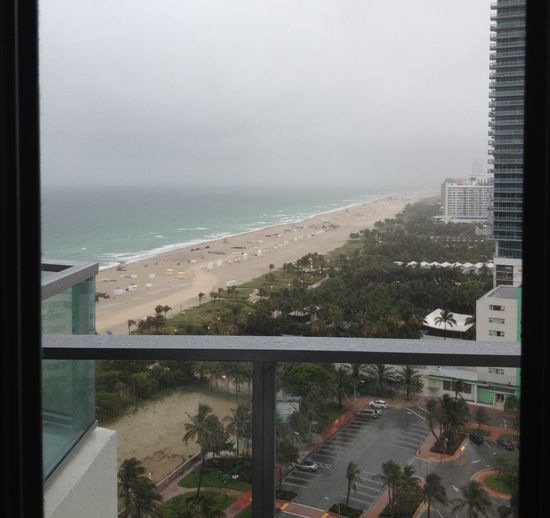
Miami, Florida, 9.53 am
Wednesday on the Dish, Andrew mulled over the damage done to democracy by the Scott Walker fight (follow-up here), called out another Romney Big Lie, and marvelled at Obama's success in counterterrorism. We grabbed reax to the Wisconsin election, gave one explanation for Walker's victory, flagged a Romney official's post-victory overreach, Obama's lead widened, his marriage equality evolution helped the cause, Colorado's pot initiative challenged the candidates, and Texas shaped the country. Edmund Burke weighed in on Bloomberg's soda ban and the Mayor was (hot dog!) a hypocrite. Ad War Update here.
Andrew also predicted more would come of Peter Beinart's book than what we now see and gaped at GOP support for Netanyahu. Readers defended the Qu'ran against Sam Harris, Obameron battled Merkel, "leadership" wasn't a Eurozone silver bullet, the European crisis made the 1930s comprehensible, China essentially censored American films, and more work went in to understanding sovereign territory sales.
Finally, Andrew highlighted one of our most entertaining correspondents, implored you to Ask Scott Horton Anything, and shared beagle happiness. We watched the HuffPo descend into self-parody territory, worried about the male invention of the internet, and blasted the vertical video epidemic. A talent for "rescue" marked good hospitals, readers sounded off on the pscyhology of poop (follow-up here), others distinguished nicotine from poison, drugs didn't explain the rash of crazy zombie incidents (on one view), socially constructed racial categories altered your biology, and breastfeeding lowered obesity rates. Luck determined success, a theocon tipped his hand, the private sectory failed to provide subways, and Ray Bradbury lived an extraordinary life. Ask Eli Lake Anything here, Quotes for the Day here and here, Cool Ad here, VFYW Contest follow-up here, VFYW here, MHB here, and FOTD here.

By Jean-Christophe Verhaegen/AFP/Getty Images
Tuesday on the Dish, Andrew weighed Obama's variant of Keynesianism against Romney's, parsed a reader's extraordinary analysis of Politifact data on lying politicians, compared Romney to Don Draper, and sent Prop 8 to the Supreme Court. We marvelled at the difference between the Democratic and GOP campaign ads, explained why Obama was going to lean on Bain, bet the last sixth months of the election were what really counted, wondered if recall elections were really necessary, projected about a future where Obama supported legal pot, and speculated about the current two-party system's durability. Weather shifted employment, Obamacare made colleges give more comprehensive health insurance, "class warfare" was implicit in the GOP's argument on inequality and taxes, and religiosity negatively correlated with economic mobility. Ad War Update here.
Andrew also updated St. Paul's views of homosexuality, picked out an illiberal strand in Richard Dawkins' views on faith, and welcomed Megan McArdle to Newsweek/Daily Beast. We examined obesity among the homeless, debated the necessity of doctors, raged against pill addiction as a consequence of sports injury, defended anti-depressants, explored the "psychology of pooping," and set social expectations for therapists. People thought they were stars of their very own Truman Shows and Hollywood misportrayed disability. Running backwards helped one man, evolution gave us potato chips, and Nicotine poisoned. Eurozone countries shared little in common and states stopped selling territory. Ask Bruce Bartlett Anything here, Chart of the Day here, Email of the Day here, Quotes for the Day here and here, Yglesias Award Nominee here, Moore Award Nominee here, VFYW Contest Winner here, VFYW here, MHB here, and FOTD here.
Monday on the Dish, Andrew compared Obama and Romney's records on jobs, rolled his eyes at Mitt's turnout strategy, discovered a "humbler American exceptionalism," found the apple of Fox Nation's eyes, and chuckled at Jonah Goldberg's new meme debut. We checked with the Presidential and Wisconsin Governor's races, figured an actual economic plan would be a political liability for Romney, explained why the recall Scott Walker drive appeared to be fizzling out, did the same for the Occupy movement, and theorized about why gay reporters got all the scoops. Ad War Update here.
Andrew also blasted Cardinal Dolan's reaction to the airing of evidence of his malfeasance, found a book the Vatican couldn't stand, called the Pope a poseur, and discovered the open embrace of bigotry by the North Carolina GOP. He further explained the morning's RSS weirdness and mined some good emails out of it. We learned about the Jewish origins of the trinity, noted an extraordinary Mormon gay solidarity march, and were impressed by Jason Alexander's apology for insensitive gay jokes. Reader ripped Matt Labash's response to the first round of criticisms on his anti-meme screed, YouTube made two young girls stars, curation appeared to be blogging, the great headphone debate carried on, and POV photography changed the way we retrospectively saw the world. Anesthesia lengthened surgery, overdiagnosis burdened the healthcare system, the military buckled under the financial weight of its own Tricare program, and Canada's move to single-payer levelled the social playing field.
Finally, Andrew enjoyed the snark surrounding the diamond jubilee and picked out a claim about America's alliances not-oft heard in officialdom. We worried about Russia's role in Syria, analyzed the Peter Beinart backlash, and gamed out the seriously terrible global economic scenarios we might be facing. One writer knew hope for the economic future and another connected food stamps to the economic difficulties of being a 20-something today. Cities bred mosquitos, living in good walking areas cost a pretty penny, cars had a place in NYC, GasPods saved gas money, and Starbucks played a critical "Third Place" urban role. Optimal cereal required precise engineering and researchers studied tomato hatred. Airline fashion evolved and unique creators fell into self-parody traps. Ask Eli Lake Anything here, Yglesias Award Nominee here, VFYW here, MHB here, and (really cute) FOTD here.
– Z.B.
How To Get Back At Awful Commenters
An anti-troll production (language NSFW):
 The Dish