“I think the inference that many people could draw from the publication of the Vatican document is that we are unfaithful. We really do not see ourselves in that way,” – Sister Pat Farrell, the latest target of the Vatican's enforcement of papal orthodoxy in America.
Month: June 2012
Saint Paul And Marriage Equality
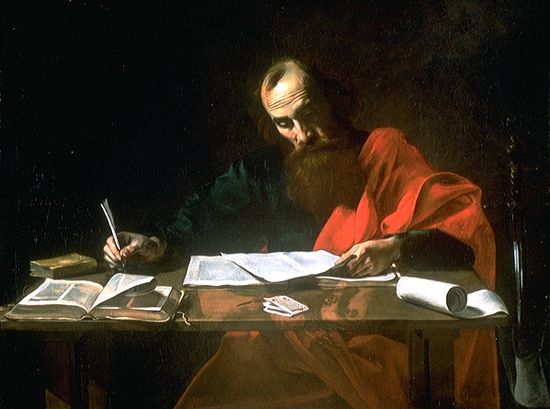
He’d have been for it, says Jon Rauch, as he was in favor of many profound social reforms and changes in his day. What about the Letters To The Romans?
Context is all. No one in Paul’s day had any inkling of a loving, consensual homosexual relationship. “There were no gay households; there were in fact no gay institutions or gay culture at all,” writes Ruden. “The only satisfying use of an adult passive homosexual was alleged to be oral or anal rape — the satisfaction needed to be violent, not erotic.” Roman mores of Paul’s day regarded male-male intercourse as an act not of love but of domination. The passive partner was contemptible; the active one was triumphant, proving his virility. But “partner” hardly seems the right word. “Target” or “victim” is more apt.
Of course a Christian would be opposed to that kind of abuse. But a consensual loving relationship between equals? Sister Farley is a brave enough Catholic to ask the right question. The Vatican, terrified of its own vast closet, wants to shut all the questions down. That’s how so many of these gay hierarchs cope with themselves. It’s just natural of them to project it all on to others.
(Painting: St Paul by Valentin de Boulogne 1591–1632.)
Will The Two-Party System Survive?
Thomas Edsall ponders its past and future:
Given the scope of the demographic and ideological transformation of the United States over the last six decades, it’s interesting that the two-party system has not imploded. In the face of sustained centrifugal upheaval — including a proliferation of religious affiliations, the enfranchisement of substantial minority populations, rising levels of economic inequality, and the belief among a plurality of voters, 44 percent, that our economic system (capitalism) and the religious identification of three-quarters of the electorate (Christianity) are not compatible — we still are a nation of Republicans and Democrats.
More so than ever actually. Perhaps it's the only truly tribal option left.
What If Obama Supported Legalization?
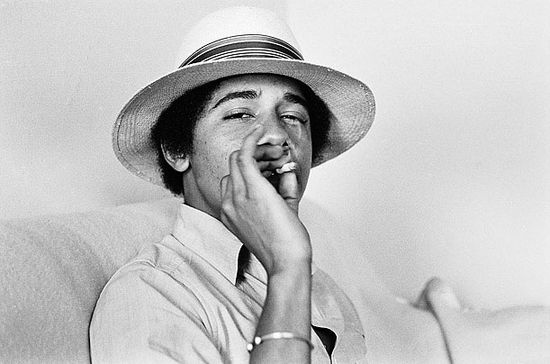
Pareene imagines the consequences:
I think when the president takes a position on an issue that was not formerly particularly "partisan," it creates partisan opposition to his position. President Obama coming out in favor of drug legalization could cause Republicans — a small number of whom have lately been sounding marginally more reasonable on the issue — to fall back in love with the drug war. But if Obama’s support for gay marriage led to the crumbling of apparently weak black opposition, as it appears to have done in Maryland, it would likely have a similar effect if he ever actually voiced support for the legalization of a harmless drug he enjoyed himself on many occasions with no adverse consequences.
Voter Myopia
The six months before Election Day make a huge difference:
Voters appear not to be answering Reagan's question, "are you better off than you were four years ago?" Instead, they are answering the question, "are you better off than you were six months ago?" Why are voters seemingly so shortsighted? In a working paper, Andy Healy and I propose and test an explanation based on recent research in psychology. Since the early 1990s, psychologists have reported a surprising finding. When retrospectively assessing experiences, people often rely on the end. In one of the better-known examples, patients evaluated their pain during a colonoscopy, not on the overall experience, but on the pain experienced at the peak and the end.
Running Pains, Ctd
Another suggestion for the best way to run – going backwards:
Garret Doherty, 33, can cover a mile in just over seven minutes and has been crowned world champion three years on the trot. Garret got hooked on the bizarre sport three years ago after turning around during a jog to avoid the sun. He found he could run nearly as fast backwards as he could forwards — and claims it has transformed his life. Garret, from Dublin, said: “Backwards running is like a drug — once you start, you’ll never want to run forwards again."
The benefits, according to Doherty:
You land on the correct part of your feet, which helps your ligaments and ankle bones. In forwards running, your feet land heel to toe — but when you run backwards it’s the other way round, which is how you’re supposed to run, the same way as you would barefoot. And instead of the muscles in your lower back getting the workout, it’s the muscles in your lower abdomen that are worked the hardest. If it wasn’t for people being too embarrassed to run backwards, it would be a lot better for everyone to do it.
Nicotine Is Poison
When inhaled, nicotine travels from lung to brain in an estimated seven seconds. Toxicologists estimate that a fully smoked cigarette delivers about 1 mg of nicotine to the lungs; this compares to a lethal dose estimate of 30-60 mg. (For further comparison, the lethal dose range for arsenic is 70-200 mg.) The International Programme on Chemical Safety (IPCS) notes that: "Nicotine is one of the most toxic of all poisons and has a rapid onset of action. Apart from local caustic actions, the target organs are the peripheral and central nervous systems."
Chart Of The Day
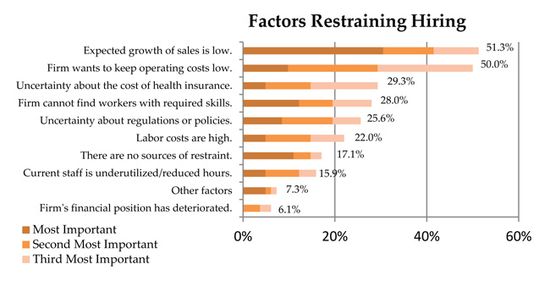
Morgan Hounsel captions this chart from the Philadephia Fed:
This closely matches other private business surveys like the National Federation of Independent Businesses survey and the PricewaterhouseCoopers' Annual Global CEO Survey. All have told a similar story: Bad regulations and uncertainty from Washington are a problem, but low sales are by far the biggest worry.
Why Don’t We Buy And Sell Territory Anymore?
Joseph Blocher wonders what happened to the days of the Lousiana Purchase and Seward's Folly:
Somewhere along the way, the market for sovereign territory seems to have dried up, at least as far as I can tell. To be sure, there is still an active market for proprietary interests in public land; the federal government, after all, owns approximately 30% of the nation’s land. But borders–sovereign territory, rather than property–do not seem to be for sale, especially domestically. Why?
One possible explanation is that there’s simply no demand, but that doesn’t seem quite right. It’s not hard to imagine situations in which some state-to-state Coasean bargaining might create mutual gains. California could shore up its budget by selling land to Oregon. Some of the dozens of major interstate metropolitan areas straddling state borders could be consolidated. Or when Martha’s Vineyard voted to secede from Massachusetts in the 1970s (yes, really), and Kansas expressed interest in acquiring it (yep), a deal might’ve been struck that would’ve left the Bay State richer and Kansas with … well, a bay.
Ad War Update
The Obama campaign runs against Romney's record as Massachusetts governor ("one of the worst economic records in the country"):
Jamelle Bouie notes an important irony:
As Pema Levy points out at Talking Points Memo, the Romney team correctly hits Obama for neglecting the extent to which the former governor inherited a bad situation. … This is exactly what the Romney campaign is doing with regards to Obama’s economic record. By blaming Obama for job losses that occurred before his policies passed or took effect, the Romney team is able to say that the United States lost jobs under his tenure. But if you count from when Obama’s policies took effect, then you end up with more than two years of private sector job growth.
On a very different note, the Obama campaign dispatches Sarah Jessica Parker to court young voters in a spot that aired during the MTV Movie Awards:
Meanwhile, the RNC mocks an Obama web video featuring Anna Wintour touting the same fundraiser:
Jen Christensen breaks down online ad spending:
In the first few months of 2012, Obama's campaign bought nearly $16.4 million worth of online ads after spending almost $2.2 million last year — even though he didn't face a Democratic challenger. That means he is on pace to spend a record amount on digital ads, according to ad spending experts. The campaign for Mitt Romney, who survived a heated primary race to become the presumptive Republican nominee, spent $7.8 million for online ads this year, in addition to the $500,000 it spent in 2011. …
For now, Romney's ads are most likely to show up online where readers may be sympathetic to his message, or on sites that would catch the attention of voters in a particular primary state. According to a CNN analysis of Nielsen Online AdRelevance, which tracks online ad spending, Romney's campaign made its largest online ad purchase — some $32,000 — on DrudgeReport.com.
Previous Ad War Updates: June 1, May 31, May 30, May 29, May 24, May 23, May 22, May 21, May 18, May 17, May 16, May 15, May 14, May 10, May 9, May 8, May 7, May 3, May 2, May 1, Apr 30, Apr 27, Apr 26, Apr 25, Apr 24, Apr 23, Apr 18, Apr 17, Apr 16, Apr 13, Apr 11, Apr 10, Apr 9, Apr 5, Apr 4, Apr 3, Apr 2, Mar 30, Mar 27, Mar 26, Mar 23, Mar 22, Mar 21, Mar 20, Mar 19, Mar 16, Mar 15, Mar 14, Mar 13, Mar 12, Mar 9, Mar 8, Mar 7, Mar 6, Mar 5, Mar 2, Mar 1, Feb 29, Feb 28, Feb 27, Feb 23, Feb 22, Feb 21, Feb 17, Feb 16, Feb 15, Feb 14, Feb 13, Feb 9, Feb 8, Feb 7, Feb 6, Feb 3, Feb 2, Feb 1, Jan 30, Jan 29, Jan 27, Jan 26, Jan 25, Jan 24, Jan 22, Jan 20, Jan 19, Jan 18, Jan 17, Jan 16 and Jan 12.
 The Dish