Mark Vernon laments the loss of silence in religious life:
A suspicion of silence took root in the second and third centuries, when bishops penned diatribes against the so-called gnostikoi, Christians who claimed that God was most fully known as unknowable, and so therefore in silence. To be branded a gnostic was to be cast out of the fold. Then, in the fourth century, came the conversion of Constantine. The church aligned itself to secular power and now what you thought was of political importance too. Thereafter, western rites included creeds to be audibly confessed. They policed who was in and who out.
The legacy of this tradition is that, today, if you go to a mass or morning worship, there will be barely a moment’s silence. Quakers aside, it is as if there is a de facto ban on silence in public worship. When people gather together, they should rehearse approved truths. The inner life, left alone, foments heresy and subversion.
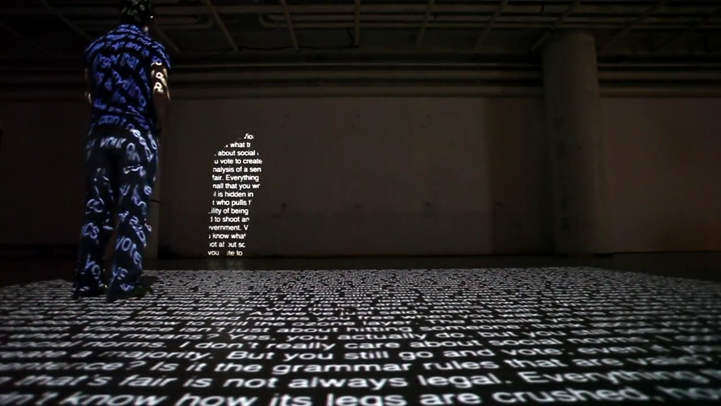
(In Order to Control by NOTA BENE Visual "features a constant loop of selected text about "the threshold [of] ethics and morality" projected on the ground" via My Modern Met.)
 The Dish