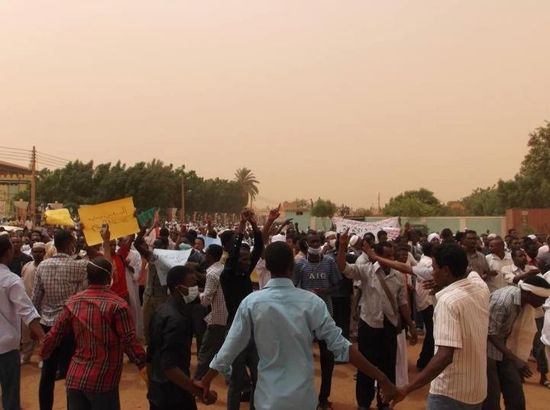
Mohamed El Dahshan thinks we're missing a big story:
You'd think it would catch the world's attention. The revolt is being led by an educated, young, polyglot class of people attempting to spread the message in half a dozen languages. Media-savvy bloggers and activists are being arrested; internet campaigns to free them are launched every day (in Arabic and English). Foreign journalists are being detained and deported. The protestors are confronting a military-religious dictatorship with demands for a civil state and social and economic justice. And, unlike some of the other worst offenders in Africa, the ruling regime is at least somewhat familiar to the western public thanks to coverage of the atrocities in Darfur and South Sudan (not to mention the involvement of George Clooney and company and the International Criminal Court's first arrest warrant — as yet futile — for an acting head of state).
Marc Lynch summarizes the revolt so far:
The "Arab spring" is hardly needed to account for the protests in Khartoum, which has a long history of popular uprisings, but it certainly frames the perception and politics of what is unfolding. The current wave of protests were triggered by austerity measures, including cuts to food subsidies, in a tenuous political arena framed by the tensions surrounding the new South Sudan. Activists, especially students who had been trying to keep protests alive for over a year and a half, have moved creatively to embrace the online communications and organizational tactics made familiar by the Arab uprisings of the last year and a half. The tortuous path of popular struggles in Syria, Yemen and so many other Arab countries following early waves of enthusiasm should be a cautionary tale about overly high expectations. But Sudan's rising protest movement in the face of a growing crackdown clearly merits the world's attention.
Al Jazeera English is on it.
 The Dish