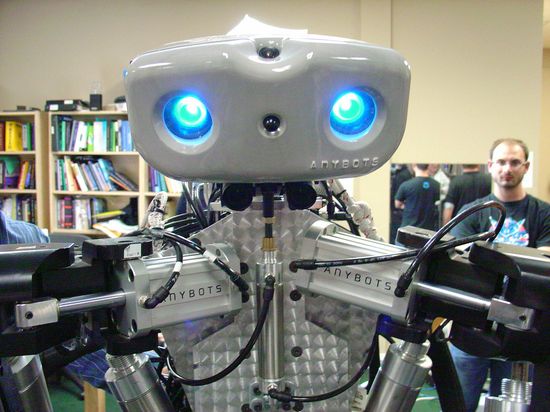
MIT doctoral student Matt Beane says the next generation of outsourcing may be robots controlled by distant lower-wage workers, a kind of technology known as telepresence:
Several elements of this scenario are no longer science fiction. Companies now produce and sell robots (including the VGo, iRobot's Ava, and Willow Garage's Texai) that allow users to navigate through a remote working environment, interacting by means of a computer screen. So far these systems have limited functionality (some dub them "Skype on wheels"), and they've mostly been used for high-value problems involving costly experts. InTouch Health's RP-7, for example, was designed to let doctors remotely diagnose stroke patients, since smaller hospitals often can't afford a neurologist on staff.
And once the industry matures:
Telepresence means that in theory, ten, a hundred, or a thousand times as many workers could compete (virtually) for the same work. No matter how bad things get in Madrid or Houston, an avatar worker somewhere else could sell his or her labor for less. The same outsourcing logic applies to many high-wage jobs that rely on physical presence and motor skills, including the work done by cardiologists and machinists.
(Photo by Flickr user mightyohm)
 The Dish