by Zoë Pollock
The tumblr Fuck Yeah Fluid Dynamics is tackling the Olympics, explaining the physics of various sports. A highlight from the diving entry:
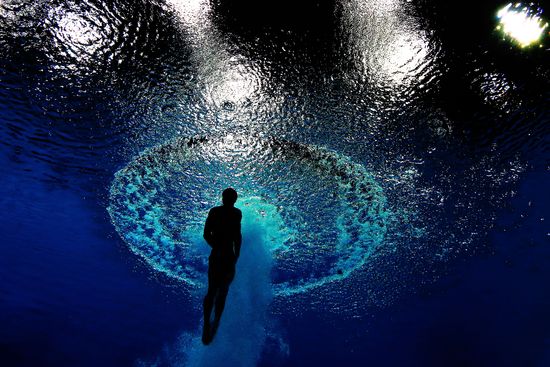
Any time a solid object enters a still liquid, it tears a cavity into the liquid. The smaller this cavity is, the less the liquid will rebound and splash when the cavity gets refilled. In diving, achieving a small splash requires a couple items. First, the diver will grab his hands over his head to form a flat surface. This will create the initial small cavity through which his body follows. When entering, the diver will keep his body straight and rigid, with arms pressed against his head; this adds stability to keep the diver from letting the force of striking the water at 35 mph affect his body’s form and create splash. Finally, the perfect dive enters vertical to the water surface. This ensures that all of the diver’s body finds its way into that cavity created by the hands without striking any undisturbed water.
Future divers, take note.
(Photo: Kai Qin of China competes in the Men's 3m Springboard Diving Preliminary on Day 10 of the London 2012 Olympic Games at the Aquatics Centre on August 6, 2012 in London, England. By Clive Rose/Getty Images.)
 The Dish