The First Class War Attack Ad

In a world of turmoil and constant change, there's a strange comfort in knowing our political ads stay the same:

"The Oldway and the New" is a 1912 campaign film put out by the Democratic National Committee on behalf of candidate Woodrow Wilson. Housed at the Library of Congress, it is the earliest known example of a political party or candidate using the medium of motion picture to communicate with voters.

And the subject? Massive concentrations of wealth in the private sector:

This film portrays Republican William Howard Taft as a mouthpiece for special interest groups and Woodrow Wilson as a champion of working class citizens aspiring to the ranks of business owners. … In 1912, large trusts and corporations were amassing power and exerting their influence over Americans' private lives. This made financial regulation a major platform issue for the candidate. Likewise, financial regulation remains a topic of political debate to this day. "The over-the-top comic approach of the film suggests that the success of those who already have wealth will somehow trickle down through better wages for workers is a joke," [Trygve Throntveit, US historian and Wilson scholar] said.

Is Privacy Sacred?

Yes, according to Garret Keizer, but we don't treat it as such:

Any attempt to negotiate a respect for our privacy rights is like trying to negotiate better treatment from your heroin dealer. As long as he knows that you need the junk and are willing to make any sacrifice necessary to get the junk, he gets to dictate what the junk costs and the hoops you need to jump through to get it.

Why Do We Get Car Sick?

Cameron Walker unpacks the science of motion sickness:

Women tend to be more affected by motion than men, particularly during their menstrual cycles. Migraine sufferers are at-risk for motion sickness, too—and women who haven’t been struck by motion sickness in the past can become more likely to get it around the two peak migraine onset periods (around age 35 and again at menopause). There may also be a genetic component to motion sickness.

Much of the motion-sickness literature reports that babies and toddlers under two are seldom victims. One thought as to why we get motion sickness is that it’s designed to stop movement that makes us unstable or involves conflict between different senses, and that avoiding this kind of movement would confer evolutionary fitness. In Brain Research Bulletin, Brad Bowins goes on to propose that motion sickness’s negative reinforcement would only work once a person could act to relieve its effects, eliminating its "advantage" in those too young to physically respond.

The Weekend Wrap

Fod

This weekend on the Dish, books and literary coverage held sway. Mark O'Connell pondered the "Amis Hatchet Job," J. Robert Lennon and Richard Brody analyzed the negative review, Jeanie Riess sampled literary food blogs, Charles Simic applauded the impractical motivation of poets, and Jesse Bering considered his writing's impact on his sex life (he also dispelled pernicious myths about gay men). As the Republican convention drew near, Ayn Rand made two appearances – Alan Wolfe gave the unflattering reason why academics might need to study her and Judith Therman detailed Rand's telling correspondence with Laura Ingalls Wilder's daughter. We also noted David Foster Wallace's faux dictionary entries and the unintended fates of literary estates. Read Saturday's poem here and Sunday's here.

In religious news, Matthew Bowman profiled the Mormon self-help guru Stephen Covey, Jesse Bering answered a reader's question about the evolutionary advantages of belief in God, David Sugarman explored Herman Melville's complex spirituality, Rowan Williams described how we experience mercy, Wan Yong proved that Jesus really was King David's descendant, and Matt Ridley showed how apocalyptic thinking isn't just for believers. And, of course, how could considerations of religion ignore the hucksters and frauds? Scott K. Johnson reminded us that creationism is out of step with Christian tradition and a Canadian pastor claimed physical violence could heal the sick.

In assorted coverage, Hannah Kaviani reported on social media's impact on disaster relief in Iran, Ashley Fetters remembered the time Phyllis Diller posed for Playboy, Pierre Manent proved to be a believer in American exceptionalism, Scott Aikin and Robert Talisse explained the real meaning of civility, and William Flesch contended that mortality and altruisum were linked. Joe Hanson pointed to Van Gogh's possible color-blindness, Benjamin Sutton further scrutinized the touch-up-a-masterpiece meme, Lisa Miller summarized a new book on the genetically-tinged future of personal ads, Hunter Oatman-Stanford charted the vagaries of contraception in America, Steven Zeitchik examined the NC-17 rating, John Gravois argued against tipping, and researchers checked the raw sewage of European cities to find out what drugs they used. FOTDs here and here, MHBs here and here, VFYWs here and here, and the latest window contest here.

– M.S.

(Photo by Keller and Wittwer)
Champion Or Cheater … Or Both? Ctd

A reader writes:

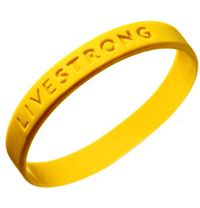
In response to the claim that Lance's contributions come from his work on cancer … well, not so much? Outside ran a pretty damning article about how Livestrong spends its money: 

The foundation gave out a total of $20 million in research grants between 1998 and 2005, the Livestrongyear it began phasing out its support of hard science. A note on the foundation’s website informs visitors that, as of 2010, it no longer even accepts research proposals. [In 2001], Livestrong had four staffers and a budget of about $7 million. Now it has a staff of 88, and it took in $48 million in 2010.
$20 million for research doesn't seem like much. While I appreciate donating facetime to cancer survivors and victims, some research support would be nice.

Another writes:

Just a personal anecdote about Armstrong from someone who never met him but was inspired. In October of 1996, at the age of 28, I began my first round of chemotherapy for Hodgkins Lymphoma.

Cancer is a pretty lonely disease, and you kind of grasp at those with good news regarding surviving cancer and definitely notice those who have bad news. The same week I began my treatments, Armstrong's case was in the NY Times and it caught my eye. After all, he was 28 and I was 25. I recall that his situation was much worse than mine was (my odds were 85% and his were 40%). He also said he would refuse to take drugs that would increase his odds of survival if they impacted his ability to race. At that point the insipration was not that he survived cancer … but that he was willing to die for the sport he loved.

Three years later my cancer relapsed. It was 1999 and Lance was in the midst of his first Tour de France victory. I can recall watching his final stage with my mom and just thinking that what he was doing is what anyone who has cancer wants: a chance to have life not only return to normalcy but to be better than it was before. It was beyond beautiful to watch him riding through Paris.

It wasn't until early 2000 that I had my stem cell transplant. Armstrong was just beginning to become a legend. The bracelets were still to come. But I knew his story and I carried it with me through my treatments. And for that I am thankful.

Update from another:

I strongly disagreed with the Outside article when it came out and definitely disagree with the claim that it is "damning." I understand that the author of the article was upset, but you should really understand what charities do before you donate to them. The National Cancer Institute's budget is over $5 billion, Livestrong raised $42.3 million in 2010. Far from being "nice," the amount of money the Lance Armstrong Foundation can give to cancer research is way past the rounding error in the national cancer research budget and the $20 million in research that LAF funded over seven years probably had no discernible effect. The LAF Board was completely justified in focusing on the things they do well – things that no one or almost no one else is doing – and they were completely clear about it.

Another is more specific:

Livestrong is not and has never claimed to be an organization that solely raises money for cancer research (an obviously important cause). It exists to improve the quality of life of people battling cancer – which, until there's a cure, is equally crucial.

The Universal Commute

Across most of the US and Europe the average commute is almost always a half-hour:

Although population is strongly correlated with commuting time, particularly when all metro areas over population one million are included in the sample, the differences are surprisingly small.  Orlando, with an urbanized area of only 600 square miles, has a mean commute just twelve seconds shorter than Dallas, which covers 1,780 square miles, although both cities have comparable densities, employment centralization and highway miles per capita.

Tim De Chant explains why urban planners may not be able to shorten our commutes:

Simply increasing density in some cities may shorten commutes for a brief period, but the honeymoon won’t last forever. … If we offer faster and better transportation, people will use it until it becomes overburdened. At which point they’ll just move closer to work.

Monday Myths

Case-of-the-Mondays

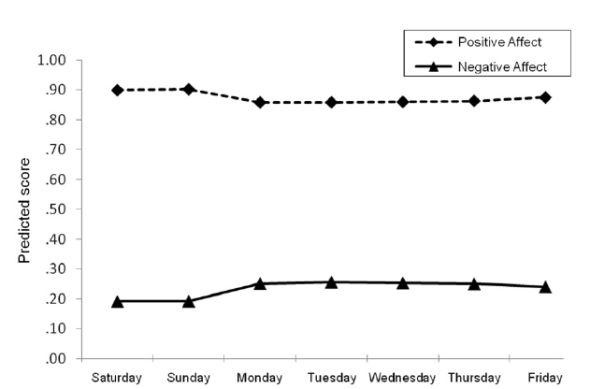
According to a Journal of Positive Psychology study, the first day of the week isn't more of a downer than the rest:

A clear pattern emerged, with people reporting far more positive mood and far less negative mood on Saturdays and Sundays, compared with weekdays… Although not as dramatic as the weekend effect, there was also evidence of enhanced mood on Fridays, relative to other days of the week – supporting popular belief in a "Thank God It's Friday!" effect. But comparing mood on Mondays against mood on Tuesdays, Wednesdays and Thursdays revealed no evidence of a dip.

"Despite our global beliefs about lousy Mondays, we conclude that this belief should, in general, be abandoned," the researchers said.

Rose Eveleth blames the myth on advertising:

In fact the “most depressing day of the year” is on a Monday. Dubbed “Blue Monday,” it falls on the third Monday in January. Turns out, that’s not real either. As Ben Goldacre points out, the premise of “Blue Monday” was dreamed up by Sky Travel, a PR company, just in time for people to take a summer holiday. How convenient.

Another study, last year, found that it takes people in Britain until exactly 11:16 a.m. to smile on Mondays. That study was funded by Marmite, a food spread. Which explains why the smiling time fell exactly in the middle of the traditional morning tea break taken by British workers – and the most likely time they’d eat Marmite.

(Chart via Sarah Kliff)

Pill Country

Days of Destruction, Days of Revolt, by Chris Hedges and graphic artist Joe Sacco, offers a glimpse into West Virginia's growing drug problems. From an excerpt:

A decade ago only about 5% of those seeking treatment in West Virginia needed help with opiate addiction. Today that number has ballooned to 26%. It recorded 91 overdose deaths in 2001. By 2008 that number had risen to 390. Drug overdoses are the leading cause of accidental death in West Virginia, and the state leads the country in fatal drug overdoses. OxyContin — nicknamed "hillbilly heroin" — is king. At a drug market like the Pines it costs a dollar a milligram. And a couple of 60- or 80-milligram pills sold at the Pines is a significant boost to a family’s income.

Not far behind OxyContin is Suboxone, the brand name for a drug whose primary ingredient is buprenorphine, a semisynthetic opioid. Dealers, many of whom are based in Detroit, travel from clinic to clinic in Florida to stock up on the opiates and then sell them out of the backs of gleaming SUVs in West Virginia, usually around the first of the month, when the government checks arrive. Those who have legal prescriptions also sell the drugs for a profit. Pushers are often retirees. They can make a few hundred extra dollars a month on the sale of their medications. The temptation to peddle pills is hard to resist.

Dreher contemplates that other opiate of the masses, religion:

You may be a poor man living in a trailer in West Virginia, or a rich man living in a Manhattan penthouse, but sooner or later, you will meet suffering and death. It is the great equalizer. Some seek to escape their mortality, their finitude, through booze, drugs, sex, and suchlike. There are people who use religion as a kind of drug, getting high on spiritual fads and pious emotionalism as a way to avoid confronting themselves and their problems. Yet I believe Hedges is on to something when he says that among the poor he saw, those who have managed to survive and even to thrive were "almost always" those who found God. … Again, that doesn’t make God true, but it does make Him real.

Face Of The Day

Halo

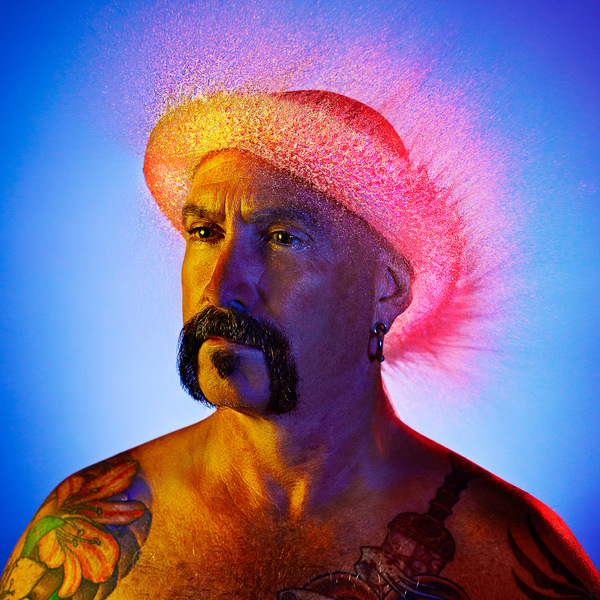
Photographer Tim Tadder explains his stunning new series, "Water Wigs":

We found a bunch of awesome bald men and hurled water balloons at their heads, to capture the explosion of water at various intervals. The result a new head of of water hair! We used a laser and sound trigger to capture the right moments for each subject to create just the head of hair that fit best with the face.

(Image courtesy of Tadder)