“By Design And Choice”

Pierre Manent, the French political philosopher, claims to believe in American exceptionalism – based especially on the circumstances of our founding:

It is difficult not to, because it is the only political experiment that succeeded. There is a nice passage in Joseph de Maistre, the counter-revolutionary, the enemy of the French Revolution, where he says that human beings are not able to build things, because when they try to create something they do not get it. You cannot really produce new and interesting things. It is just given, by the process of history, by God, or whatever. And if there is a case where he was wrong, it is in the case of the United States of America. It’s the only successful political foundation, as the Federalists would say, "by design and choice."

It is not a question of agreeing with American policy or politics, I think, but if you are not able to treat the United States for the great political-civic accomplishment it is, you miss something huge in the political landscape, and your view of politics in general is biased. And really, I do not want to look like a flatterer of the United States, but it is my experience that people who have good judgment in general about political things all some way or another have a sympathetic understanding of America.

Previous coverage of American exceptionalism here, here and here.
Not Just Being Nice

In a democratic culture brimming with argument, Scott Aikin and Robert Talisse believe we have misunderstood the meaning of civility:

We all agree that civility in political argument is an increasingly scarce good.  Yet it’s not clear precisely what civility is.  On some accounts, civility is equivalent to conflict aversion; one is civil insofar as one is conciliatory and irenic in dealing with one’s political opponents.  Civility in this sense seeks to deal with disagreement by disposing of it.  Civility of this kind is little more than a call for compromise at the expense of one’s own commitments.  Hence this kind of civility might be inconsistent with actually believing anything.  To be sure, compromise among clashing viewpoints is frequently a fitting avenue to pursue once argument has reached an impasse.  But when taken as a fundamental virtue of argument itself, compromise is vicious. 

Another prevalent account of civility is focused on the tone one takes in arguing with one’s opponents.  The thought is that when arguing, one must avoid overly hostile or antagonistic language.  On this view, a paradigmatic case of incivility is name-calling and other forms of expression overtly aimed at belittling or insulting on one’s opponents.  Now, there is no doubt that maintaining a civil tone when arguing is generally good policy.  But a civil tone is not always required, and there are occasions where aggressive language is called for.  Argument is a form of confrontation, one with words instead of weapons, and any norm that prevents argument from displaying the critical edges of disagreements undercuts what inspires the argument to begin with…If civility of tone has a purpose, it is to maintain conditions under which proper argument can commence; thus it is not itself a component of proper argument.

Kicking Your Ailments

Recently the Dish covered Rick Warren's new Book of Daniel-based diet plan. As despair-inducing as that might be, it pales in comparison to this "pastor" who uses physical violence to "heal" people:

Todd Bentley, a Canadian pastor currently based in the U.S, heals people by kicking them, claiming his violence will cure them of diseases. He claims to have cured a man of cancer by punching him in the chest. He shoved/healed a congregant so hard that the man lost a tooth. One Youtube video features him saying, "And I’m thinking why is the power of God not moving? And He said, “Because you haven’t kicked that woman in the face.” So, he did and, "I inched closer and I went bam! And just as my boot made contact with her nose, she fell under the power of God." (Seems like there might have been a few factors involved in what made her fall there, but anyway.)

Soon congregants may need the mixed martial arts offered by Fight Church.

Perilous Times Might Come

Musing on the end of the world extends beyond hucksterish television preachers and Left Behind readers. Matt Ridley charts the rise of a secular brand of apocalyptic thinking:

Religious zealots hardly have a monopoly on apocalyptic thinking. Consider some of the environmental cataclysms that so many experts promised were inevitable. Best-selling economist Robert Heilbroner in 1974: “The outlook for man, I believe, is painful, difficult, perhaps desperate, and the hope that can be held out for his future prospects seem to be very slim indeed.” Or best-selling ecologist Paul Ehrlich in 1968: “The battle to feed all of humanity is over. In the 1970s ["and 1980s" was added in a later edition] the world will undergo famines—hundreds of millions of people are going to starve to death in spite of any crash programs embarked on now … nothing can prevent a substantial increase in the world death rate.” Or Jimmy Carter in a televised speech in 1977: “We could use up all of the proven reserves of oil in the entire world by the end of the next decade.”

He counsels a moderate approach to planetary problems, steering a course between fear-mongering and inaction:

Just as policy can make the climate crisis worse—mandating biofuels has not only encouraged rain forest destruction, releasing carbon, but driven millions into poverty and hunger—technology can make it better. If plant breeders boost rice yields, then people may get richer and afford better protection against extreme weather. If nuclear engineers make fusion (or thorium fission) cost-effective, then carbon emissions may suddenly fall. If gas replaces coal because of horizontal drilling, then carbon emissions may rise more slowly. Humanity is a fast-moving target. We will combat our ecological threats in the future by innovating to meet them as they arise, not through the mass fear stoked by worst-case scenarios.

A Literary Will

What happens to an author's papers after they die isn't always what they intended:

Three years before his death, Ernest Hemingway placed a letter in his library safe stating, “It is my wish that none of the letters written by me during my lifetime should be published.” Yet by 1976, his widow, Mary Welsh Hemingway, was already quoting those letters in her memoir, How It Was. In 1981, only two decades after her husband’s violent suicide, she allowed the publication of six hundred letters in Ernest Hemingway: Selected Letters, 1917–1961.

And, in 1999, Hemingway's son published a "bowdlerized version" of True at First Light, the author’s last unfinished work. To combat the problem this exemplifies, some archives are moving to acquire literary estates while the writer is still alive.

Searching In The Holy Land

Screen shot 2012-08-23 at 5.03.33 PM

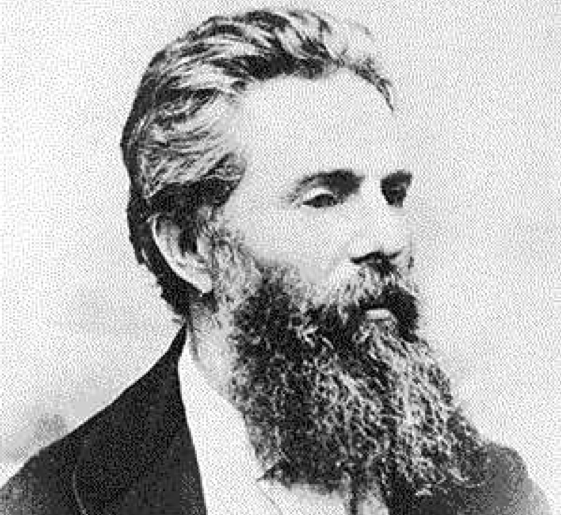
After Herman Melville "all but lost his readership with the publication of Moby-Dick; or The Whale," which sold only 3100 copies during his lifetime, he traveled to Europe and the Middle East "in the hopes of finding some clarity, inspiration, and cheer." David Sugarman describes Melville's visit to Jerusalem during the trip and the complex spirituality he brought with him:

Melville’s view of the place was certainly clouded by his financial and artistic troubles, as well as the religious tensions he felt as a Christian traveling in 19th-century Jerusalem. While Melville was not a traditionally religious or observant man, theological questions dominate the author’s work. The philosophically inclined child of a Christian father and pious Calvinist mother, Melville held a complex theology, best described as something like devout agnosticism. “He can neither believe, nor be comfortable in his unbelief,” Hawthorne wrote of Melville in his journal. “He is too honest and courageous not to try to do one or the other. If he were a religious man, he would be one of the most truly religious and reverential.”

This devotion to uncertainty—but affiliation with pious Christianity—affected Melville’s view of Jerusalem in a number of ways: He felt uninspired by the city and disappointed to find himself feeling this way. Additionally, he was saddened to see the sites associated with Christian history in such poor condition. He wrote that “the mind can not but be sadly & suggestively affected with the indifference of Nature & Man to all that makes the spot sacred to the Christian.” The barren city, in combination with his bleak mood, left Melville feeling disenchanted; his outlook was markedly more optimistic upon departing for Rome.

(Image of Herman Melville via Wikimedia Commons)

Why Study Ayn Rand?

Alan Wolfe provides the unflattering reason:

In the academy, she is a nonperson. Her theories are works of fiction. Her works of fiction are theories, and bad ones at that. Should the Republicans actually win in 2012, we might need to study her in the academic world. It would be for the same reason we sometimes need to study creationism.

A Poem For Sunday

Gnomon

"Gnomon" by Noelle Kocot:

A mirthy owl stands past breathing.
It is a plate-glass rescue
Of the ten thousand things.
Martha knew it once, came
To her own conclusions.
Then her spirit cried for respite
And release. There was no
Other season for the blatant cross-
Road of the yellow trees.
There was no other, Martha
Knew as she flew to the giant
Warmth in the desert of the real.

(From The Bigger World by Noelle Kocot © 2011. Reprinted with permission of Wave Books and the author. Photo by Flickr user Mr. T in DC)

A Difficult Mercy

Mark Vernon reviews Archbishop of Canterbury Rowan Williams' new book, The Lion's World, drawing particular attention to his account of how we actually experience mercy:

He portrays [mercy] as an unsentimental though humane experience … because it means facing up to the truth about what you have done and who you are. The theistic insight is that this truth can only be seen when you are confronted by the divine. To meet God – or Aslan, as Lewis has it in the Narnia stories – is "to meet someone who, because he has freely created you and wants for you nothing but your good, your flourishing, is free to see you as you are and to reflect that seeing back to you".

In other words, to see yourself as others see you might be discomforting but it will also always be skewed by the distorting lens of their self-interest. To be unmasked as God sees you is painful because purgative, but is also a path to true liberation. It is merciful because without it we are left in a citadel of self-deception, life's energies being sapped and wasted on bolstering self-regard.