Quote For The Day

by Matthew Sitman

"I hope you don’t have friends who recommend Ayn Rand to you. The fiction of Ayn Rand is as low as you can get re fiction. I hope you picked it up off the floor of the subway and threw it in the nearest garbage pail. She makes Mickey Spillane look like Dostoevsky," – Flannery O'Connor, in a letter to Maryat Lee, May 1960.

The Teen Drama That Started It All

by Zoë Pollock 

 Emily Landau remembers the trailblazing show, Degrassi Junior High:

Degrassi's camp value has often overshadowed its cultural significance. Twenty-five years after it debuted, its DNA lives on in every subsequent teen drama; in fact, it inspired Aaron Spelling’s Beverly Hills, 90210. However, Degrassi ‘s gritty vérité approach (working-class characters, untrained actors) had more in common with the social realist films of Ken Loach and Mike Leigh than with the brassy designing women and idyllic nuclear families of ’80s television. Degrassi treated such issues as teen pregnancy, abortion, and suicide with gravitas. It was the only place on television where kids could see themselves depicted honestly. There has never been anything else like it.

LDS Lit

by Matthew Sitman

From Orson Scott Card to Stephanie Meyers, Mormons seem to have a knack for writing fantasy and science fiction novels. Alan Hurst ponders the reasons why:

Fans of fantasy and sci-fi, or at least Mormon fans of fantasy and sci-fi, have often
wondered why Mormon writers are so well represented in the genre. Some have said there’s something in our theology that sparks it; others say it’s just a coincidence—a few Mormon writers were successful writing fantasy and sci-fi, they trained others, and it became a trend. Some think Mormons aren’t overrepresented, just more open about their religious affiliation than other writers. And, of course, some smirk. Mormons believe in fairy tales, so why shouldn’t they be good at writing them?

Why he thinks Mormons should continue writing such tales:

[G]ood fairy stories are not merely fables, presenting simple lessons in didactic style. They deal with deeper matters—a truth I learned from the great fairy-tale writer of our time, J.R.R. Tolkien. Tolkien hated shallow allegory, grumpily refuting popular attempts to read his masterpiece as a veiled retelling of World War II. Yet at a deeper level his work is fraught with philosophical and even theological significance, which he privately acknowledged. Tolkien’s elves, men, dwarves, and hobbits represent various aspects of human nature, as do his orcs and goblins, who are sadly the races of Middle Earth that Tolkien thought most resembled modern society. The story of the One Ring is a lengthy meditation on technology, pride, and power, on the sinful wish to reject the place the Creator intended for us and become gods ourselves.

A Poem For Sunday

Sunforpoem

Selected by Alice Quinn and Matthew Sitman

"The Day of the Sun" by Vijay Seshadri:

Arriving early at the limit of understanding,
I managed to find a good seat,
and settled in with the others,
who were fanning away the heat

with their programs full of blank pages.
The orchestra was in place,
and soon the show started.
First, deep space

rose high and flooded the stage,
immersing all the spots
where our thoughts could have fixed
if our minds had thoughts.

Which they didn’t. Then
the sun came out and stood.
That was all that happened,
and ever would.

(From The Long Meadow © 2004 by Vijay Seshadri. Reprinted with the permission of the author and Graywolf Press. Photo by Flickr user kxcd)

Losing The Flock

by Zoë Pollock

Atheists are now 13% of the world population, according to WIN-Gallup's recent poll, the Global Index of Religion and Atheism 2012 (pdf). Adam Lee welcomes the results:

In 2005, when this poll was last conducted, 69% of Irish defined themselves as religious, 25% as non-religious, and 3% as convinced atheists. In 2011, those same numbers stood at just 47% religious, 44% non-religious and 10% atheist. In other words, in just six years, one in every five Irish people has given up religion, which is enough to vault Ireland into the top 10 nations worldwide with the most atheists. This is less a demographic tide than a demographic earthquake. And it's easy to guess why. In per-capita terms, Ireland suffered more from the Catholic child-rape scandal than any other nation in the world, and the Vatican's response has consistently been one of denial, arrogance and condescension. … The church authorities have acted as if they were immune from the law and even from public opinion, and that all they had to do was hunker down and wait for everything to blow over. They seem to have forgotten that simply leaving the church is a choice that fed-up people can make.

In the U.S. people who say they are "religious" dropped from 73 percent to 60 percent and the number of Americans who say they are atheists rose, from 1 percent to 5 percent. Kimberly Winston parses the numbers:

The seven years between the polls is notable because 2005 saw the publication of “The End of Faith” by Sam Harris, the first in a wave of best-selling books on atheism by Christopher Hitchens, Richard Dawkins, Daniel Dennett and other so-called “New Atheists.” … “For a very long time, religiosity has been a central characteristic of the American identity,” [sociologist of religion Ryan Cragun] said. “But what this suggests is that is changing and people are feeling less inclined to identify as religious to comply with what it means to be a good person in the U.S.”

Hemant Mehta wonders when politicians will take note:

For America, where only 60% of the population calls themselves “religious,” and an additional 30% calls themselves “non-religious,” politicians are making a big mistake by ignoring us during election seasons. As philanthropist Todd Stiefel pointed out in an email, “they go after Jews (1%), African Americans (12.6%) and Hispanics (16.3%) like crazy, but [the] non-religious+atheist crowd (35%) is larger than those three groups combined (29.9%).”

The “Sin” Of Depression

Quiet_desperation

by Zoë Pollock

Katherine Sharpe looks for the origin of the depression stigma:

Modern conversations about depression often return to the idea that the illness carried a terrible stigma in ages past. It is likely that this sense of depression’s stigmatization comes to us from the Middle Ages, when a religious tradition, familiar then but only a muscle memory to us now, identified depression as a type of sin. Called "acedia" or "wanhope" (literally, "faint hope"), it was considered a subset of the deadly sin of sloth. Its major feature was a loss of faith in one’s own worthiness of salvation and mercy in the eyes of God. 

Previous coverage of Sharpe's new book, Coming of Age on Zoloft, here. Recent Dish on anti-depressants here

(Image via Ryan Bateman. Update from a reader: "That guerrilla piece is from the artist behind webcomic "Pictures For Sad Children".)

How Not To Read The Bible

by Matthew Sitman

Rick Warren strikes again. His book, The Purpose Driven Life, epitmoized the self-help Christianity genre, and now he has turned to the Book of Daniel for dieting advice. Rob Goodman provides the disheartening details:

Pastor Rick Warren says this is a story about weight loss. The story is the Hebrew Bible’s Book of Daniel, and out of the wealth of details in this two-and-a-half-millennia-old book, Pastor Warren has plucked one in particular as the centerpiece of his church-sanctioned diet.

Daniel, one of the four kidnapped Jewish youths, “resolved not to defile himself with the royal food and wine,” and chose to subsist on vegetables instead, ending up as healthy as anyone in his captors’ court. So, as Time magazine recently reported, Warren has “launched the Daniel Plan, a comprehensive health-and-fitness program.”

Goodman's assessment of this travesty:

Pastor Warren’s Daniel Plan, and the ugly religious thinking it represents, ought to matter whether you see the Bible as sacred writ or human literature. Warren and his fellow apostles of self-help Christianity have a bible of their own: one in which the strange and foreign—and human—are stripped away, and the shallowly motivational is exalted; one in which the demands of 21st-century America are made the measure of these ancient texts.

“Everybody Worships”

Dfw

by Matthew Sitman

Recently the Dish pointed to the forthcoming biography of David Foster Wallace, Every Love Story is a Ghost Story. After watching a panel on the Wallace archives at the Ransom Center that included the biography's author, D.T. Max, Daniel Silliman worries that Wallace's religious beliefs are being ignored:

It is very interesting, from the stand point of biography, that Wallace's writing struggles are so important to so many. I wish, though, that Max found Wallace's struggles with and attempts at religion important too. What does that say? What does it say that Wallace dedicated some time trying to be a part of church communities? How did that work and how did it play out…

Maybe Wallace's thoughts on religion were banal. I doubt it, though. Unfortunately, Max seems to assume that's the case without investigating any deeper or even being interested. The rest of his answer is just speculation — and, really, even if his Illinois church attendance was best explained by those things, there's still plenty there to explore. None of those answers specifically would be boring, though Max seems to take them that way.

It's like a terminal disinterest in religion. David Lipsky's extended interview with Wallace was the same way. Wallace talked about religion and God several times, but Lipsky let every statement pass, never following up, always pursuing other questions.

If Silliman's assessment is right, I'll be disappointed. My suspicion is that among DFW's literary and academic peers, his church-going and attachment to Christianity (however complicated and complex) is not a feature of his life that intuitively is understood – and so the language and themes in his writing that point to this, whether overtly theological or not, tend to get downplayed.

In Wallace's Rolling Stone article after 9-11, he mentions "belonging" to a Protestant church in Bloomington – probably not the type of place with which too many New York-based writers have an intimate familiarity. This fact about his life seems worthy of investigation, and I hope Max's biography addresses it. A 1996 Details profile revealed, for instance, that Wallace twice pursued becoming a Roman Catholic, and eventually spent time going to a Mennonite house of worship. Beyond these details, though, DFW's work itself points to an understanding of human nature brimming with religious insight. Or rather, he held that we were religious beings. In his famed Kenyon commencement address, Wallace said

In the day-to-day trenches of adult life, there is actually no such thing as atheism. There is no such thing as not worshipping. Everybody worships. The only choice we get is what to worship.

Wallace understood our addictions – to fame, power, beauty, wealth – as petty idols, replacing a transcendent, ultimate source of devotion with the penultimate, taking good, if limited, things and making them everything. Which of course leads to misery – and worse. Any reader of Wallace's knows the place of addiction in his work, and the lurking anthropology behind his assessment of it, by the end of his life, was religious. Examining the matter of what, or whom, Wallace worshipped, or tried to, is an essential task in understanding his literary and philosophical vision. That Wallace evinced some reticence about this, or refused to slip into the tired slogans of our culture's publicly pious, doesn't diminish its importance. He once admitted how difficult it was to discuss such questions, in an almost eery preview of the hesistancy we now find among those scrutinizing his life:

…it’s very hard to talk about people’s relationship with any kind of God, in any book later than like Dostoyevsky. I mean the culture, it’s all wrong for it now. You know? No, no. Plausibly realistic characters don’t sit around talking about this stuff. You know?

I always come back to this comment of Wallace's during his interview with Lipsky:

It's more like, if you can think of times in your life that you've treated people with extraordinary decency and love, and pure uninterested concern, just because they were valuable as human beings. The ability to do that with ourselves. To treat ourselves the way we would treat a really good, precious friend. Or a tiny child of ours that we absolutely loved more than life itself. And I think it's probably possible to achieve that. I think part of the job we're here for is to learn how to do it. [Spits with mouthful voice into cup.] I know that sounds a little pious.

The term for what he's describing, in Christian theology, is grace. Wallace's life, it seems to me, was a search for it.

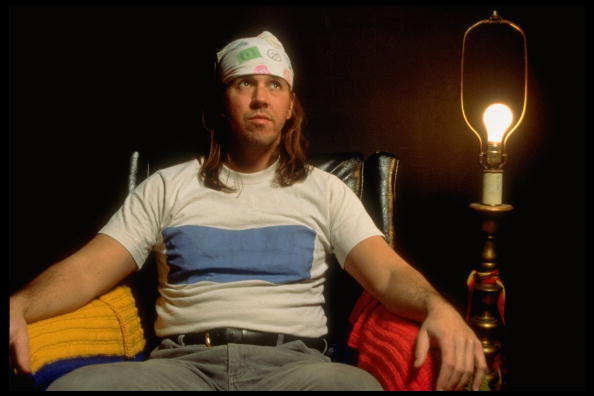
(Photo: Author David Foster Wallace by Steve Liss/Time Life Pictures/Getty Images)

Hungry For God

by Zoë Pollock

Rollo Romig converted to Islam after marrying his wife. In an essay about his first time fasting for Ramadan, he beautifully conveys the rituals, the hardship, and the humor of giving up food and water for 30 days. He posits that fasting might have "something to do with God’s very unknowability":

Wherever they are, Muslims direct their prayers toward the Kaaba, the black cube at the center of the Grand Mosque in Mecca, which Muslims also circumambulate when they make their major pilgrimage. Inside, the Kaaba is empty. When the fast empties you out during Ramadan, no matter how well you adjust to the deprivation, you never stop feeling the tug of hunger. That tug is a reminder—a reminder, perhaps, of that void inside the Kaaba, and the silent mystery of the divine. On Day Twenty-seven, I happened upon a verse in the Koran about a mirage in the desert: “The thirsty man takes it to be water until he comes to it and finds it to be nothing, and where he thought it to be, there he finds God.”