Hunting The Profound


by Matthew Sitman

Steve Rinella has a new TV show about hunting (and book of the same title), Meat Eater. Outside magazine interviewed him about it, and he distinguished his approach from Bear Grylls, of Man vs. Wild fame, this way:

I don’t know Bear Grylls but the title of his show implies an adversarial relationship to the wild. I don’t think that the point of being in the wilderness is to get out as quickly as humanly possible. In the woods I find things that are spiritual, redemptive, and worthy of contemplation. I don’t run around thinking, Holy shit! Watch out! And I don’t smear mud all over my face.

The video above gives a sense of what the show is like – when a wild pig got in a tangle with two hunting dogs, Rinella proclaims, via voiceover, "You have to find it within yourself to stab the pig." Not for the particularly squeamish.
They Just Don’t Invent Religions Like They Used To

by Zoë Pollock

Neuroskeptic notices that no new "notable cults, sects or religions that have sprung up in the past 20 years":

Contrast this to the period from say 1945 to 1990. New groups were springing up all over the place. Scientology; the Hare Krishnas; Transcendental Meditation; the Moonies; Jesus Freaks; the Manson Family; Heaven's Gate; Jonestown; the Kaballah Centre; the Nation of Islam; the New Age; Neopaganism, Wicca… These are all household names. But they all date to, at latest, about 1990. Why haven't there been any more since? The Waco siege was in 1993, but the Branch Davidian group was much older. Was Waco the end of an era?

A Story In Ink

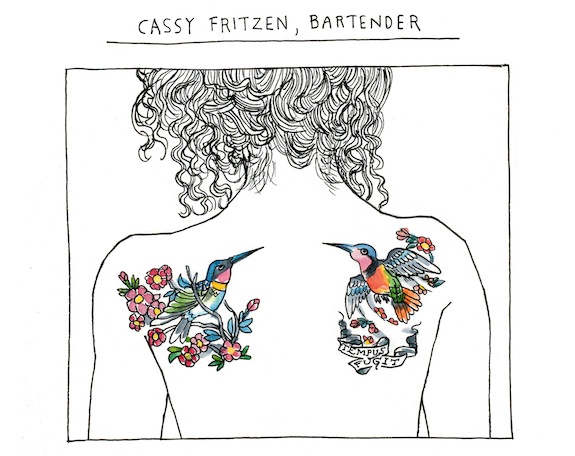
Hummingbird

by Zoë Pollock

The blog Pen and Ink renders beautiful illustrations of tattoos and the stories behind them. Sky Dylan-Robbins spoke to the project's creators, San Francisco illustrator Wendy MacNaughton and Rumpus managing editor Isaac Fitzgerald. On Fitzgerald's own homemade tattoo that reads “Forgive Me.”

Well that’s a long story … or a short one, depending on the moment. In short, the idea was some grasp at Catholicism, forgiveness and the Holy Trinity. It’s kind of hard to remember, though, because of all the whiskey.

MacNaughton describes her tattoo philosophy as "No regrets":

When people ask me what one of my tattoos means, my standard response is, “A youth well spent.”

(See Pen and Ink for Cassy's story of her hummingbird tattoos, above)

A Literary Escort

by Zoë Pollock

Caroline Leung interviewed her friend "Mary," a 22-year-old student, writer, and sex worker in Toronto. Mary's profession has provided great fodder for her creative writing:

Her job gives her stories every night: the man whose paltry inheritance pays for her visits, the curator with the white thong, the cable TV star with a penchant for double-ended dildos. She’s a discoverer of strangely-shaped birthmarks. She’s inspected a thousand bookshelves. She’s answered fucked up questions, and has been a solution for fucked up problems. She genuinely feels blessed.

Face Of The Day

Slide-Half-Drag-Miss-Fame

by Zoë Pollock

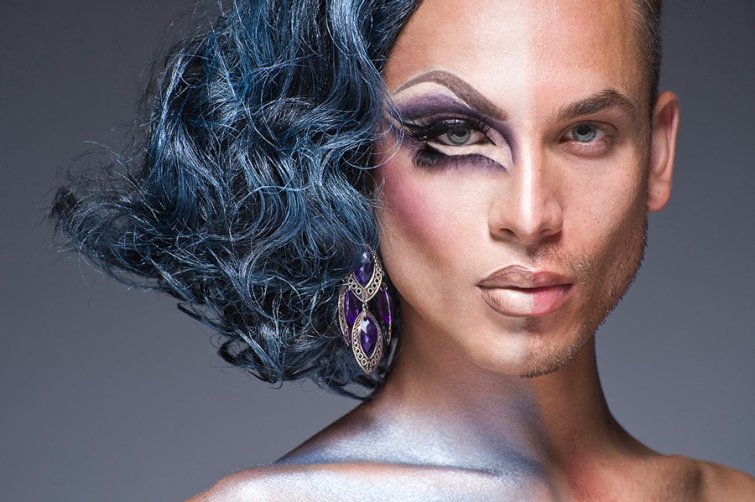
KC Ifeanyi applauds Leland Bobbé's latest project:

"Half-Drag" was born with a cadre of queens giving nothing but face, makeup or no (the images are composed in camera and are not two separate images joined together, with each transformation taking about two hours). "I thought by shooting really tight portraits it would enable me to accentuate the differences in the male female sides" says Bobbé. How right you were.

Understanding Assholism

by Patrick Appel

Malcolm Jones reviews Geoffrey Nunberg's new book, Ascent of the A-Word:

It is a word sparingly applied to women and almost never to children: “It’s easy to think of small children as little shits, since a predisposition to malice or cruelty can manifest itself very early on. But we rarely describe little children as assholes. You can’t be an asshole until you’re old enough to know better, and neurotic enough to sense that you ought to feel bad about it.”

A Story For Saturday

by Chas Danner

One of my passions is live storytelling, and Ed Gavagan is one of the most gifted and engaging storytellers that I have ever seen. Here he shares his remarkable origin story as a New Yorker, a kind of love letter to the city. It’s a bit longer than the videos we normally post on the Dish, but absolutely worth it:

If you want to know more about the world of live storytelling, a few months ago the author Nathan Englander wrote a nice post about his experiences with storytelling org The Moth, and in April the NYT did a survey of the New York storytelling scene here.

When Undergrads Overshare

by Matthew Sitman

Stephen Winzenburg, a college professor, reports on how Facebook and Twitter have "led young people to publicly announce intimate personal details without thought of the consequences," creating some awkard classroom and office hours interactions with students:

Allison walked into my classroom apologizing for missing two weeks of classes by saying she had been in rehab for alcoholism. Stan's excuse, stated in front of the class, was that drugs he was taking for a psychological disorder had caused him to oversleep. Greg said he didn't have his assignment done because he had to go to court after being arrested for punching a guy in a bar fight. Carly texted me that she couldn't make it to class that day because she was in the hospital after having a miscarriage.

A new advisee, Amy, was in tears as she asked if she could shut my office door. It was her first semester, and she had always had a bright smile on her face in the classroom. But in my office, she told me her grades were suffering because she was having an affair with a local married TV reporter.

There is, however, a strange corollary to the oversharing – students' deep aversion to any perceived criticism from a professor:

The most baffling aspect for a faculty member to adjust to is that the same young people who now tell you everything have conversely become much more sensitive about what you say to them. An instructor may make an innocent comment, often in response to what is perceived to be open communication, only to have the student take offense.

Mental Health Break

by Zoë Pollock

Friends don't let friends dance to Maroon 5:

An explanation for the blast from the past:

It appears as though somewhere around the time the "Chandler Dances on Things" meme was hot that someone made a "Moves Like Chandler" mashup video using that painfully ubiquitous Maroon 5 song and scenes of Chandler Bing dancing on Friends. The end result appears to have gone largely unnoticed by the internet — it has registered under 3,000 views as of this writing — but it made me LOL heartily enough when a friend sent it to me last night that I think it’s worth spotlighting now, since it’s doubtful that most of you reading this have seen it.

Learning To Think

by Zoë Pollock

Verlyn Klinkenborg's advice to young writers:

Before you learn to write well, to trust yourself as a writer, you will have to learn to be patient in the presence of your own thoughts. You’ll learn that making sentences in your head will elicit thoughts you didn’t know you could have. Thinking patiently will yield far better sentences than you thought you could make.

I’m repeatedly asked how I write, what my “process” is. My answer is simple: I think patiently, trying out sentences in my head. That is the root of it. What happens on paper or at the keyboard is only distantly connected. The virtue of working this way is that circumstances — time, place, tools — make no difference whatsoever. All I need is my head. All I need is the moments I have.