A Poem For Saturday

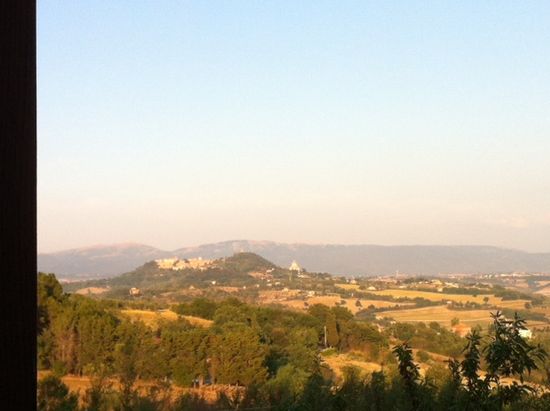
Field

Selected by Alice Quinn and Matthew Sitman:

"Girl Riding Bareback" by Chase Twichell:

These late summer afternoons are so like childhood’s
they take my breath and breathe it with me,
take it and breathe it without me.

Curved hot muscle of the neck, the chestnut shoulders
flowing through the uncut hay—

old August daydream come to visit
a place that looks familiar,
a field like the field it remembers—

arrows of sun falling harmless on a girl
and the big imaginary animal of her self.

(From Horses Where the Answers Should Have Been: New and Selected Poems © 2010 by Chase Twichell. Reprinted with the permission of the author and Copper Canyon Press. Photo by Flickr user Dr. Hemmert)

Sexually Unexceptional

by Zoë Pollock

We're losing our fertility edge:

For years, America was unusual among rich countries in having a relatively high [total fertility rate] of around 2.1, the so-called “replacement rate”, at which a population stabilises over the long term. European countries were typically below that rate, sometimes far below it. So it comes as something of a shock to discover that in 2011 America’s fertility rate was below replacement level and below that of some large European countries. The American rate is now 1.9 and falling. France’s is 2.0 and stable. The rate in England is 2.0 and rising slightly.

Oscar Wilde’s Day Job

Oscar_Wilde_Portrait

by Matthew Sitman

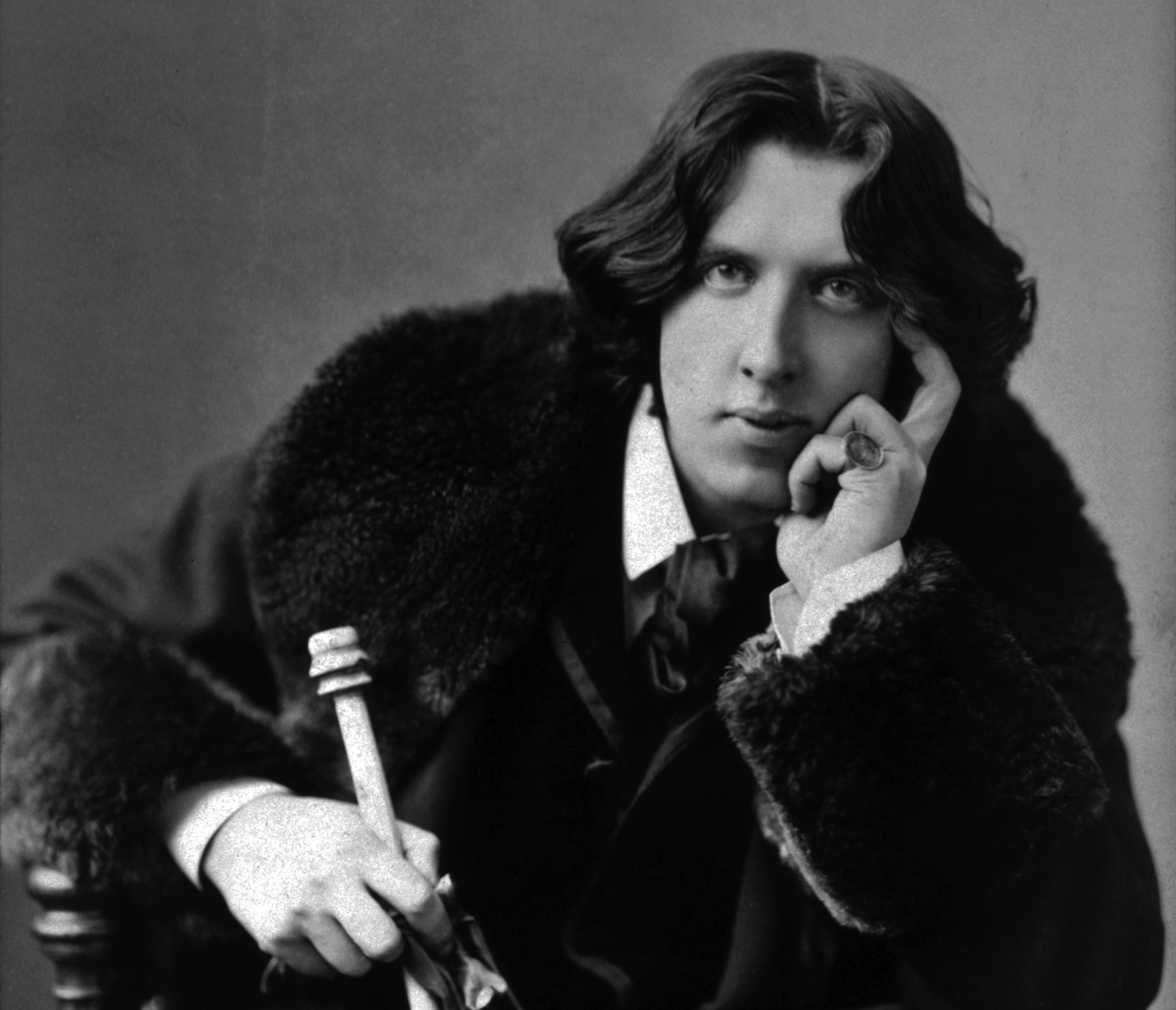
It turns out the dashing, mercurial Oscar Wilde once had a desk job – as the editor of a fashion magazine, The Woman's World. Though he was not well-suited for the rigors of office life, he did manage to finish some of his best writing during the period of his employment:

In between May 18, 1887, when he signed the contract with Thomas Wemyss Reid, who was general manager of the company, and October 1889, when he was handed his notice, Wilde managed to write the most brilliant and lengthy of his essays, including "The Critic as Artist," "The Decay of Lying," "Pen, Pencil and Poison," and "The Portrait of Mr W. H.," a speculation on Shakespeare's Sonnets (which later became a favourite of Borges), not to mention The Picture of Dorian Gray, which is often considered Wilde's best work and the defining text of the late-Victorian age.

It is difficult to imagine a serious author of our day performing a similar feat. Could Jonathan Franzen, that great enemy of superficial twittering, have written The Corrections while editing GQ, spending his weekdays in its offices? While numerous contemporary authors prefer unplugging the network cable from their laptops while writing, Wilde did the opposite thing and tried to have as many connections as possible, which he thought would contribute to his competence and inventiveness as an author.

(Photo of Wilde via Wikimedia Commons)

No Mr. Darcy

by Matthew Sitman

An independent Brooklyn bookstore features a dating sevice where literary loners can "choose their prospective romantic interests based on their list of favorite authors pinned to a cork board." It turns out women never chose Jack Kerouac as their go-to writer. Stephanie Nikolopoulos ponders the reasons:

I encountered a woman who openly disdained Kerouac — and all that he seemed to represent. It occurred to me that women saw him as a misogynist vagabond, the bad boy who had left their broken hearts in a trail of exhaust fumes. He didn’t like being tied down by responsibilities, or women. Perhaps those female readers who actually did like his writing feared adding Kerouac to their list of favorite authors for a literary matchmaking board because they didn’t want to end up with someone like him: a penniless drifter, a dreamer, an alcoholic.

If I am to be terribly stereotypical, I’d say the literary crush I hear most women talk about is Mr. Darcy, the cute fixer-upper worth the effort because of his money and social standing. Sure, maybe he’s a bit aloof at first, but in the end Mr. Darcy’ll put a ring on it. Of course, dating-savvy women wouldn’t necessarily include Jane Austen as their favorite author for the literary matchmaking board: they’re smart enough to know they might scare off potential male suitors if they implied they enjoy staying in on a Friday night to watch BBC films on television, possibly having to get out the smelling salts during the “pond scene” in Pride and Prejudice.

Recent Dish coverage of the perils of literary romance here.

The View From Your Window Contest

Vfyw_8-18

You have until noon on Tuesday to guess it. City and/or state first, then country. Please put the location in the subject heading, along with any description within the email. If no one guesses the exact location, proximity counts.  Be sure to email entries to VFYWcontest@gmail.com. Winner gets a free The View From Your Window book. Have at it.

Colonizing The Arts

by Zoë Pollock

Alexander Chee reveals how artist colonies provide a refuge for writers:

One of the burdens of life among fellow civilians is that when you enter the fugue state required for making art, you can’t really be a normal person. The good news is that at a colony, you’re not expected to—you’re expected to be civil to other colonists, and respectful, but not normal. It’s a huge relief. 

How the MacDowell Colony maximizes creative output:

The rules of MacDowell are very specific: You are forbidden to interrupt other artists at work. No approaching other studios without invitation. Your lunch is unobtrusively left at your door in a picnic basket; you can spend the night in your studio if you wish. So if you don’t want to talk to anyone, there’s no need, even when you’re walking the grounds—everyone understands how shattering it can be to have an idea fall apart at the end of a stroll because of someone who is only engaging in a brief compulsory social ritual.

The Hipster In Historical Perspective

by Matthew Sitman

Rachel Shteir reviews a new book on the history of sincerity, with insights stretching from Machiavelli to Millennials:

For several centuries, sincerity was alternately celebrated and reviled. Machiavelli advised princes that they need only look sincere, since it was unlikely that any peasants would get close enough to tell the difference. (This has a familiar ring.) Montaigne was the first to prize sincerity enough to write about himself as he really was. The most appealing seventeenth-century commentator on the subject is La Rochefoucauld, whose maxims zero in on how easy it is to fake sincerity and how hard it is to be sincere. For instance: “What usually passes for sincerity is only an artful pretense designed to win the confidence of others.”

The topic's relevance for today? Hipsters, of course:

Magill is right to explain the Millennials’ embrace of hipsterism as a sincerity-desiring defense for a generation that has “grown up in the shadow of a culture that values economics and consumption over the values of humanism and artistic enterprise.” In other words, as the Recession narrowed young peoples’ choices, they began to flail around for anything not connected to a dead-end job—even if the real thing thing they settled on was ultimately fake. (Wearing a wifebeater does not make you James Dean.) And yet Magill’s analysis of hipsterism is ultimately dissatisfying, putting into relief how anemic—even how ironic—hipsterism is.

Campaigning On Vagueness

by Gwynn Guilford

Greg Sargent rants about the Romney-Ryan's deliberate dodging of policy specifics:

[I]n what appear to be strategic leaks designed to mollify Republicans worried about the campaign’s lack of specificity, Romney advisers are explicitly confirming that all of this is part of a grand strategy to only signal general direction to the American people. It’s a guiding idea that specifics are a political peril to be avoided. The campaign thinks sharing details about what he’d actually do as president would be politically suicidal. As Steve Benen asks: “what does it say about the merit of Romney’s policy agenda if voters are likely to recoil if they heard the whole truth?”

Peggy Noonan thinks that, because of Ryan's involvement, keeping it vague won't work:

Ryan is associated with the word cutting. Republicans will have to make people believe the word to associate with him is "saving," that the Romney-Ryan ticket wants to save entitlement programs that aren't sustainable, that will in time collapse unless we impose ruinous taxes or continue with ruinous deficits. Republicans have just a few weeks to get across—on the stump, at the conventions—that they're trying to save Medicare, not kill it, that they're the lifeguard, not the shark.