No Paul Ryan Bounce?

by Patrick Appel

Gallup calls public reaction to the Ryan pick "among the least positive" that "Gallup has recorded in recent elections." Silver's view:

I think the smart money is on Mr. Ryan’s polling remaining mediocre throughout this election cycle.

He articulates his ideas well, but with a somewhat intellectual timbre that might appeal more to high-information voters than those who are less invested in politics and are more likely to be undecided in the race. And he has inherently something of a tough sell, since his policy preferences are reasonably far removed from those of the median voter. Mr. Ryan is also on the young side for a vice-presidential choice, and lacks foreign policy experience, so he may have more work to do than the average candidate in demonstrating his credentials.

The Business Of Mormonism

by Patrick Appel

In response to Adam Gopnik's recent article on Mormonism (covered here and here), Douthat considers the religion's relationship to prosperity theology:

[Mormonism] celebrates its businessman, but it makes extremely stringent demands of them at the same time; it allows that riches may be associated with virtue, but insists that the rich prove their virtue through consistent works of charity as well. Speaking as someone who spent some of my childhood in religious worlds influenced by prosperity preaching, the feeling you get visiting a Mormon ward is extremely different from the feeling you get from visiting a prosperity-oriented megachurch, and the attitudes toward money visible in L.D.S. exhortations and literature are different than the rhetoric you’ll hear from, say, Kenneth and Gloria Copeland. The link between piety and prosperity is present, but the emphasis on thrift, charity and solidarity is just as intense. 

Relatedly, Reuters examines the Mormon church's wealth and its sources.

The Medal Count, Ctd

by Chris Bodenner

A reader writes:

Expanding on the reader's point comparing US and EU medal counts – because of the way that qualifying for events is limited by country, the EU was able to send over 3800 athletes to the Olympics. This means the EU averaged about 0.07 medals per athlete. The USA was allowed to send 543 athletes, which means they averaged 0.19 medals per athlete, or almost three times as many as the EU. There is no way to say that US would have beaten out the EU if they had been able to send seven times as many atheletes as they actually did, but given that there is an element of chance to all sporting events, just the presence of more athletes from one country will increase the overall medal count for that country.  (As an aside, the host country sent more athletes than the US – 558 from Great Britain).

Another writes:

I cannot believe you haven’t considered medal count in relation to the population of the competing countries. (Being from Denmark, I take great pride in that type of comparison.) You can see from this link that the picture changes radically.

The US is 28th by that standard. Another reader:

It should be noted that the only really fair measure (fair being defined by the parameters on which nations actually compete) would be some kind of weighted medals per unit of GDP per capita. Fortunately, it turns out someone's done that medal tally. You can argue over the weighting scheme (how about market prices of each metal? You'd need to find a right balance for bronze…), but nothing else would really capture the right balance of objectivity and insight.

The US is 7th by that standard. Another:

If the University of Florida were a country, its athletes would have ranked 11th in the world medal count.

Update from a reader:

To the reader who cited the success of UF-affiliated athletes, I have to offer a counter from the West (Best) Coast. USC-affiliated athletes brought in 25 medals, while up in the north, Cal brought in 17 medals and Stanford another 16. California as a state brought in around half of the medals the US earned.

How The Medicare Wars Will Play Out

by Patrick Appel

Goddard says "Republicans are quietly circulating a fascinating case study on how they think candidates can overcome any Ryan drag." It is bit long, but it does an excellent job explaining the GOP strategy:

Sonny Bunch urges the Romney campaign to borrow a tactic from the video above:

[Romney] has picked a candidate who has a mother on Medicare living in Florida. If team Romney isn’t cutting an ad right now starring Paul Ryan’s mom assuring the olds that her boy’s plan isn’t going to do anything to the Medicare of anyone over 55 and that this plan will ensure their grandkids have a shot at some form of Medicare when they get old and that President Obama is a dick who is lying about her boy and oh, by the way, Barack Obama wants to cut $700B from Medicare, we should sue the campaign for negligence and incompetence.

Kate Pickert wonders whether this strategy will succeed:

Expect Romney-Ryan and Obama-Biden to compete to see who can demagogue health care the best. The effectiveness of either campaign’s message remains to be seen. Voters have traditionally trusted Democrats more than Republicans when it comes to Medicare and Social Security. But the health care reform war of 2009, which focused a lot of attention on the ACA’s Medicare cuts, left a stain on Obama that might be hard to remove.

Ezra argues that the real Medicare debate isn't about the cuts themselves:

Ryan’s budget — which Romney has endorsed — keeps Obama’s cuts to Medicare, and both Ryan and Obama envision the same long-term spending path for Medicare. The difference between the two campaigns is not in how much they cut Medicare, but in how they cut Medicare.

Avik Roy agrees. Jonathan Cohn thinks the "most significant difference between the two sides, at least for the short- to medium-term, is how they handle the savings these cuts generate.":

Obamacare puts the money back into the pockets of people who need help with their medical bills. A portion of the money is earmarked for children and non-elderly Americans, who, starting in 2014, will become eligible for Medicaid or receive tax credits to offset the cost of private insurance. A smaller, but still significant, portion of the money is for seniors. It helps them pay for prescription drugs, by filling the "donut hole" in Medicare Par D coverage. It also eliminates out-of-pocket costs for annual wellness visits, some cancer screenings, and other preventative services. Those benefits have actually started already: In the first six months of this year, according to the Department of Health and Human Services, more than 16 million seniors took advantage of the free preventative care provision.

Ryan's budget—which, again, Romney has repeatedly embraced and said he would sign—actually takes those new benefits away. The Part D donut hole would open back up. Access to free preventative care would vanish. And where would Ryan and Romney put the money instead? They say it's for deficit reduction. I'd say it's really for their big new tax cuts, which disproportionately benefit the wealthy. If somebody is "stealing" from seniors here, it's not Obama.

Maastricht’s Pot Hangover

by Gwynn Guilford

Maastricht is a Dutch town that was famous for its marijuana cafes. Zoe Chace and Robert Smith explore how the creation of the Eurozone impacted the town:

The single currency, along with all the other reforms that make it so easy to cross borders in the Euro Zone, led to an influx of foreign tourists coming to Maastricht to get high. "The name of our city is synonymous with cannabis," Onno Hoes, Maastricht's mayor, says. Hoes is unhappy about this. He says that the people who come to buy marijuana violate traffic laws, litter, and don't spend money anywhere but coffee shops.

This led to the controversial passage of a law making it legal to sell marijuana only to Dutch citizens. But this modified prohibition has brought its own negative economic consequences:

Today, "maybe 30 or 40 people come into the shop" every day, says Stephan Korsten, who owns a coffee shop. That's down from 1,500 a day before the new rules were put in place. Most of the coffee shops in the city have shut down altogether. "Our money is allowed to go to the Spanish banks," says the owner of another shop. "But the Spanish pot smokers are not allowed to come to the Dutch coffee shops any more."

Meanwhile, the illegal market for drugs is gaining popularity. Drug dealers like are selling marijuana again—not only to foreigners, but also Dutch residents who don't want to register at the coffeeshops.

Previous Dish coverage of the demographics behind support for the Netherlands' revised marijuana law here.

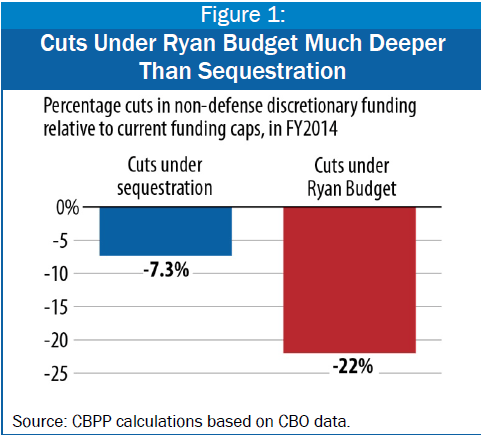
How Do Ryan’s Cuts Compare With Sequestration?

Ryan_seq

by Gwynn Guilford

Jared Bernstein puts Ryan's budget cut proposals in some useful context:

[L]ook at all the arguing around the sequestration—the automatic cuts scheduled to take effect next year.  Though there focus is exclusively the defense cuts, R[epublican]s in particular are fighting these cuts, including members who voted for them!  All the sudden, government spending is critically important for jobs!

Well, that holds for non-defense spending too, and it holds times a factor of three (see figure) for the cuts in the Ryan budget. So when you hear that we can cut taxes trillions beyond the Bush cuts, increase defense spending, and make up for it all by cutting spending and closing loopholes, think about the dust up were into right now over scheduled cuts majorities in both parties actually voted for. 

The Winner Effect

by Zoë Pollock

John Coates explores it in his recent book:

Biologists studying animals in the field had noticed that an animal winning a fight or a competition for turf was more likely to win its next fight. This phenomenon had been observed in a large number of species. Such a finding raised the possibility that the mere act of winning contributes to further wins.

But before biologists could draw such a conclusion they had to consider a number of alternative explanations. For example, maybe an animal keeps winning simply because it is physically larger than its rivals. To rule out possibilities such as this, biologists constructed controlled experiments in which they pitted animals that were equally matched in size, or rather that were equally matched in what is called ‘resource holding potential,’ in other words the total physical resources — muscular, metabolic, cardiovascular — an animal can draw on in an all-out fight. They also controlled for motivations, because a small, hungry animal eating a carcass can successfully chase off a larger, well-fed animal. Yet even when animals were evenly matched for size (or resources) and motivation, a pure winner effect nonetheless emerged.

The Canard Over Current Seniors

by Chris Bodenner

In a similar fashion as Anderson pressing Newt over false claims against Obama on welfare, Wolf Blitzer doesn't let the DNC chairwoman get away with obscuring the truth over Paul Ryan's cut-off age for Medicare cuts:

Guy Benson narrates:

[Debbie Wasserman Schultz] stubbornly rejects the (correct) premise that the Romney/Ryan Medicare reform plan exempts everyone over the age of 54, and plays fast and loose with numbers — conflating 55 and 65 on several occasions.  When she is brow-beaten into finally acknowledging — if not admitting — the truth around the 3:45 mark, she quickly realizes her "mistake" and reverts back into denialism.  When Blitzer asks her to specify exactly how current or soon-to-be seniors would be impacted by the GOP plan, she cannot.  Because they're not. 

… Dear Democrats, Medicare is slated to go bankrupt in 2024.  You say it's wrong for future seniors to be denied Medicare as it currently exists.  Okay, what's your plan, guys?

China’s Paranoid Patriotism

by Gwynn Guilford

Businessman and long-time China resident Mark Kitto explains why the world should fear a China-led 21st century:

The Communist Party of China has, from its very inception, encouraged strong anti-foreign sentiment. Fevered nationalism is one of its cornerstones.

On how the Party derives power from this setup:

To speak ill of China in public, to award a Nobel prize to a Chinese intellectual, or for a public figure to have tea with the Dalai Lama, is to “interfere in China’s internal affairs” and “hurt the feelings of the Chinese people.” The Chinese are told on a regular basis to feel aggrieved at what foreigners have done to them, and the Party vows to exact vengeance on their behalf.

Kitto's account of China's insularity and paranoia resonates with the much-discussed This American Life episode in which New Yorker China correspondent Evan Osnos spoke with American expatriate rocker-journalist Kaiser Kuo, one of the founders of the most popular rock band in China in the 1990s, Tang Dynasty. In May 1999, after the US bombed the Chinese embassy in Belgrade, Tang Dynasty was asked to perform in a "peace concert." From the transcript of the broadcast, Kuo recalls:

So they set up a stage in front of the whole thing. And they bussed in all these people who were wearing color-coordinated t-shirts that say [SPEAKING CHINESE]. Today China says no. And I realize that this is not a peace rally, that this is an anti-American rally….

So my hackles are up. And this camera swings into my face. And it's live, and I didn't know this either, at the time. And they ask me, you're an American. Tell me about your reaction to what's happened. And I said, I come here in the interest of peace. And I said, by peace, I don't mean just peace between the Kosovars and the Serbs, not just peace between the Yugoslav Federation and NATO, but also– and most importantly– peace between China and the United States after this tragic, tragic accident.

And at the word "accident," of course, everyone's face just blanches. The camera swings away. People start yelling at me. And then I can see that– I figured that my band mates who were nearby me were mad because they immediately distanced themselves from me.

Kuo left the band as a result. Reflecting on the experience decades later, he says:

I have yet to meet a single Chinese person, to this day– I mean, like somebody who hasn't at least spent their life outside of China– who doesn't believe that this was a conspiracy, that this is a deliberate act.