The Con In Cellular Contracts

by Zoë Pollock

Brian X. Chen wonders why more people don't use prepaid phones:

The iPhone with a two-year contract on AT&T, for example, costs $200 for the handset and then upward of $90 a month for the plan; over two years, including the cost of the phone, customers pay at least $2,360. With a prepaid plan on Virgin Mobile, which is owned by Sprint, the iPhone costs $650 for the handset, and then $30 a month, including unlimited data (the type of data plan that people are happier with, according to J.D. Power). Over two years, that would cost about $1,370. 

So why don't cell users go for the cheaper plan?:

“Right now, consumers don’t do the math, and they have a lot of resistance to paying $500 to $600 upfront, and they’d rather pay $100 upfront and then overspend,” [analyst Tero Kuittinen] said. “That psychology has worked for hundreds of years, and it’s still working.”

The Medal Count, Ctd

GT_FIELDHOCKEY_20120813

by Gwynn Guilford

It seems that there's a clear winner this year in the gay medal count:

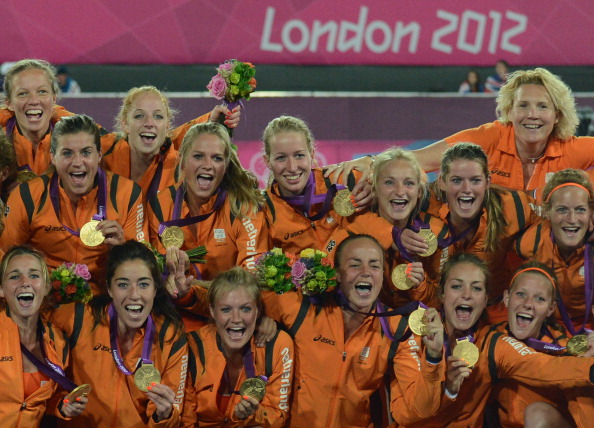
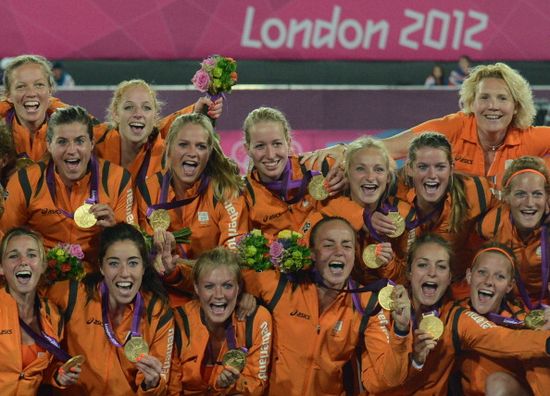
The Netherlands' hockey team took home the gold after a 2-0 win against Argentina. A quarter of Dutch women's field hockey team happen to be lesbians (Marilyn Agliotti, Kim Lammers, Maartje Paumen, and Carlien Dirkseke van den Heuvel), making them the most out team at the Olympics. Both Paumen and van den Heuvel scored in the final game.

In the US, the most popular gay Olympian – at least, as measured in gif tributes – was probably US soccer star Megan Rapinoe, who also took home the gold. Rapinoe came out officially shortly before the Games began:

“I feel like sports in general are still homophobic, in the sense that not a lot of people are out,” [Rapinoe] says…. Not that Rapinoe has been hiding anything; it’s just that no one ever asked her directly. “I think they were trying to be respectful and that it’s my job to say, ‘I’m gay.’ Which I am. For the record: I am gay.”

Another list of gold-winning gays here.

(Photo: Netherlands captain Maartje Paumen (C) leads teammates and coaching staff as they pose with their gold medals after the podium ceremony following the women's field hockey gold medal match between Netherlands and Argentina. By Indranil Mukherjee/AFP/GettyImages)

When STDs Become Untreatable

by Zoë Pollock

Last week the CDC announced that we're down to just one antibiotic that can effectively treat gonorrhea. Cord Jefferson translates:

In layman's terms, gonorrhea has gradually grown resistant to nearly every antibiotic we've created over the past several decades to destroy it. … According to a statement from the CDC's Director of STD Prevention, Dr. Gail Bolan, it is now "only a matter of time" until gonorrhea is resistant to our final, feeble antibiotic regimen. After that, we'll have nothing to stop it, which is not good news considering that 700,000 Americans come down with gonorrhea every year.

A scary thought considering gonorrhea can kill you and is very effective at making women infertile. Dan Avery argues "the AIDS epidemic is what might help us prevent a catastrophe":

Before AIDS, if you got a STD, your doctor gave you the cure and told you to tell your partners (wink, wink). But as AIDS cut a swath through society, learning how to tracking disease vectors became a life-or-death issue. … Before AIDS, medical professionals were not always diligent about sterility—and nobody bothered putting on gloves unless you were getting a prostate exam. Now, the importance placed on antibacterial soap, latex protection and other tools will help control the spread of gonorrhea, which can transfer from a patient’s genitals to a nurse’s hands to her eye.

That’s where some experts say we’re headed: working to control the spread of gonorrhea instead of administering a simple cure. Sound familiar?

Previous coverage of the gonorrhea threat here.

Ryan’s Sartorial Problem

GT_RYAN-SUIT_120813

by Chris Bodenner

A reader sizes up the new sidekick:

Never trust a guy with an ill-fitting suit. I'm absolutely convinced that Romney let Ryan borrow his sport coat right before the big announcement.  First off, I believe it matches the pants Romney's wearing. Secondly, do not for a second tell me that a public figure with a wife is allowed to buy such a horribly-fitted sport coat.  He looks like I did during my first communion, when I borrowed my cousin's blue blazer that was too big for me "but I'd grow into it".  Did Ryan not bring a coat?  I know he's the same age as Mitt's oldest son, but the idea of this dynamic where Dad loans him clothes for special occasions is too much for me.

I'll allow that Obama did wear some pretty funky mom jeans throwing out a first pitch at a White Sox game, but my god son, this is the biggest stage you've ever been on here, let's not look like your mom buys your suits from Mens' Wearhouse (2 for $99!).

There was also much ado about no tie. Fashion critic Robin Givhan observes:

[Ryan] was dressed in the uniform that President Barack Obama popularized during the 2008 campaign. Obama wore the tieless black suit whenever he was looking to convey authority and gravitas in an informal situation. It was his go-to look for late night talk shows, for instance. Obama accessorized this look with cool, with nonchalance. Ryan prefers the aw-shucks understatement of an earnestly furrowed brow.

Althouse pounces:

Aw-shucks? What's aw-shucks about Paul Ryan? "Shucks" — according to the Urban Dictionary — is a "backwoods" interjection. Obama has "authority and gravitas" wearing exactly the same thing as Ryan, because Obama brings "cool," but Ryan brings "aw shucks." Givhan is subtly approaching the line of racial stereotypes, isn't she? No, she's not. She's already labeled Romney and Ryan "white guys" (and she'll end the column by calling them "white guys" again). … Givhan wants to say they are over-controlled in their hair and their clothes, but the facts don't fit the preferred template. Neither man wore a business get-up, and each man stepped down from that level in his own way…

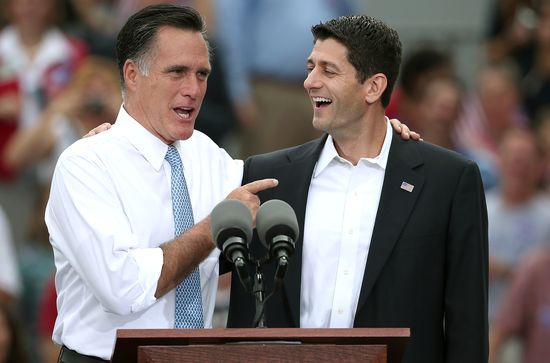
(Photo: Republican nominee Mitt Romney jokes with Rep. Paul Ryan (R-WI) after announcing him as the "next PRESIDENT of the United States" during an event announcing him as his vice presidential running mate in front of the USS Wisconsin August 11, 2012 in Norfolk, Virginia. By Win McNamee/Getty Images)

Is Paul Ryan A Neocon?

by Patrick Appel

Max Fisher reviews Ryan's foreign policy record:

Articles about Paul Ryan's foreign policy experience tend to be short, and to mostly talk about anything but. The Wisconsin congressman and now Republican vice presidential candidate has long focused on domestic policy, particularly social programs and the budget. Like Romney, he has little to no record on foreign policy or national security. Oft-quoted political analyst Larry Sabato called him "just a generic Republican on foreign policy" who, also like Romney, has tended to follow the party's lead. His one foreign policy issue seems to be overturning the Cuba embargo, the sort of thing that appeals to foreign policy dorks (like me) but does poorly among the GOP establishment and swing Florida voters, meaning that we will probably not hear much about it during the campaign.

Eli Lake reports that defense hawks are pleased with the Ryan pick:

Danielle Pletka, the vice president for foreign and defense policy studies at the conservative American Enterprise Institute, also praised the Ryan pick. “Unlike a lot of fiscal conservatives, one of the great things about Paul Ryan is he is not omni-directionally a budget cutter,” she said. “He understands the primary role of the federal government is the national defense and not the handing out of food stamps.”

Larison analyzes Ryan's foreign policy and concludes that "Ryan's views on foreign policy are drearily familiar":

Ryan gives every indication that he favors exporting our political principles abroad and using strongly moralizing rhetoric to berate other governments that reject them. Yet Ryan seems remarkably uninterested in funding diplomacy and development aid, and seems to conceive of U.S. power abroad mostly in terms of military strength. On foreign policy, Paul Ryan truly is a product of the era of George W. Bush.

Scott McConnell passes along the above tweet by the Weekly Standard's Stephen Hayes, who hears that Ryan has been taking foreign policy advice from neoconservatives.

Mental Health Break

by Zoë Pollock

Neha Prakash claps:

Looks like even Gotye knows his song, "Somebody That I Used to Know," is an overplayed, viral sensation that has spawned an entire genre of YouTube covers. So the singer decided to acknowledge the hundreds of piano-playing, harp-plucking, and guitar-strumming fans who paid tribute to the catchy tune. How? He made a whole new song from the covers.

Gotye calls it "Somebodies," and it’s just as annoyingly awesome as the original. He’s one of the first artists to take covers of their own song, and create new music. Talk about crowd-sourcing talent.

Ryan’s Monetary Radicalism

by Gwynn Guilford

Forget Ryan's fiscal irresponsibility for the moment – his monetary policies are just as foolhardy, if not more so. Dylan Matthews looks back:

In 2008, Ryan sponsored a bill repealing the requirement that the Federal Reserve act to reduce unemployment, and specifying that it should determine a specific definition of “price stability” and then act to promote that.

Matthews is referring to the Fed's dual mandate – it is responsible for addressing both inflation and unemployment. Ryan's bill would have made the Fed unauthorized to inject money into the economy to stimulate growth. In practice, this would mean that another round of quantitative easing – such as what the Fed will hopefully embrace in September – would be impossible. Brad Plumer explains exactly how radical Ryan's monetary views are:

Ryan has roundly criticized Bernanke’s efforts to stimulate the U.S. economy by buying up assets and injecting money into the economy. For instance, one way the Fed’s efforts are thought to work is by reducing the value of the dollar, helping U.S. exports. But Ryan has countered that there is “nothing more insidious that a country can do to its citizens than debase its currency.”

Ryan's track record adds more support to arguments in Patrick's post from earlier today that the GOP ticket's lack of concrete solutions to the unemployment problem is not merely oversight or incompetence – it's ideological. Take a look at Plumer's explanation of what Ryan endorses instead:

As an alternative approach, Ryan has suggested that the United States should return to “sound money” by anchoring the value of the dollar to, say, the price of a basket of commodities. This isn’t quite a return to the long-abandoned gold standard, but it’s a roughly similar concept. It would prevent the Federal Reserve from boosting the money supply in times of crisis, as the Fed did in 2008. And Ryan’s approach could have other downsides as well. As economist David Beckworth explained here, if the dollar was pegged to commodities like metals or soybeans, it would be greatly affected by outside forces, such as swings in Chinese demand. “For better or for worse,” he told FrumForum’s Noah Kristula-Green, “the political process can’t allow big swings in the monetary policy by outside forces.”

While Ryan has vaguely and recently disavowed his Ayn Rand allegiances, her philosophies are largely in line with Ryan's monetary stances, as Dave Weigel explains. Linking to Ryan's 2005 speech to the Atlast Society, he parses Ryan's statement that "I always go back to…Francisco d'Anconia's speech, at Bill Taggart's wedding, on money when I think about monetary policy":

In early chapters, d'Anconia pretends to be a Bruce Wayne-esque reckless playboy. He occasionally slips, because he's a Rand character. Thus, "Bill Taggart's wedding speech," when d'Anconia goes to the party of a businessman using state connections to make money. A left-wing magazine writer tells him that "money is the root of all evil."

That sets off d'Anconia, who launches rant about money that runs to 23 paragraphs. "When you accept money in payment for your effort," he says, "you do so only on the conviction that you will exchange it for the product of the effort of others. It is not the moochers or the looters who give value to money. Not an ocean of tears nor all the guns in the world can transform those pieces of paper in your wallet into the bread you will need to survive tomorrow. Those pieces of paper, which should have been gold, are a token of honor – your claim upon the energy of the men who produce."

As Jane Mayer and Tim Mak have both pointed out, his rejection of Rand's philosophy has mainly emphasized his disagreement with her atheism. Writes Mak:

“I reject her philosophy,” Ryan told the National Review in April. “It’s an atheist philosophy. It reduces human interactions down to mere contracts and it is antithetical to my worldview. If somebody is going to try to paste a person’s view on epistemology to me, then give me Thomas Aquinas…Don’t give me Ayn Rand.” But Ryan’s disavowal’s come after years of promoting Rand’s books and endorsing her in 2009 as doing “the best job of anybody to build a moral case of capitalism.”

Previous coverage of Ryan and his plan here, here and here.
A Place On The Spectrum

by Matthew Sitman

George Dvorsky celebrates the increasing acceptance of autism and Asperger Syndrome – and the cultural benefits that acceptance brings:

[A]utism has played a significant role in crafting much of what we consider to be modern culture — from the music and books we read, to the technological devices we all take for granted. The acceptance of radically different ways of thinking, it turns out, can be seen as an integral part of a rich and diverse overarching culture.

He lists those on the spectrum who have made notable cultural contributions:

A quick roster of known or suspected autistic artists who have made an impact in arts and culture includes such seminal figures as Stanley Kubrick, Andy Warhol, David Byrne, Brian Eno, Satoshi Tajiri (creator of Pokémon) and many others. Their contributions have become an indelible part of the zeitgeist. They're also making an impact in tech media, or what Silberman refers to as the geek landscape. Geek entertainment sites such as Wired and BoingBoing "are built for neurotypicals, but serve the aesthetic of autistic people as well.

Paul Ryan, Deficit Dove

Paul_Ryan_Taxes

by Patrick Appel and Gwynn Guilford

Over the weekend, William Saletan hailed the Ryan nomination as a victory for "real fiscal conservatives." Money quote:

Ryan understands that the longer we ignore the debt crisis and postpone serious budget cuts—the liberal equivalent of denying global warming—the more painful the reckoning will be.

Paul Krugman lights into Saletan and, more generally, the "self-proclaimed centrists, who want to show their 'balance' by finding a conservative to praise":

What [Saletan is] doing – and what the whole Beltway media crowd has done – is to slot Ryan into a role…of the thoughtful, serious conservative wonk. In reality, Ryan is nothing like that; he’s a hard-core conservative, with a voting record as far right as Michelle Bachman’s, who has shown no competence at all on the numbers thing. What Ryan is good at is exploiting the willful gullibility of the Beltway media, using a soft-focus style to play into their desire to have a conservative wonk they can say nice things about. And apparently the trick still works.

Fallows cautions against journalistic tropes commonly associated with Ryan:

One request: I hope that when reporters are writing or talking about Paul Ryan's budget plans and his overall approach, they will rig up some electro-shock device to zap themselves each time they say that Ryan and his thoughts are unusually "serious" or "brave." Clear-edged they are, and useful in defining the issues in the campaign. But they have no edge in "seriousness" over, say, proposals from Ryan's VP counterpart Joe Biden.

Ryan's soundbites and the media "cliche machine" obscure the deficit-growing specifics of his policies, argues Tomasky:

Ryan from time to time inveighs against deficits, and so he is unveiled to the American people, as The New York Times did over the weekend, as "intent on erasing deficits."As Matt Miller notes in The Washington Post, this is absurd and so indefensibly lazy as to defy comprehension. He would balance the budget in around 2040. What Ryan is actually "intent" on doing is slashing domestic spending to the bone and, most of all, giving massive tax breaks to rich people. This is the inescapable objective truth, if you've actually studied his plan.

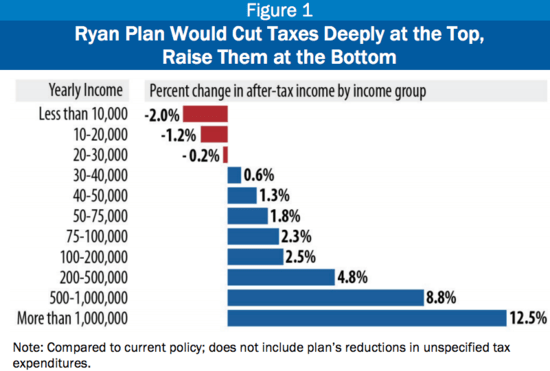
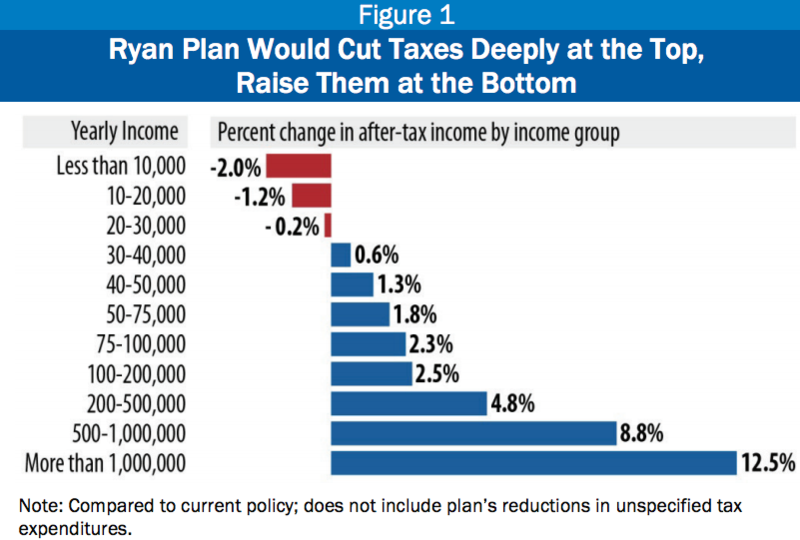
Suzy Khimm underscores that point with the chart above from the CBPP:

[T]he Ryan and Romney tax plans are cut from the same cloth: They both give big tax breaks to the wealthy without saying how they’d be offset. But Ryan’s plan makes the tax break for top incomes even bigger.

Ezra Klein looks at Ryan's spending-cut specifics:

The truth is that the Ryan budget’s largest long-term savings don’t come from Medicaid or Medicare or Social Security, or even Medicaid and Medicare and Social Security put together. They come from everything else. Ryan says that under his budget, everything the federal government does that is not Medicare, Medicaid or Social Security will be cut to less than 3.75 percent of GDP by 2050. That means defense, infrastructure, education, food safety, energy research, national parks, civil service, the FBI — all of it. Right now, that category of spending is 12.5 percent of GDP.