Not-So-Silly Season

by Patrick Appel

Weigel puts recent political spats in the best possible light:

There’s a kind of beauty to the Reid and welfare stories … They can only be explained or debunked with torturous policy analysis. Bill Clinton’s response to the welfare story (he appears in Romney’s ad as a sort of beacon of bipartisan hope and change) was a long explanation of how welfare waivers were actually implemented in the 1996 reform. “In Clinton fashion,” snarked Politico, “brevity is not at play.” Readers could skip the snark and read more about the policy. Not bad for a slow, stupid August.

Ad War Update: Attacking The Attacks

by Chas Danner

An absolute mud fight today as both campaigns and even an outside group got out ads refuting other ads. First the Obama campaign hit Romney's welfare attack ad in seven states:

Then the Romney campaign released an attack on Priorities USA's Bain-cancer attack ad, trying very hard to tie Obama to the Super PAC that supports him (size and scope of the ad buy currently unknown):

NPR's Frank James lays out the Romney camp's larger strategy:

The ad goes directly at what has been an area of strength for Obama with voters. Polls have consistently indicated that voters see the president as more likable than Romney. A recent Gallup poll also shows the president with a significant edge on the question of which candidate is more honest and trustworthy. The new Romney ad can be seen as an effort to weaken the president's advantage on that score.

Also today, Karl Rove's Super PAC American Crossroads got into a little Super-PAC-on-Super-PAC action, putting out a new web video in which they edit together as much as they can to imply Obama is responsible for Priorities USA's actions:

Also, regarding the issue of whether TV ads are really TV ads, it appears that Priorities USA is not even airing their controversial Bain-cancer ad yet, as they had indicated; it's just been getting played via the media. Priorities USA also launches another Bain attack ad:

Justin Sink reports on the intention for the ad's run:

Bill Burton, the former White House aide who heads Priorities USA, said Friday that the ad was not intended to replace controversial cancer ad and will ship to television stations next week. The cancer ad has not aired yet but is available online. Burton noted it has seen huge Web traction in swing states, saying that four of the top five states where people have viewed the ad are Florida, Ohio, Pennsylvania and Virginia.

MoveOn.org has a new TV ad out as well, apparently airing in the cities Romney will be visiting on the campaign trail. The ad accuses him of being a pickpocket:

Finally: "What will stop the madness?" A reader passes along a new web ad:

In 2010, [Florida State Rep.] Mike Weinstein produced what I considered the best-worst political ad of the election cycle. The political gods have smiled upon us and delivered this sequel:

Ad War archive here.

The Medal Count, Ctd

by Gwynn Guilford

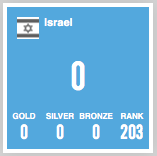
Lamenting Israel's big whiff in London, Liel Leibovitz reveals some startling numbers from Spain and the UK:

Israel’s state budget for 2011 was $61 billion. Its investment in sport for the same year was approximately $21 million, or 0.03 percent of the budget, one of the lowest rates Screen shot 2012-08-10 at 4.58.11 PMin the Western world. Even after agreeing to reduce its national spending to 122 billion euros this year, for example, Spain is still investing around 150 million euros in sport, or, relatively speaking, three times as much as Israel does. Spain has Rafael Nadal, a handful of gold medals, and every soccer championship imaginable to show for it. And Britain, after a disappointing performance in the 1996 Atlanta games—one gold medal, 15 in total—increased its investment from 60 million pounds to 264 million pounds; as of this writing, they are fourth in the overall tally of medals in London, with 22 gold, 13 silver, and 13 bronze.
Israel's minister of culture and sport is on it, though – she's setting up an official investigative committee to learn why Israeli athletes come up so consistently empty. Leibovitz applauds the move:

Most of the world has already realized that sports are more than just a pleasant pastime; they’re an indication of a civic society’s health.

According to a report by the global consulting firm Substance, investing in sports tends to empower underprivileged youth, bring about a reduction in crime, and contribute to overall economic growth. It’s sad that 65 other nations have ridden these insights all the way to the Olympic podium while the start-up nation did not.

While Israel wrings its empty hands, concern about the wisdom of lavish sports spending is growing in a country seldom associated with patriotic restraint: China. Elizabeth Economy reports on the Chinese people's growing discontent with excessive Olympics spending:

Some Chinese are concerned that the cost of an Olympic gold is too great, both literally and figuratively. People have reportedly calculated the financial cost of swimmer Sun Yang’s two years of gold medal-worthy training at approximately $1.57 million. Not a small sum in a country where per capita income still tops out at roughly $7,500.

Previous Dish coverage here, here and here. Image from MedalCount.com.

The Functions Of Fun

by Patrick Appel

Robin Hanson calls our inability to admit fun's utility one of "humanity’s biggest mental blocks":

We insist that we aren’t trying to do anything other that enjoy ourselves and have fun. We play an instrument or a sport because its fun, not to impress people. We dance because its fun, not to meet mates. We aren’t trying to get a promotion, no, when playing golf with our boss; golf is just fun.

His view:

Since we are intricately designed highly adapted and successful creatures, all of our major long-established behavior habits must have (had) important adaptive functions. And they must also be intricately designed, with many specific features that match the details of how such functions are best achieved. So, since we are inclined to spend a large fraction of our time on play and fun, such things simply must have important functions.

When Sport Is Culture

GT_REZAEIIRANWRESTLER_20120810

by Chas Danner

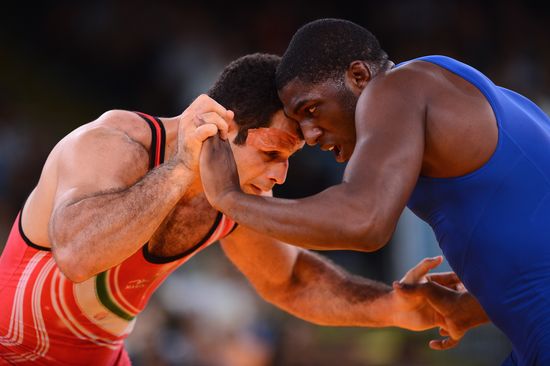
Iran has cleaned up at the Olympics in weightlifting and wrestling, so far taking home 4 gold and 7 overall medals in the sports. Max Fisher takes a look at how Persian history has played into this success:

The surprisingly rich academic literature on Iran's impressive records at wrestling, weightlifting, and tae kwon do consistently connects all three to an ancient Persian sport called Varzesh-e-Bastani [PDF], which literally translates to "ancient sport." To Westerners, Varzesh-e-Bastani might look like an odd combination of wrestling, strength training, and meditation. Though there's no known link between Varesh-e-Bastani and yoga, it might help to think of it as something like a Persian version of this athletic practice that's also a method of personal and community development — and a symbol of cultural heritage.

Though Western cultures typically treat wrestling as an aggressive, individualistic, and deeply competitive sport, traditional Persian Varzesh-e-Bastani emphasizes it as a means of promoting inner strength through outer strength in a process meant to cultivate what we might call chivalry. The ideal practitioner is meant to embody such moral traits as kindness and humility and to defend the community against sinfulness and external threats. The connection of weightlifting with character development might sound odd, but it's perhaps not so different from, for example, the yogic practice of Shavanasa, a meditative pose meant to bolster the spiritual and mental role of yoga's stretches and poses.

Meanwhile, the Guardian's Saeed Kamali Dehghan looks at how the Olympics have played out back in Iran, including the reactions of ordinary Iranians:

The country's success at the Olympics comes at a time of financial stringency and threats of war. But it is lifting the spirits of a nation gripped by sorrow and anxiety. "Despite all the pressure, there's at least something positive out there to talk about and that's the Olympics," [a college student named] Reza said. His comments are echoed my many of his countrymen. "It's so nice to see people discuss our success on public transport and share some joy," said Ameneh, a 22-year-old Iranian student. "It's also nice to see Iran's name mentioned in some positive context. In the middle of all these financial difficulties, we have almost forgotten how to be happy," she said.

(Photo: Yunior Estrada Falcon of Cuba (blue) wrestles against Ghasem Gholamreza Rezaei of Iran in the Men's 96kg Greco-Roman Quarter-Final on Day 11 of the London 2012 Olympic Games at ExCeL on August 7, 2012 in London, England. Rezaei subsequently won the Gold for his weight class. By Mike Hewitt/Getty Images)

A Recipe For Quality Healthcare? Ctd

by Patrick Appel

Atul Gawande recently argued that hospital chains can improve the American healthcare system. Austin Frakt is skeptical:

Gawande spends much of the article illustrating how the Cheesecake Factory manages to tight standards, increasing quality and lowering costs along the way. His claim is that, like chain restaurants such as the Cheesecake Factory, hospital chains are in a better position to achieve higher quality at lower costs by exploiting economies of scale, making investments that would not be feasible for smaller organizations.

I’m on board with Gawande that hospital chains should make such quality-improving, cost-lowering investments. I’m even on board that they could. I’m skeptical that they will, and the evidence from the past is that they, by and large, don’t.

Big Tobacco’s Olympic Onslaught

by Gwynn Guilford

Stanford med school professor Robert Jackler discusses the history of the tobacco industry's Olympic marketing tactics. From the Atlanta Olympics:

Perhaps the most comprehensive effort was the tobacco company’s “accommodation program.” [Philip Morris] managed to hermetically surround the Olympic site with hotels, restaurants and bars that would accommodate smokers. Over 700 establishments surrounding the Olympic Ring participated in the program, all despite the Olympic committee’s anti-smoking policies.

Jackler suspects this marketing approach continues today.

More Manic Than Dream Girl

by Zoë Pollock

Sady Doyle hopes for an end to the Manic Pixie Dream Girl (MPDG). She examines Ruby Sparks - a new film where an eccentric writer creates the girl of his dreams using his typewriter. He's then able to write her however he pleases:

If you think this relationship is going anywhere but to a scene of Ruby forced to shout “you’re a genius” over and over, tears streaming from her eyes, then you’re one of the world’s true optimists. For Ruby is a deconstruction of the Manic Pixie Dream Girl—the adorably quirky, indie-soundtrack-appropriate female character who exists solely to light up some white male sad-sack’s life.

For a historical overview of the MPDG, check out this MHB.