The Economics Of A Monthly Pass

Card8

by Zoë Pollock

Clyde Haberman wondered if a monthly NYC metro pass is worth it if you're on vacation for part of the summer. Michael Moyer actually crunched the numbers:

[A] 7-day unlimited pass only makes sense if you’re planning to take 14 or more rides a week—twice a day, weekends included. A 30-day unlimited pass works out after 12 rides a week, just in case you prefer to spend Sundays at home. To my surprise, a standard 10-ride-a-week commuter should always pay by ride.

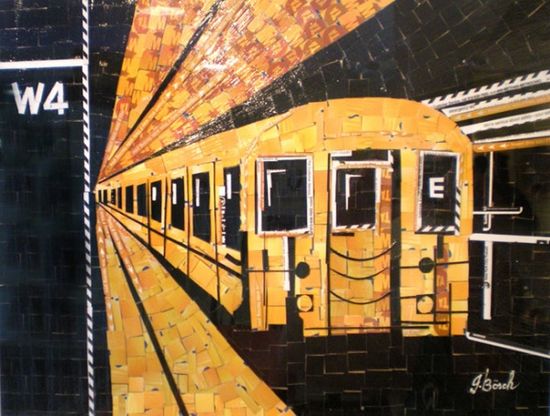
(MetroCard collage by Nina Boesch via Flavorwire)

Sex In The Land Of The Rising Sun

by Gwynn Guilford

In his review of Sexonomics: Profits in the Global Sex Economy, Jake Adelstein pulls out some highlights:

[T]he “fashion health” (euphemism for sexual massage to include fellatio/hand-jobs/frottage) industry, which is perfectly legal in most places, brings in ?678,000,000,000 a year (8 billion dollars).  That’s only a fraction of the sex industry. In addition to “fashion health” there are also “image clubs”, in which similar sexual services are provided but the women wear uniforms (maid, nurse, policewoman, office worker, pregnant mother etc) and the sex shop often has special facilities, like a subway car.  Think of mini-sexual theme parks and you have a good idea of what an image club is like.

On a more disquieting note, there's Japan's apparently booming teenage prostitution business:

[The book asserts] that 1 in 10 Japanese men has a “lolita complex” (pedophiliac tendencies) and that 15% of the male population has viewed child pornography, while over 10% of the male population owns child pornography. The statistics were not pulled out of thin air but come from a Japanese government survey. In addition, the book notes that there are an estimated 170,000 junior high and high school girls engaged in prostitution each year in Japan, charging higher than the standard market rate (30,000 yen) or roughly 50,000 yen ($600) per customer. The teenage prostitution market is estimated to be as high as 54,700,000,000 yen per year (approx. 70 million dollars).

Face Of The Day

GT_SIKH-PROTEST_120805

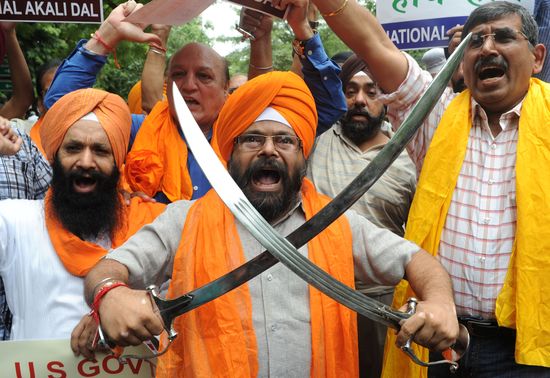
Activists of the National Akali Dal shout anti-US slogans during a protest in New Delhi on August 6, 2012, after a gunman in the US shot worshippers at a suburban Sikh temple in Wisconsin. Indian Prime Minister Manmohan Singh voiced shock August 6 at the killing of worshippers at a Sikh temple in the US, while Sikh leaders suggested American Muslims may have been the intended target. By Sajjad Hussain/AFP/Getty Images. A primer on Sikhism:

A monotheistic religion founded during the 15th century in the Punjab region, by Guru Nanak Dev and continued to progress with ten successive Sikh gurus (the last teaching being the holy scripture Gurū Granth Sāhib Ji). It is the fifth-largest organized religion in the world, with over 30 million Sikhs, making up only 0.39% of the world's population. Approximately 75% of Sikhs live in the Punjab, where they constitute about 60% of the state's population. Even though there are a large number of Sikhs in the world, certain countries have not recognised Sikhi as a major religion. The khanda symbol is like a "coat of arms' for Sikhs. In the symbol the sword to the left represents truth, and the sword to the right represents the willingness to fight for what is right – dharma (religion).

– C.B.

Do Internships Pay Off?

by Zoë Pollock

A new survey from the National Association of Colleges and Employers suggests that it helps if there's some money involved:

60% of 2012 graduates who worked a paid internship got at least one job offer, while just 37% of those in unpaid gigs got any offers. That’s slightly – only slightly – better than the offer rate for graduates who skipped internships entirely, at 36%.

The Weekend Wrap

Bird

by Matthew Sitman

This weekend on the Dish, Andrew took us on a stroll through Rasmussen-Land, contemplated an Obama landslide, noted that Fox News went there with Gabby, reminded us not to take VP advice from Bill Kristol, and wondered who would want the number-two job anyway. In Olympics news, Louis Menand pondered the cultural significance of the Games and we continued asking questions about their relationship to nationalism.

Literary and philosophical coverage abounded. Sean Wilentz considered the artist's role in politics, Elain Scarry argued for literature's ethical power, William Sieghart examined the consolations of poetry, Jamie James explored the connection between poetry and magic in Yeats' work, Sarah Rich asked where Sherlock got his hat, and Joyce Carol Oates held that Dickens was the most English of English novelists. Jim Holt told us who was his favorite philosopher, Ira Brent Diggers praised N.T. Wright's theology of engagement, and Adam Frank turned to Walker Percy to find out why we're lost in the cosmos. Read Saturday's poem here and Sunday's here.

In assorted coverage, Robert Rosenberger investigated how technology changes writing and Jay Rosen revisted what he thought of Wikileaks. Roger Ebert questioned the lack of contemporary additions to a recent greatest films list and Andrew O'Hehir applauded the subdued coverage of Larry Wachowski's transition to Lana. William Davidow searched history for the meaning of our dependence on tools, Joshua Yates inquired about the sustainability movement's sustainability, Nicole Pisulka profiled the man behind funeral home music, Tom Freston met General Butt Naked, Heather Havrilesky applauded TV characters moving beyond the typical tropes, and Doerte Bemme and Nicole D'souza showed the difficulty of diagnosing mental health problems in the developing world.

And of course, what would the weekend be without thinking about our vices? Cigarettes remained our most addictive drug and our assumptions about how best to serve wine got muddled. Check out our FOTDs here and here, MHBs here and here, VFYWs here and here, and the latest window contest here.

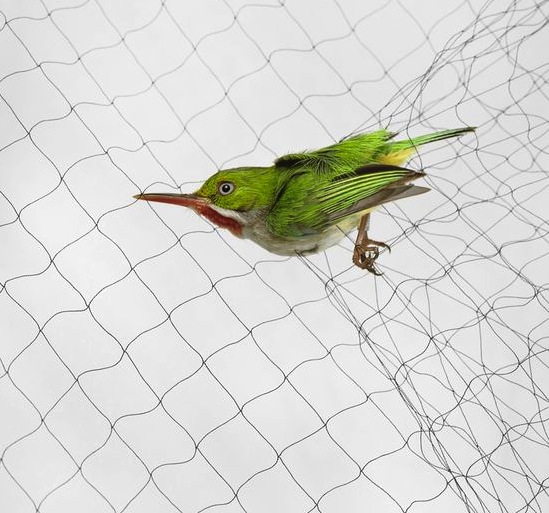
(Photo: Puerto Rican Tody (Todus mexicanus), 2009, courtesy of Todd R. Forsgren)

Will Legalization Cause A Surge Of Stoned Kids? Ctd

Photo (7)

by Chris Bodenner

A reader gets a highdea:

It's a modern version of the Johnny Appleseed story, only I call it Johnny Weedseed!  No, I'm not high – haven't been for many years – but I'm tired of the stupidity, and the damage done, by our prohibition on marijuana.  I think I might have a simple way to force the issue a bit.

If you have a seeds … plant them!  Plant them anywhere and everywhere. Drive down the highway and throw them out the window. Go for a walk in the woods.  Marijuana used to grow naturally all over this country, let's make that happen again!  Make weed so ubiquitous that it's impossible to control!  Make people deal with it as a normal, naturally occurring substance the way we used to before the "War".  Put dealers out of business, overwhelm enforcement resources, stop the insanity!

Another returns to the topic at hand:

I'm 100% in favor of marijuana legalization, but I think it's crazy to believe the ability for minors' to access it will go down upon legalization. Three points:

First, the most probable type of legalization is not going to be corporations growing acres of pot that is then sold in state-run liquor stores; it's going to be the legalization of personal cultivation on private property. That's a teen bonanza. Second, you are confusing two statistics: the relative availability of pot and liquor to teens on one hand, and the availability of pot to teen before and after legalization. Yes, pot is easy to get now. But that doesn't mean it won't be easier to get once it's legal, simply because it's regulated like alcohol.

And finally, the most important point: pot is easy to get because of its medium. You can get a whole party high with a ziplock bag of pot that can be stuffed in a jacket pocket, weighs virtually nothing, will never break, and doesn't have to stay cold. That's way easier to conceal, transport, and distribute than, say, a keg of beer. And legalization will not change that fact one bit.

Another:

Your dissenting reader is right; marijuana isn't totally harmless. But the reader doesn't really say much about the harms, so I wanted to help out. I'm on board with legalizing marijuana, but I'm also always on the look out for negative effects. I haven't come across much in the literature (I also support more research in this area), but I always make note of it when I stumble across something. My favorite, from the Journal of Medical Microbiology:

A cluster of tuberculosis cases was identified in Seattle, USA, among East-African immigrants with a history of illicit marijuana use (Oeltmann et al., 2006). Isolates shared identical genotyping patterns, which in the state of Washington was exclusive to this outbreak. Patients reported frequent ‘hotboxing’, the practice of group smoking of marijuana in a vehicle with the windows closed so that exhaled smoke is repeatedly inhaled. Indigenous practices such as the sharing of a marijuana water pipe (‘bong’) in Australia and using a common ‘chilam’ or earthen tubular pot filled with tobacco and burning coal among opium users in India have been reported to favour tuberculosis transmission (Munckhof et al., 2003; Mathur & Chaudhary, 1996). ‘Shotgunning’ or inhaling smoke from illicit drugs and exhaling it directly into another's mouth has been associated with M. tuberculosis transmission among a group of exotic dancers and their contacts (McElroy et al., 2003).

Teenage marijuana has also been linked to schizophrenia; there's a nice little overview here and a longer meta-analysis here (there is an association, but they're not necessarily saying that marijuana causes schizophrenia). I should note that these effects are pretty rare. I don't feel very concerned about the link between weed and tuberculosis.

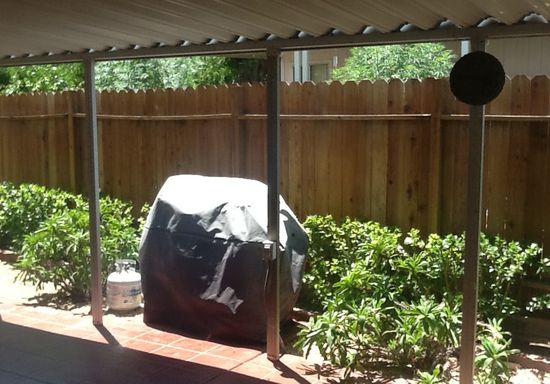
Another sends the above photo:

This is the view taken from my kitchen window in southern California. The temperature is 112 degrees F. I've been meaning to photograph this for you for about two years and I'm finally getting around to it. I live in a gated retirement community bounded by a golf course.  You'd never be able to pick out my window because all these double-wide mobile homes have covered patios/driveways that hide windows from an arial view. (Yes, even people who live in double-wide trailers read your blog.)

Note the tall plants peeping over my neighbor's fence. My neighbor looks like a Hell's Angel. He's in his mid-60s and has taken to growing 2 or 3 marijuana plants each year. There are three of them in this photo and I expect he's close to harvesting them. The plants are about 8 feet tall right now, very healthy and lush. Before my neighbor started doing this I'd never seen an actual plant in my 60 years. As you might expect, my neighbor is a very laid-back guy.  

I don't smoke pot. I'm still recovering from 30 years as a fundamentalist Christian and I'm a bit too uptight to tolerate the (in my experience) powerful effect. I did try a couple of times when I was in my 20s but I puked my guts out on both occasions. It was too strong for me. I had the same reaction to cigarettes.
The Frontlines Of Freedom

by Matthew Sitman

At NRO, Stanley Kurtz (who else?) argues that the Obama administration's Sustainable Communities Initiative is both an attempt to "abolish" American suburbs and the "missing link that explains his administration’s overall policy architecture." Matthew Cantirino provides the takedown:

In being so dismissive of efforts to rein in suburban sprawl (oddly thrown into scare quotes like it’s some kind of code word and not a widely-recognized popular image of our postwar landscape) and think more broadly about how our interaction with the natural world, Kurtz actually cuts off a powerful conservative argument. Every attempt to roll back or rein in what are now widely acknowledged to be major missteps in our built environment do not need to elicit visceral anger, or cries of collectivism and redistribution.

Rather than fantasize about losing our natural right to three-acre lawns, those on the right ought to be embracing calls for more modest and—yes—traditional forms of living. We can certainly debate the most efficacious ways of going about things like combatting wasteful, atomizing land use; I even suspect the specific policy Kurtz critiques does tend toward bureaucratic know-it-all-ism rather than genuine community engagement (the proposal to scramble municipal tax revenues around a region could certainly be a localist sticking-point). But it’s rather baffling for people who profess to be concerned about culture to jumpily exempt large swaths of its constitutive elements (like, say, the physical arrangement and daily routine of peoples’ lives, jobs, and commutes) from any sort of real criticism.

More on the suburbs' relationship to Christianism here.

Off-Grid

Littlepuffyclouds

My annual fortnight of coma begins today. I leave the Dish in the ever-more-capable hands of Patrick Appel and Chris Bodenner, the two indispensably industrious and creative ramparts for this entire contraption. They are joined for the next two weeks by Zoe Pollock and by three new voices here – Chas Danner and Gwynn Guilford, our new interns – and by Matt Sitman, our new literary editor. Please be polite: it's not easy stepping into the spotlight previously occupied by the boss, especially when you are the new hires. But they're new hires for a reason – and with each vacation, I find myself happily less necessary for the life of the place. So have fun while I'm gone.

See you when I come back up for air.

A Poem For Sunday

Moon2

“So, We’ll Go No More A Roving” by Lord Byron:

                   I
So, we’ll go no more a roving
   So late into the night,
Though the heart be still as loving,
   And the moon be still as bright.

                   II
For the sword outswears its sheath,
   And the soul wears out the breast,
And the heart must pause to breathe,
   And love itself have rest.

                  III
Though the night was made for loving,
   And the day returns too soon,
Yet we’ll go no more a roving
   By the light of the moon.

(Image by Flickr user Clicksy)