The Poet’s Power Over Reason

W.B. Yeats not only was one of the towering poets of the late 19th and early 20th centuries; he was a fervent devotee of magic, esotericism, and the occult. Jamie James explains the connection:

[H]ow could this supremely disciplined poet, a Nobel laureate, the founder and first director of the Abbey Theatre, a senator of the Irish Free State, ever have attached himself to such transparently bogus cults? Specifically, why would this undoubted genius dismiss the "fraud theory” about Madame Blavatsky after the debunking she had received in Madras? … No one reads the poetry of Yeats for its lucid logic; he despised rationalism. The principal source of Yeats’ power as a poet was his fabulous rhetorical gift. From the beginning he could turn an unforgettable phrase as deftly as a ballet dancer takes a leap. He devoutly believed that words were magic charms, endowed with an innate, transcendent power to raise poet and reader directly into a higher realm, just as the dancer may believe that the music lifts him soaring from the stage.

Death Be Not Loud

Nicole Pasulka profiles David Young, the man behind much of the easy listening music in funeral homes today:

Songs on Young’s CDs vary between "downtempo," "upbeat," and "spiritual." They bring to mind waiting for customer service. There are lots of wind chimes and bird sounds. There are no large leaps in volume or changes in meter, no unpredictable or complex chord progressions. This is music as single-issue sloganeering, a made-for-TV movie of sound. Young’s oeuvre is one of distillation, melding classical, opera, pop, and folk. It always sounds familiar, even when you hear it for the first time.

But Pasulka believes the Muzak-like sound is an appropriate way to mitigate grief:

A natural disaster or presidential election may go completely unnoticed when mourning a loved one, while the slightest gesture—a smile from a familiar-looking face in a crowd—can bring paroxysms of grief. Cutting back on stimulation, retreating away from anything that swells, or pains, or carries contradiction can be an act of self-protection or therapy. To play Young’s music at a funeral, because of its ability to either enable an exaggerated emotional response or be ignored entirely, is to choose not to choose.

A Theology Of Engagement

Ira Brent Diggers reviews the New Testament scholar N.T. Wright's latest book, How God Became King. Diggers praises its critique of both unthinking religious activism and forms of spiritual escapism:

As a seminary professor, I encounter these reductions in my own teaching, especially with first-year students. And I know my situation is not unique. There are students who rely on oversimplified theological formulas or vague notions of outreach and justice but who have very little knowledge of the Gospel narratives. There are also students who view salvation in strictly private and spiritual terms, often with the lone anticipation of leaving this world and going to heaven. And in all of this, there is very little appreciation for, much less understanding of, the relationship between the story of Jesus and the story of Israel and Israel’s God.

The reintegration of these stories—reading them as a unified narrative—is the key to Wright’s project. It is what allows him to avoid the formulaic reductions and false dichotomies that too often plague popular Christianity on the one hand and modern historical scholarship on the other hand. One senses that Wright is trying to put Humpty-Dumpty back together again. For if we are at all interested in hearing the Gospels as they were meant to be heard, then theology and politics must be seen as inextricably related and mutually informing. God does not decree from on high our engagement with the world. Nor does God enter the fray only to deliver us from the world. Rather, God enters the fray precisely to engage the world, restore creation, and draw human creatures into that healing, restorative enterprise. For Wright, this is what it means to say that God has become king.

The Mysterious Self


Adam Frank celebrates Walker Percy's guide for the perplexed, Lost in the Cosmos:

Walker Percy began his professional life seeking to be a doctor. Then a battle with tuberculosis in brought him to a second career as a successful writer. Both made Percy a keen observer of the fundamental human predicament. In one section he attempts explore "Why it is possible to learn more in ten minutes about the Crab Nebula…which is 6,000 light years away than you presently know about yourself even though you have been stuck with yourself all your life." We're forever a mystery to ourselves, Percy is telling us, and it makes everyone just a little bit crazy.

For more, Alan Jacobs excerpts a great bit on boredom from Lost in the Cosmos.

The Cinematic Canon

The highly-esteemed Sight & Sound poll, from the British Film Institute, just released a new list of the 50 greatest films of all time. Hitchcock's Vertigo has ended the 50-year reign of Citizen Kane. Ebert questions the list's lack of contemporary additions:

What surprised me this year is–how little I was surprised. I believed a generational shift was taking place, and that as the critics I grew up with faded away, young blood would add new names to the list. Kieslowski, perhaps. Herzog. Fassbinder. Scorsese. Lynch. Wong Kar-Wei. What has happened is the opposite. This year's 846 voters looked further into the past. The most recent film in the critics' top ten, as it has been for years, is Kubrick's "2001: A Space Odyssey" (1968). The two new films are silent: Vertov's "Man With a Movie Camera" (1929), and Dreyer's "The Passion of Joan of Arc" (1928). Murnau's great silent "Sunrise" (1927) is also on the list–three silents out of ten, and no Chaplin, Keaton or Eisenstein.

Ebert's personal submissions here.  David Edelstein's top ten here.  Sight & Sound's Ian Christie explains how the 10-year poll has evolved:

So does 2012 – the first poll to be conducted since the internet became almost certainly the main channel of communication about films – mark a revolution in taste, such as happened in 1962? Back then a brand-new film, Antonioni’s L’avventura, vaulted into second place. If there was going to be an equivalent today, it might have been Malick’s The Tree of Life, which only polled one vote less than the last title in the top 100.

Dana Stevens takes issue with the idea of a canon:

I’m not sure how many rounds of voting it takes to narrow the Sight & Sound ballots down to the final top 50 (I didn’t vote in the poll), but years of voting for critics’ circle awards has shown me how, early in the process, you often need to kill your darlings and start putting your weight behind whatever generally favored candidate you dislike the least. Maybe this is what bugs me about the reception of the Sight & Sound list: that the document’s status as a made object, a contingent result of countless small compromises, gets glossed over in the conversations about what belongs where.

Scott Tobias doesn't think the canon is as stodgy as it seems:

If you can imagine yourself going back in time and seeing any of these films for the first time, nearly all of them are mini-revolutions, breaking so firmly with what people expected cinema to be that they were often misunderstood or hated. There’s nothing "stodgy" about The Rules Of The Game, which had to be removed and drastically re-edited due to mass outrage and a government ban. Tokyo Story and The Passion Of Joan Of Arc violate the most basic rules of how a film is supposed to be shot, the former by breaking "the 180-degree plane" and the latter by abandoning spatial relationships altogether. 2001: A Space Odyssey attempts nothing short of accounting for existence itself—and doesn’t even get to the space part until after a long prologue about a breakthrough in ape evolution.  

As a parting tribute to Citizen Kane's #1 going up in smoke, Tim Carmody's essay from last year is worth revisiting:

Orson Welles was always embarrassed by Rosebud. "It’s a gimmick, really," he told interviewers, "and rather dollar book Freud." The mystery of "the great man’s last words" was, like the reporter Thompson charged with solving it, "a piece of machinery" designed to lead the audience through the fragmented plot.

The solution to the mystery is supposed to be that we, like Kane’s friends, lovers, and confidantes, discover that "the great man" is actually hollow inside. There is nothing there — no lost love, no moral truths, no imparted wisdom. "Rosebud" is just a missing piece in the jigsaw puzzle. It has no special value other than that it is missing. Kane the man, like Kane the film, is what Borges called it: a labyrinth without a center.

A Poem For Saturday

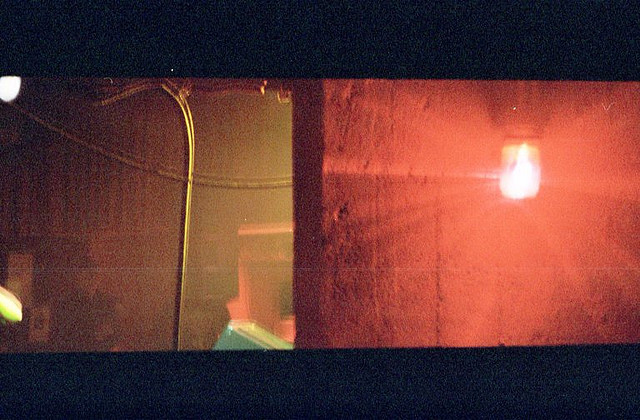
Redlight

"What Is This Journey I Am On" by Dorothea Lasky:

What is this journey
That leaves me
And finds me
On the dirt road
With my bloody mouth

And the other wolf
O his mouth aches in mine
O his mouth
Opens in red ribbons
And red windows

O the red room of his mouth
That I am sleeping so soundly in

(From Awe by Dorothea Lasky © 2007 by Dorothea Lasky. Reprinted with the permission of the author and Wave Books. Image by Flickr user D.B. Blas)

Now Hapless And Helpless

Heather Havrilesky applauds the rise of TV characters who are pushing the typical tropes forward:

On the vast majority of family shows, "Dad" isn't a person so much as a shapeless halfwit, fumbling confusedly with modern appliances, sputtering hopelessly in the face of tiny marital challenges, and just generally underwhelming friends, family and foes at home and at work. Strangely, though, this subhuman of limited charms, very little wisdom, and almost no capacity for grasping complex emotions is, nine times out of ten, remarkably smug about himself and his abilities. …

Thankfully, Louis CK came along and endowed the Hapless Dad with the self-loathing that he rightfully deserves.

On FX's "Louie," our hero embodies all of the fumbling and emotionally stunted behaviors of the standard idiot dad, but with generous servings of spite, dread and learned helplessness ladled on top. Instead of chuckling and shrugging and waving off his wife's nagging, Louie long ago alienated his wife, who pops up as his ex now and then, mostly to marvel at how lazy and disgusting and useless he continues to be. Louie doesn't blame her, because he himself is in a perpetual state of despair and horror at his own vileness and ineptitude.

Warm Your Whites, Chill Your Reds

Screen shot 2012-08-02 at 4.48.01 PM

Apparently we've got our assumptions all wrong:

Most red wines are served too warm; the "room temperature" rule originated in Europe, where room temperature is between 60 and 65 degrees Fahrenheit. On the other hand, chilled white wine came from the European cellar, where temperatures hover around 55 degrees Fahrenheit. In America, to achieve the ideal wine temperature you actually have to cool red wines and warm white wines, assuming your reds are stored in a room temperature wine rack and your whites are kept cold (too cold!) in the refrigerator. Average room temperatures can be over 70 degrees and most refrigerators are a frosty 35 degrees Fahrenheit. One critic recommends putting a bottle of red wine in the fridge for 45 minutes before serving while taking a bottle of white wine out of the fridge 30 minutes prior to serving.

So maybe it's the temperature ruining your Two-Buck Chuck:

When wine is served too warm, the dominant flavor can be that of alcohol, masking the subtler flavors of the wine’s ingredients. This effect is particularly noticeable with strong red wines that have a higher alcohol content to begin with. On the other hand, chilling a wine brings out greater astringency, which means the wine tastes sharp and tart as the flavor of tannins is emphasized.

(Wine cork portrait by Scott Gundersen via Christopher Jobson)