Chart Of The Day

A dramatic comparison of job creation under each president over the past 70 years – after the jump because of the large size:

Screen shot 2012-08-02 at 10.45.36 AM

Chris Cillizza lists the caveats:

Yes, Obama took office in the midst of a economic crisis of worldwide proportions. And, yes, the ongoing struggles of European economies have further complicated the Obama Administration’s attempts to dig the country out of this economic hole. And, yes (again), he has yet to complete his first term, making these comparisons (slightly) unfair. And yes (again, again), data can be bent to serve partisan political purposes — on both sides — and Obama and his team would argue that given what they inherited from George W. Bush, he has done as well as could be expected.

Still, in political campaigns, the simplest argument almost always wins. And one look at the chart above makes clear that Obama’s success (or lack thereof) on job creation is decidedly anomalous when compared to those who have held the White House before him.

The Dons, Ctd

Simon Critchley, Chair and Professor of Philosophy at The New School, lends to the lament of where higher education is today:

Universities used to be communities; they used to be places where intellectual life really happened. They were also places where avant-garde stuff was happening. And that’s – in England anyway – completely ground to a halt. Universities are largely sold as factories for production of increasingly uninteresting, depressed people wandering around complaining. There’s been a middle-management take-over of our education, and it’s depressing. So universities, like the university I was at – Essex, which was a radical, experimental, small university, but had a bad reputation but did some great stuff – have become a kind of pedestrian, provincial university run by bureaucrats.

(Hat tip: Exp.lore)

The Olympics And Nationalism

Artist-transforms-London-bus-into-athlete-doing-pushups-for

Stephen Walt contemplates his country while watching the Games:

I don't root for Ryan Lochte of the United States over Yannick Agnel of France because I know them both personally, and I happen to like Lochte more, or because my personal knowledge of the two tells me that Lochte is more deserving in some larger sense (i.e., he works harder, has overcome more obstacles, etc.). I have no idea, yet for some silly reason I get a certain pleasure when some American I've never even met does well. … This feature of nationalism is what Benedict Anderson famously meant by the phrase "imagined community." A nation is a group of people that imagines itself to be part of a common family, even though most of the members do not know each other personally (and might not like each other if they did).

Who knew Walt was chummy with Ryan Lochte? Poor Lochte may be in for a surprise neocon attack if he's not careful. (Update: Walt in fact doesn't know Lochte; he corrects my misinterpretation here.) National affinity gets more complicated when Olympians are either free agents or exclusively train away from their country [NYT]:

"There is no doubt that we are in the midst of the globalization of sport," said Christian Donzé, the national technical director for French swimming. "We’re living in very individualized societies, where people tend to create their own microcommunities and where athletes have their own agendas with, for example, their agent, their support team and their coach."

In a world where great talent in many domains flows across borders, sports are only a reflection of a larger, more powerful trend. At this post-modern stage, nationality can even be a symbolic choice for a star athlete. Maria Sharapova, who has lived and trained in the United States since she moved to Florida as a young girl to become a tennis champion, continues to represent Russia, the nation of her birth, because she wants to honor her parents, her roots and her Russian identity.

Alpha Abebe reflects on how the success of Ethiopian athletes will help shape the perception of a country "whose historical global image is as diverse and contradictory as Ethiopia’s":

[A]ll countries are dynamic, heterogeneous social and political constructions…right? So any effort to represent a country as something more stable and coherent than it is involves some level of fantasy, fiction and often subversion. But national images, however constructed and confused as they are, do matter. They matter in public diplomacy, they matter for tourism revenues, and they matter to individual identities. Unlike pop-stars and retail companies, countries cannot simply hire consultants and marketing firms to whip up a compelling global brand.

Czech artist David Cerny created the above sculpture:

[He] transformed a London bus into an athlete doing push-ups. He attached two gigantic electrical arms which lift the body of vehicle up and down, so it could do push-ups with resounding grunts and groans like the athletes you’ll see once the games begin. Dubbed as the London Booster, it will be displayed outside the Czech Olympic headquarters in London.

Watch it in motion here.

China’s Cult Of Impersonality

In examining the Bo Xilai scandal that has been gripping China, Perry Link explains the Communist Party's peculiar aversion to charisma in selecting its leaders:

The distinguished novelist and blogger Wang Lixiong has written an article arguing that at the end of the 1980s Deng Xiaoping sought to solve this problem by laying down a blueprint that called for two elite groups (one originating around Jiang Zemin, the other around Hu Jintao) who would alternate holding the political center for ten year periods, with the group not in power waiting in the wings. Each group, knowing that the other would get its turn, would have an incentive to be civil. Neither would need, or should want, a charismatic leader. Bland managers like Hu Jintao and Xi Jinping (a member of the Jiang group who is set to take over in fall 2012) would be ideal candidates to sustain the system: they are interchangeable parts whose function is to serve the Communist Party elite, the large group that endures through the shifts.

Bo bucked this trend in a way that made the party uneasy:

Enter Bo Xilai: charismatic, ambitious, impeccable of pedigree, and wealthy—but not one of the interchangeable parts in line for the top. Bo "feels contemptuous of Hu-Wen [President Hu Jintao and Premier Wen Jiabao]," said a scientist I called, "and was convinced that he should be where [heir apparent] Xi Jinping is." This person paused a moment, then added, "And to be fair, Bo has a point. The others are mediocrities." I asked if Bo’s Maoist "leftism" is sincere or only a way to exploit popular sentiment; Bo is known, after all, for wearing Western suits and driving Ferraris. "80% sincere," the scientist answered.

Holy Mola

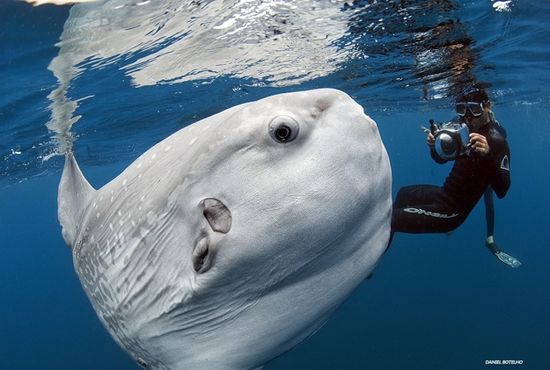
Mola Mola

Photographer Daniel Botelho posted the above photo on Facebook this week and set off mola  mania. The world's heaviest bony fish, mola (aka sunfish) can grow to 14 feet and weigh as much as 5,000 pounds. Though they rarely venture into California waters, where Botelho encountered this one, they're appearing in increasingly high numbers. But they're still hard to catch on film:

Though molas are docile and appear sluggish, they're difficult to photograph because they're deceivingly swift and do not generally tolerate divers who try to get close. "There were more than five in the same spot but once I got in the water, as stealthily as I could, they all went out fast," Botelho explained. "But one specific fish stopped to check what I was, and God knows why the fish decided to follow me. People in the boat said it seemed like a dog following his owner."

Mola expert Dr. Tierney Thys explains why they look so odd:

It’s in the same order as puffer fish and porcupine fish, but it’s one of the most evolutionarily derived fishes in the sea. So, it has a cranium more like what ours looks like, along with fewer vertebrae; its spinal column is actually shorter than its brain…. Their design has evolved to be more like an armored tank with a stiff body as opposed to a streamlined torpedo body like other fish. They just look like big puffer fish on steroids. They use mostly their fins for propulsion as opposed to wagging their body. They look lazy, but they’re really industrious. They dive up and down as much as 40 times a day. We recorded them off the Galapagos Islands diving as deep as 1,100 meters [3,600 feet].

(Photo courtesy of Daniel Botelho)

Correction Of The Day

"An obituary about the author Gore Vidal in some copies on Wednesday included several errors. Mr. Vidal called William F. Buckley Jr. a crypto-Nazi, not a crypto-fascist, in a television appearance during the 1968 Democratic National Convention. While Mr. Vidal frequently joked that Vice President Al Gore was his cousin, genealogists have been unable to confirm that they were related. And according to Mr. Vidal’s memoir "Palimpsest," he and his longtime live-in companion, Howard Austen, had sex the night they met, but did not sleep together after they began living together. It is not the case that they never had sex," – the NYT.

The Daily Wrap

GT_GABBYDOUGLAS_20120802

Today on the Dish, Andrew broke down the basics about taxes and deficits and then went after Romney's plan for totally ignoring them. He also took apart Amy Siskind's fatuous rant against his purported sexism and argued that Romney's position on defense is out of tune with reality. He also sided with Joe Klein on Romney's slurring of Palestinian culture and denounced the Vatican's silence on torture. The Obama administration may have slipped on torture themselves. And a reader got whiplash from Andrew's moodswings.

In the horse race, Obama hit an all-time high in the electoral college projection, his campaign launched a nine-state offensive against Romney's tax plan, and Paul Ryan continued to be full of it. While Jon Stewart skewered Reid, readers defended him – possibly because of their ethical double-standards. On the international scene, the slaughter continued in Syria, Vietnam began weighing legal protections for its LGBT citizens, and many "developing" countries graduated to first-world wealth.  Jerry Bremer's post-Iraq career segued into painting – for example, landscapes with subliminal cigarettes in them. And while Eugene Ulman found the "lost Jews" of Zimbabwe, David Brooks rooted for the Chosen gymnasts.

Speaking of the Olympics, the ancient Games involved sex, gore and sports, and despite its flatulence, Ann Romney's horse didn't offend the Brits. A reader added the much-needed women-loving-Megan Rapinoe perspective to the debate about objectifying female Olympians. Also in gay, readers reflected more on Gore, as did one of his close friends, while three books clarified Christianity's reaction to homosexuality. And straight couples thought Chief Justice Marshall's Goodridge decision had a deep-yet-secular ring to it.

In assorted coverage, sharks made the cut for the horrific sex squad of the animal kingdom, Hanna Rosin stood up for non-breastfeeders, Jessica Valenti argued that elephant ears build character, and Alexis Madrigal asked folks to back off Jonah. Jay Rosen urged readers to check out Taibbi more often, academic dons got props, and Japan loved its fax machines. Slightly dirty water beat out the superclean alternative, lunar US flags got bleached, and Puff the Mutant Dragon broke down the chemistry of uppers. FOTD here, MHB here and VFYW here.

G.G.

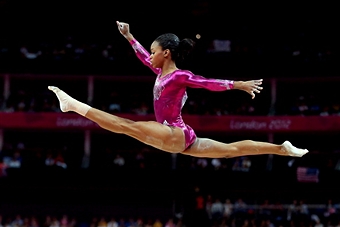
(Photo: Gabby Douglas of the United States competes on the balance beam in the Artistic Gymnastics Women's Individual All-Around final. Her performance won her the gold, making her the first black gymnast to claim the prize in the All-Around. By Streeter Lecka/Getty Images.)

Mason Jars And Marriage Equality

Straight couples are turning to the Massachusetts Supreme Judicial Court ­decision legalizing gay marriage as philosophical inspiration for their own secular weddings:

With a little deft editing, respecting both the listener’s patience and the layperson’s general disinterest in legal footnotes, a bride- or groom-to-be could stitch together some of [Chief Justice Margaret H. Marshall]’s most elegant observations into an affirmative case for marriage that even the ­Westboro Baptist Church would not protest. As support for gay marriage increased, that softer packaging of [Goodridge v. Department of Public Health]—and the universal themes it advances—found a foothold in the weddings canon.

It was Marshall’s line about “yearnings for security, safe haven, and connection” that grabbed Bethany Albertson when, in 2008, she started looking online for material to use in her secular ceremony that fall. … “For us, the thing was ‘How do you make it meaningful when it’s not a religious ceremony?’?” says Albertson. “That opinion had to make the case why civil marriage was important.”

A taste of Marshall's opinion:

Civil marriage is at once a deeply personal commitment to another human being and a highly public celebration of the ideals of mutuality, companionship, intimacy, fidelity, and family … Because it fulfills yearnings for security, safe haven, and connection that express our common humanity, civil marriage is an esteemed institution, and the decision whether and whom to marry is among life’s momentous acts of self-definition.

Vidal, Ctd

Another glimpse at a complex figure from a close friend for 64 years:

He used to have a lot of girlfriends back in the day, but for much of his life, Gore lived with a very nice guy by the name of Howard Austen. I’d say they were together for about 45 years. They split their time between Los Angeles and their villa in Italy. Howard died of lung cancer in 2003, and it was very hard for Gore. Howard was a professional singer with a fabulous voice, and Gore had all these tapes of him singing popular show tunes. Gore would want me to come over late at night, so he could play these tapes over and over and over again. He would play this thing 10 or 15 times with tears in his eyes, because he’d miss Howard so much. All of a sudden it was 5 a.m., and there we were, still listening to Howard’s tapes…

When he was back home in Los Angeles, Gore spent a lot of time at the Beverly Hills Hotel. He sat in the polo lounge for two or three hours and then he would sit at the fireplace for two hours, then he would go to the little new bar in the front overlooking the parking lot for another three or four hours. He’d have 10 different drinks. I’m talking about scotch and wine. He’d drink that expensive port at the hotel that cost $25 a shot.

Ad War Update: Math And Taxes

The Obama campaign released a nine-state TV ad hitting Romney with the independent study of his tax plan and tying it to what little we know of his own taxes:

For its part, the Romney campaign released a Virginia-focused "didn't build that" web ad that also references the misleading "it worked" rhetoric. And the following TV ad from Romney suggests that Obama doesn't care about Florida's economy (the scope and size of the ad buy is unknown):

NBC's First Read has a solid rundown of ad spending so far:

While it’s technically correct that the Obama campaign is outspending the Romney campaign in TV advertising in the battleground states, you can’t say the same thing when adding all the outside groups.

Right now, Team Romney — the campaign, the RNC, and all the GOP-leaning outside groups — is outspending Team Obama (campaign, DNC, outside groups) this week by a nearly 2-to-1 margin, $25 million to $14 million. That $25 million, in fact, is more than we’ve seen from one side during any other week this cycle. Here’s the full breakdown on this week’s ad spending (from July 30 to Aug. 5), according to data from SMG Delta: Obama $12.8 million, Crossroads GPS $9.7 million, Romney $8.1 million, Restore Our Future $3.8 million, RNC $2.5 million, Priorities USA $1 million, American Crossroads $940,000. Note that Crossroads GPS is outspending the Romney camp right now, and the Koch Brothers’ Americans for Prosperity has booked a multimillion buy slated to begin next week.

A lonely exception:

[O]ne place where Team Obama has a definite ad-spending edge over Team Romney is on Hispanic media — a total of $6.1 million to $521,000.

The campaigns and outside groups aren't just buying up TV airtime this fall; online ad space is running out as well:

Search ads and display ads are more plentiful and are still available to campaigns. The ads in question are those 15- and 30-second spots that automatically play before videos on YouTube, Yahoo, AOL and other sites — and they’re either sold out in some markets or will be auctioned off at record prices, insiders tell POLITICO.

Lastly, MoveOn.org is a happy warrior when it comes to painting Romney as rich and out of touch (the scope and size of the ad buy is unknown):

Ad War archive here.