Laurie Winer explores LDS history and scriptures, finding that the church "possesses a remarkable adaptability that keeps it alive and thriving." To believe Mormonism is true depends on a mindset that downplays intellectual openness in the name of obedience, even obedience to doctrines that might change in an instant. She argues the peculiarities of the religion help explain Romney's etch-a-sketch beliefs:
Aside from the trinity of the Godhead, the main difference between Mormons and
other sects of Christianity is that their founding is recent enough to have been extensively documented by verifiable witnesses and historians at every turn. Mormonism therefore requires a different kind of faith than does other Christian sects. It requires a very special obedience. It asks its members not to read, and not to believe, wide swatches of their own country’s history.
What this means in practice:
Young people born into the church are actively encouraged to read only the official, neutered version of Mormon history, which omits virtually all of the good stuff, all the messy moral complexity. Perhaps that is why the Mormons of the twentieth and twenty-first centuries have cultivated a certain bland exterior, keeping the messy and complicated submerged. Apostay is a very serious matter and often involves the cutting off of all family and friends. Worrying about the past can destroy your future.
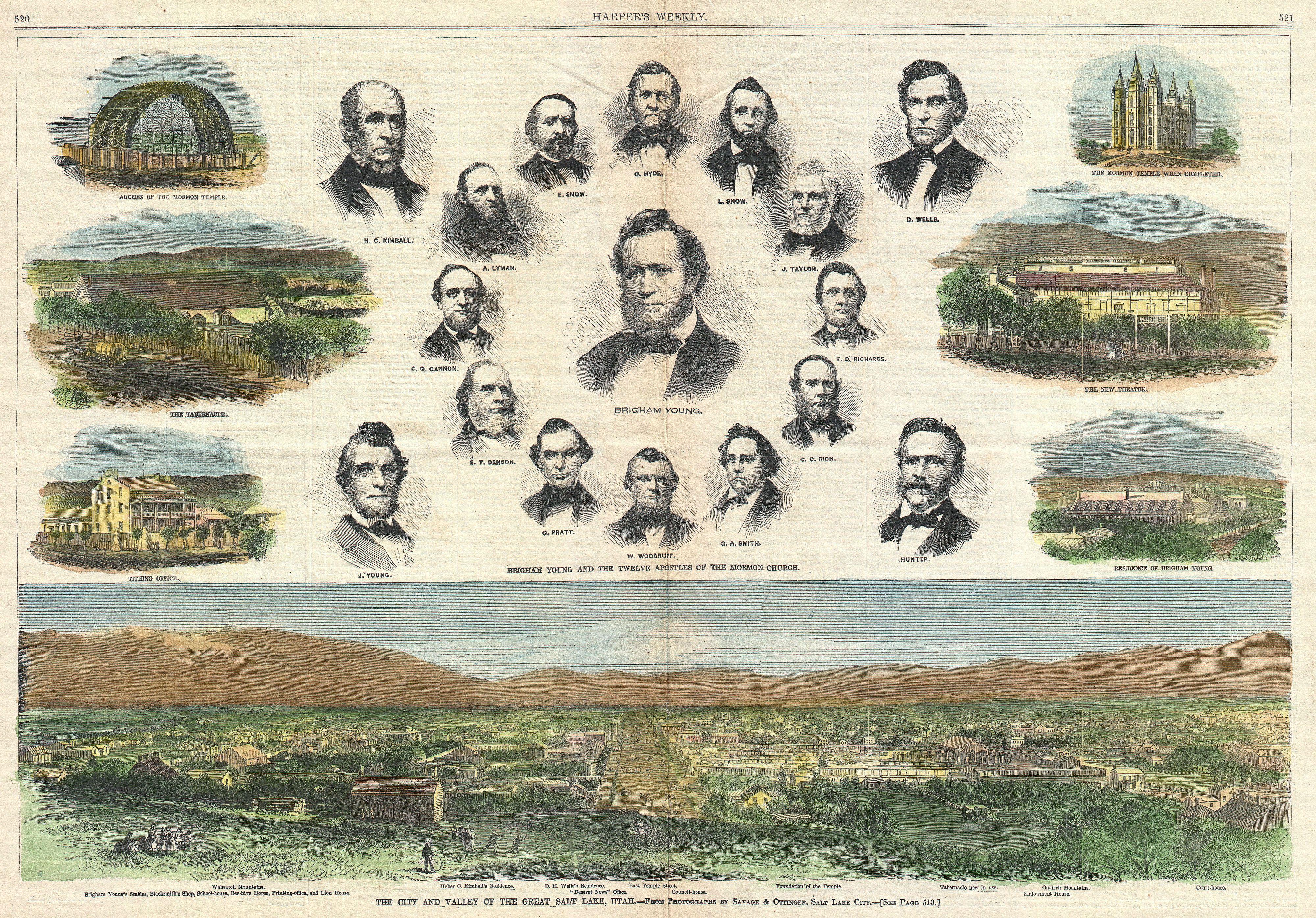
(Image: "A handsome view of Salt Lake City, Utah from the August 1866 issue of Harper’s Weekly. Offers a panoramic view of the city as well as six smaller views of important Salt Lake City buildings, including the Tithing Office, The Tabernacle, the Arches of the Mormon Temple, the Mormon Temple when Completed, the New Theater and the Residence of Brigham Young. Also offers portraits of sixteen important early leaders of The Church of Jesus Christ of Latter-day Saints, including Brigham Young," via Wikimedia Commons)
 The Dish