Jacob Mikanowski contemplates the ubiquity of the headshot:
For a long time, photo portraits were restricted to a few places: in wallets, on ID cards and passports, in police files and high school yearbooks, on walls and desktops, on tombstones and wanted posters. Now they're everywhere: on Facebook, Twitter, and Tumblr dashboards, they follow us around in a constantly updating cloud. Photography has become a means of autobiography and a broadcast art. It's a way of keeping track what we wore last year and telling the world what we did last night. But as portraiture has become ubiquitous, it hasn't gained in power. The ability to pierce or possess the viewer is still given to only a few images out of the billions.
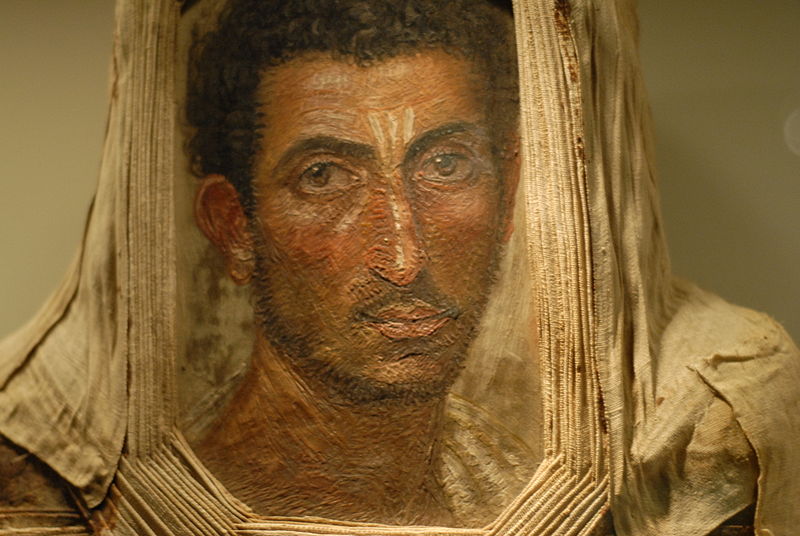
Portraiture stretches back to Fayum mummies:
The Fayum portraits are the earliest images of recognizable individuals that we have. Painted with colored beeswax on linen or thin planks of wood, they were made two thousand years ago for the residents of an Egyptian oasis town as likenesses of the faces of their beloved dead. Placed as a sort of mask on the head of the mummified body, the portraits served a dual purpose: as mementoes for the bereaved family (they were kept in the home, along with the mummy, for seventy days before burial) and as a means of identification for the dead on their journey to underworld. They were, in a genuine sense, passport photos to the afterlife.
(Image: a Fayum mummy portrait via Wikimedia Commons)
 The Dish