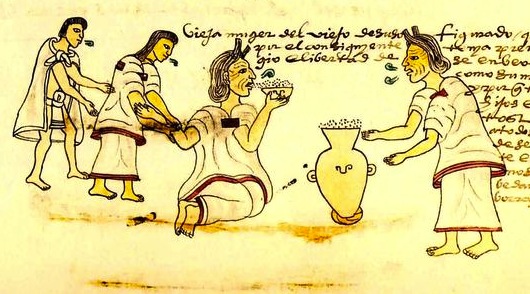
Kurt Hollander profiles pulque, Mexico City's traditional drink derived from the fermented sap of the maguey, a type of agave:
During the Aztec empire, and even centuries before, pulque was considered nectar of the gods and a panacea for mortals. Senior citizens were allowed to drink pulque to warm their blood and help them sleep, and women drank it after giving birth to help them recover their strength and to produce milk. Sick people were administered pulque mixed with herbs and seeds to help ease pain, heal wounds and treat venereal diseases, and it was also used as an anti-inflammatory. During times of scarcity, pulque served as a food substitute due to its high level of proteins and carbohydrates, and substituted for water during droughts.
Precisely because pulque was such a potent quaff, commoners were prohibited from drinking except during special celebrations: the end of the harvest, rain ceremonies, marriages, births, funerals and religious feasts. The celebrations of the dead were five-day binges in which everyone was encouraged to drink til they dropped, it was prohibited to beat or insult drunks, as they were under the protection of the pulque gods. During the festivals dedicated specifically to pulque, a giant stone rabbit representing a pulque god was filled with the liquid and everyone drank from straws stuck in its head. There were four hundred rabbit gods, each representing a different state of pulque intoxication (such as the head-opener, the hanger and the drowner).
Today, pulque is "considered bottom-of-the-barrel alcohol and the few pulquerías that still exist in Mexico City are located in the poorest neighborhoods and are frequented by the lowest social strata."
(An illustration from Codex Mendoza depicting elderly Aztecs smoking and drinking pulque via Wiki Commons)
 The Dish