Claire O'Neill taste-tests civet coffee so you don't have to:
The beans are literally gathered from animal feces. And for the purposes of empirical research, I got my hands on some for a taste test. I bought two little samples (costing more than $100) from two companies. Not wanting to screw up this pricey cup of joe, I brought the beans to a nearby cafe, Chinatown Coffee, to have the baristas do their magic.
At first sip, I wasn't wild about it — though maybe I would have thought differently if I hadn't known its provenance. Tim Carman, food writer at The Washington Post, did his own taste test earlier this year: "Petrified dinosaur droppings steeped in bathtub water" is how he put it.
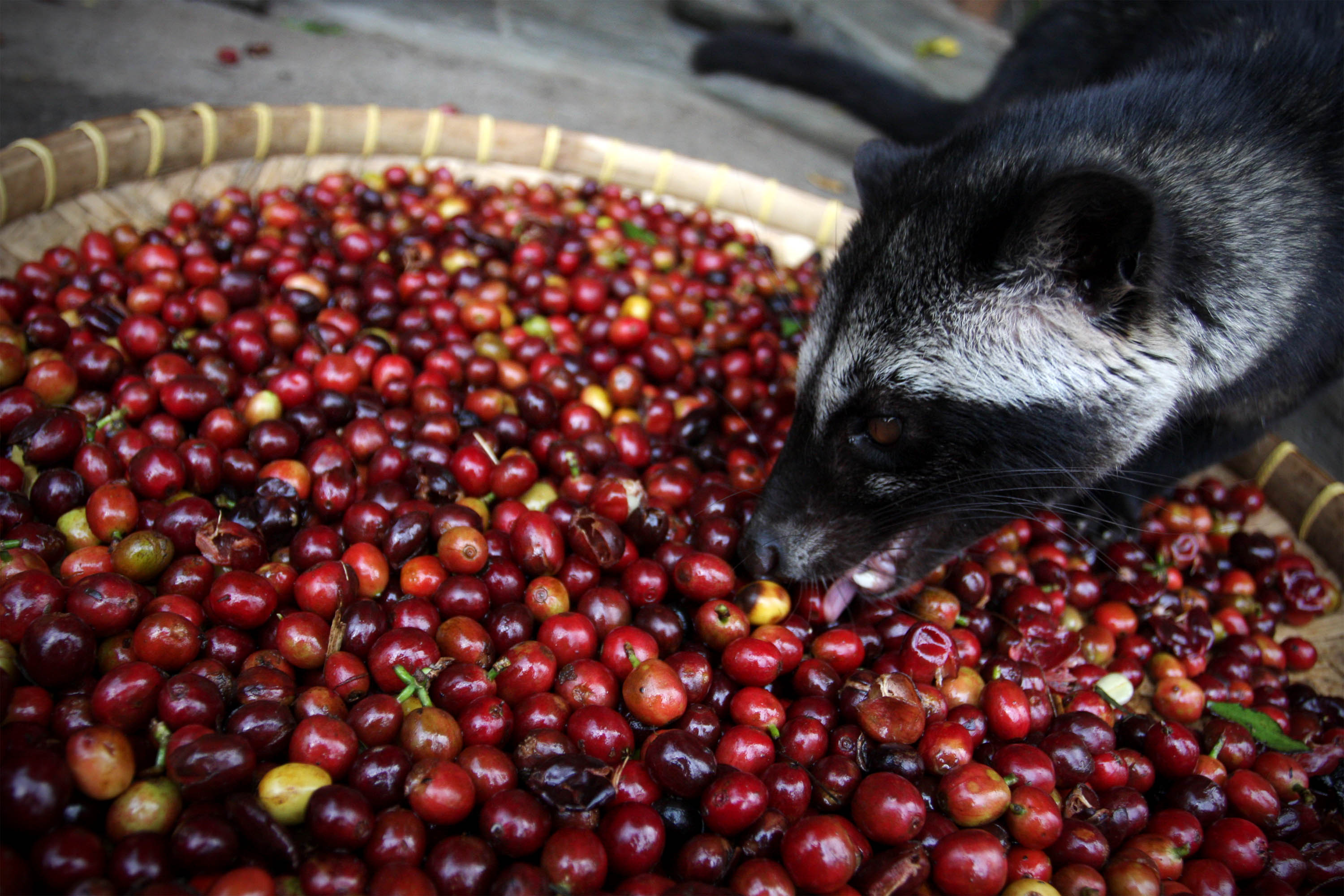
(Photo: A civet is eating coffee during the production of Civet coffee, the world's most expensive coffee, in Bondowoso on August 11, 2009 in East Java, near Surabaya, Indonesia. The coffee, also known as Kopi Luwak, is produced by the civet (a small squirrel-like arboreal mammal) which eats the coffee berries or red coffee cherries. The feces are then cleaned, dried, and lightly roasted to make the coffee. Coffee from Indonesian civets is considered to have the best aroma, and it is the unique enzymes in the civet's stomach which give coffee its bitter taste. It retails for USD 100 to USD 600 per pound but only around 1000 pounds make it to market each year and supply is very limited. By Ulet Ifansasti/Getty Images)
 The Dish