Adam Gopnik acknowledges the contributions of historians who focus on geography – while resolutely pointing to the limits of such an approach:
American prosperity looks like a function of virtue and energy, but the geographic turn tells us that it’s mostly a function of white people with guns owning a giant chunk of well-irrigated, very well-harbored real estate off the edge of the World Island, bordering a hot land on one side and a cold one on the other. Really, you can’t miss. Our geographic truth enters our songs and sagas even if it evades our sermons: O beautiful for spacious skies, for amber waves of grain, for purple mountain majesties, above the fruited plain; this land is my land, from the redwood forest to the gulf-stream waters. The geographic truth beneath our prosperity is as naturally sung by our bards as the olive oils and wine-dark sea at the heart of Greek culture were sung by theirs.
Yet there’s a difference between humility and fatalism. The continuities of geography are striking. But the discontinuities produced by thought are more striking still. The fruited plain did little for the idea of brotherhood until brotherhood took things into its own hands. Once, the sight of a Viking prow coming down a river was as terrifying a sight as any European could imagine. Now the Scandinavian countries are perhaps the most pacific in the world. Whatever changed, it wasn’t the shape of Scandinavia. Those Viking ships turned around, and the Vikings eventually became do-gooding Danes, because sense prevailed in the snows. England certainly is an island, and it was water, as much as will, that stopped Hitler. But the transformation there from the gang ethics that dominate human history to democratic reformist ones can hardly be accounted for by mere insularity. Tyranny flourished in the British Isles; and, when it ended, England had not drifted any closer to the Continent. Good ideas matter, as does the creation of the prosperity that good ideas need in order to flourish. Conversation shapes us more than mountains and monsoons can. Human history, like human love, is still made most distinctly face to face.
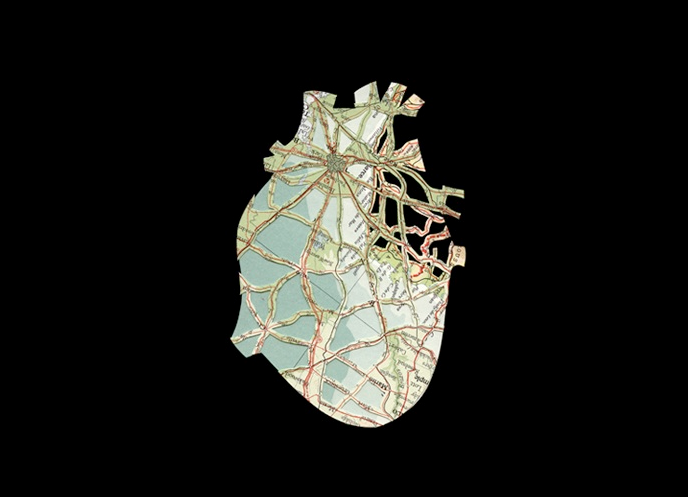
(Image from the ‘Anatomy Series’ by Shannon Rankin via Ignant)
 The Dish