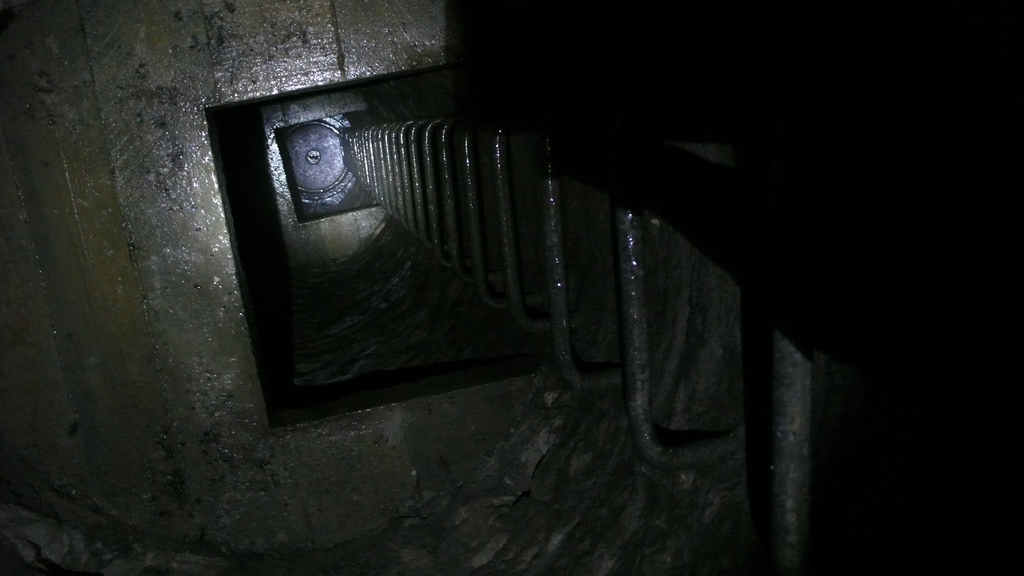
Will Hunt goes adventuring in the city's subterranean spaces:
Our aim is to examine the city's connection to its underground in a way no one has before: we will attempt to walk from the southern edge to the northern, using only catacombs, telecom tunnels, sewers and other hidden infrastructure. It is a 14-mile trek, every step illegal. The six of us—five Americans and an Australian—are prepared for a two- or three-day journey, with nights sleeping in the bowels of Paris. We have packed food, sleeping bags, an arsenal of flashlights and headlamps, and gas meters to alert us to any poisonous fumes in the sewers. It will be urban troglodytism, a walkabout in the wilderness under the city.
A great deal of the city's history is represented underground:
Parisians say their city, with all of its perforations, is like a wedge of Gruyère cheese and nowhere is so holey as the catacombs.
They are a vast, earthy labyrinth, 320km (200 miles) of tunnels, mainly on the Left Bank of the Seine. Some of the tunnels are flooded, half-collapsed, riddled with sinkholes, others are finished with neatly mortared brick, spiral staircases and elegant archways. These were the quarries that supplied the limestone blocks that make up the grand buildings along the Seine, 18 metres (60 feet) above our heads. The oldest had been carved to construct the Roman city of Lutetia, traces of which can still be found in the city's Latin Quarter. Over the centuries, as the city expanded, quarrymen brought more limestone to the surface, and the underground warren spread like the roots of a great tree.
When [1861 explorer Félix Nadar] first dropped into the catacombs with his camera, the tunnels were largely empty. He might have encountered the occasional mushroom farmer, or perhaps the Inspection des Carrières, the workers who prevented the tunnels from collapsing under the weight of the city—otherwise, in those days, no one.
Today, the quarries teem with activity. Walls are covered in riots of graffiti, chambers gilded with carvings and murals. This is the work of cataphiles, a loose tribe of young, bohemian Parisians who spend days and nights in the catacombs. They throw parties, stage performances, make art, explore the limits of the system. Entering the catacombs is illegal and the police employ a special squadron—catacops—to patrol the network. But they deter no one. The tunnels are like a big secret clubhouse.
(Photo by Nicolas Vigier)
 The Dish