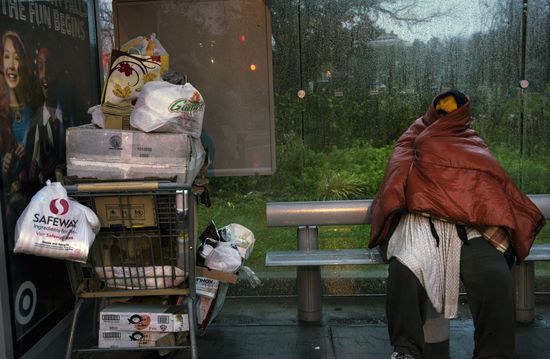
The wealth gap, argues David Rohde:
Divides between the rich and the poor are nothing new in New York, but the storm brought them vividly to the surface. There were residents like me who could invest all of their time and energy into protecting their families. And there were New Yorkers who could not. Those with a car could flee. Those with wealth could move into a hotel. Those with steady jobs could decline to come into work. But the city’s cooks, doormen, maintenance men, taxi drivers and maids left their loved ones at home.
Zack Beauchamp, meanwhile, points out that income inequality is "the single most important predictor of vulnerability to storm damage." He adds:
Other sorts of related inequalities also make the impact of storms worse. [Three experts at the University of South Carolina] found that black, Hispanic, and Asian communities in the United States were also more at risk from storms, as were communities dependent on one industry (like mining or fishing), ones with high percentages of residents living in mobile homes, and ones with high population density. The most vulnerable place in the country, in their analysis? Manhattan Borough.
(Photo: John Edgecombe II, who is homeless, takes refuge from the rain and wind at a bus stop on October 29, 2012. By Brendan Smialowski/AFP/Getty Images)
 The Dish