Seema Shah previews Kenya's election, which is in March:
Kenya’s political parties have shown little sign of shifting away from being based in ethnic identities. Although the constitution outlaws ethnically based parties, it is clear that leaders are still relying largely on their co-ethnics for votes. This is hardly surprising, given Kenya’s entrenched pattern of patronage politics. Indeed, MPs likely use hate speech to drive certain groups out of their constituencies specifically so they can rely on ethnic blocks to vote them into office.
It remains to be seen whether or not proportional representation will moderate this strategy. With regard to the presidential contest, alliances are based at least partially on ethnic calculations. Thus, Kenyatta is counting on his co-Kikuyus (and closely allied Meru and Embu groups) for support, but by courting Ruto as his running mate he also hopes to win Kalenjin votes. Parties based on identity in this way leave little room for issue-based competition.
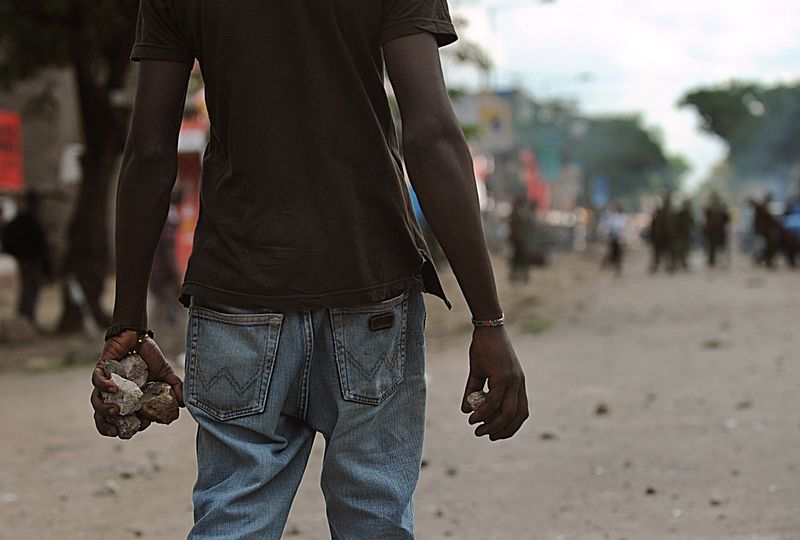
(Photo: A youth of non-Somali ethinicity armed with stones stands on November 19, 2012 during inter-ethnic clashes in Nairobi's Eastleigh suburb. Clashes broke out a day after a bomb exploded in a minibus, blamed on sympathisers of Somalia's Al-Qaeda-linked Shebab insurgents, killing seven people and leaving several wounded. A day after the blast, non-Somali Kenyans turned on Somalis and attacked their shops and stalls, accusing them of being responsible for the bomb. No one has claimed responsibility for the blast. By Tony Karumba/AFP/Getty Images)
 The Dish