Ask McKibben Anything: Greatest Environmental Victory?

Bill McKibben is one of the world’s leading environmentalists and writers:

In 2009, he led the organization of 350.org, which organized what Foreign Policy magazine called “the largest ever global coordinated rally of any kind,” with 5,200 simultaneous demonstrations in 181 countries. The magazine named him to its inaugural list of the 100 most important global thinkers, and MSN named him one of the dozen most influential men of 2009.

Bill’s previous videos are here, here and here. Read some of his Sandy-related coverage featured on the Dish here, here and here.

Wanted: An Israeli Sherman! Ctd

Walter Russell Mead defends himself from my criticisms:

[W]e’ve gotten in trouble with the calm and level headed management over at the Dish because we thought it was worth explaining why, as a matter of political reality, so many Americans are unshocked by what so many people around the world see as unacceptable Israeli violence in Gaza. We pointed to a long established tradition in American culture and political thought—one of four described in Special Providence: American Foreign Policy and How It Changed The World. This tradition believes that when a country or its citizens is attacked it has the right and even the duty to crush the offenders without regard to what defenders of just war theory consider the proper limits of force. The VM piece—like the book on whose analysis it is based—didn’t endorse this approach but tried to show dispassionately and clearly what it is, how it works and why, to those who think this way, it makes sense.

Just go read the original piece and see if you believe that Mead is merely describing and analyzing rather than endorsing Jacksonian mass violence. You may also notice that Mead does not actually link to that piece in his rebuttal (a revealing omission when you are defending your own argument). As one reviewer put it of one of his books, he offers a "robust celebration of Jacksonianism as it historically was … an admiring portrait of a tough, xenophobic folk community, ruthless to outsiders or deserters, rigid in its codes of honour and violence". And that's why he loves Greater Israel: its ruthlessness, contempt for just warfare as developed in European civilization, and its barbaric doctrine of creating "deterrence" by mass murder and a stifling blockade.

The View From Your Thanksgiving

Original bleg here, where we asked readers to share any red-blue political discussions with family members that added more light than heat. A previous reflection from a reader here. Another writes:

My mother was a life-long Republican.  She's a devout Christian who reads her Bible and spends time in devotion and prayer daily.  She voted for George W. Bush in 2000 and was pretty disgusted with my reaction when I warned her that we would be lucky to get through his presidency alive. But something happened: by the 2004 election, although she couldn't bring herself to vote for John Kerry, she did not vote for Bush – the first time she hadn't voted in a presidential election since her first vote in 1948.  By the 2008 election, she'd had it with two wars, torture, and the cock-up during Katrina. She became a regular listener to MSNBC and cried when she cast her vote for Obama, saying she never dreamed she would live long enough to vote for an African-American for president.

This year, at the age of 88, she formally changed her registration to Democrat because she didn't want anyone to think she ascribed to the Republican ideology. 

She became totally fed up with the Fundamentalist obsession with abortion (she says people are going to have them no matter what and they should be medically safe) and homosexuality (she has come to support gay marriage, putting her at odds with her church).  We watched the returns on election night and spent a pretty delightful evening cheering every Democrat declared a winner. 

I realize how blessed I am that my mom and I are on the same page politically.  You can't imagine how fun it is to see a woman in her late 80s watch the Daily Show and know who Nate Silver is, tell me how good Rachel Maddow's latest show was, and see her sitting at the computer to read Brian McClaren's blog.  My mom is still a conservative, but she should serve as a warning to the Republicans (losing a white, Christian Senior Citizen? Really?)…  I know she serves as an inspiration to me.

Another:

I want to share a quick story about last Thanksgiving, hoping that counts for the thread. My grandpa is extremely Republican. He overwhelms our families' inboxes with forwarded emails about Obama's Islamism, gets his history from Glenn Beck, and generally believes that this country is in severe decline. Needless to say, I don't share many of his views, but what I learned last Thanksgiving was how similar we really are in our beliefs.

After dinner we got to talking about his past employment history. We hail from rural Kansas and he worked for over 40 years for the local farming coop. He told me about the time one of the railroad giants canceled the route past his coop's grain elevator, a move that would have greatly endangered the survival of most of our region's already dwindling small farm population. Grandpa, and a liberal attorney from Kansas City, went to bat for the coop, fighting a court battle that took a number of years and in the end won. My grandpa, Fox News Republican, went to war with big business and won. I can't tell you how proud that made me.

This year, a recently released convict whom my grandpa had met doing his prison ministry will be joining our family for Thanksgiving. He is living with my grandparents for a few months while he gets back on his feet. My grandpa is helping him look for a job and teaching him carpentry. He takes Jesus' commands seriously.

What this has all taught me is that our political disagreements, while major, are not nearly as important as what we actually do. It takes nothing for me to believe that gay marriage should be legalized. It takes a lot to invite an ex-con into your house and to your table.

Another:

I was riding around with my uncle, hunting for Redskins swag, when he and I got to talking politics.  My uncle is the bluest of blue-collar workers, born and raised in Bristol, VA, then moved to North Carolina where he still lives.  He's worked HVAC, landscaping, and myriad other manual labor jobs over the years.  It also wasn't more than a decade ago I'd hear cringe-worthy racist and homophobic comments from him and other members of my family from North Carolina on a regular basis.  They still slip occasionally, but nowhere near as often as they used to. 

But this week he said something along the lines of, "I could NOT bring myself to vote for Mitt Romney.  Rich bastards making money off the backs of regular people."  We also talked about his girlfriend's daughter being diagnosed with MS and I mentioned that Ann Romney had MS.  He said he knew, and then went off on how Mrs. Romney said during the campaign if she were First Lady she was going to focus on MS (and breast cancer I think), but wasn't doing it already.  I then mentioned how it must be nice to have all the money in the world for treatment, but the first thing Mitt was going to do was repeal Obamacare, and my uncle was in total agreement. 

He also said he didn't want to say he'd never vote for Republican for President, but at the moment it wasn't going to happen.  I said I liked Jon Huntsman, but by and large I couldn't either, that the anti-gay marriage stand of the GOP was a deal-breaker for me for one thing, and he was also in total agreement on that point.  Know hope.
One-Forty Liners

The inimitable Alex Pareene reflects on how Twitter humor shaped coverage of the 2012 election:

In elections past, the sort of stuff reporters joke about—Joe Biden telling a Virginia rally it could win North Carolina; Mitt Romney admiring clouds—might have ended up in pool reports, seen and appreciated only by other journalists. The Internet gives the campaign press ways to publicize the weird details that otherwise might not make it into print. The behind-the-curtain material that makes The Boys on the Bus and Fear and Loathing: On the Campaign Trail ’72 so readable is now more often than not shared with the world in real time.

But in those books, weird details generally served a better understanding of a candidate’s character; on Twitter, they reduce a candidate to his stupidest moments for a quick laugh. And at a certain point (let’s say that point was when Time released photos of Paul Ryan dressed like Poochie, the ‘cool dog’ character from the ‘Simpsons’) the ‘Mystery Science Theater 3000’ routine subsumed the other part of campaign coverage, where you explain the state of the race and the issues involved to normal people.

The House GOP’s “Mandate”

More tenuous than might appear, as Rick Hertzberg explains:

This year, as usual, “people” wanted one party to run the whole show. That party was the Democrats. Republican House candidates won more seats, but Democratic House candidates won more votes—in the aggregate, about a million more.

For one party to win a majority of House seats with a minority of votes is a relatively rare occurrence. It has now happened five times in the past hundred years. In 1914 and 1942, the Democrats were the beneficiaries. In 1952, 1996, and this year, it was the Republicans’ turn to get lucky, and their luck is likely to hold for many election cycles to come.

It's not just gerrymandering; it's also geographic distribution. But it seems to me an important talking point if House Republicans claim a mandate for divided government. Popular majorities voted for Democrats in all three branches of government. That is obviously not dispositive. But it argues for a kind of humility and spirit of compromise that the GOP has not exactly been famous for lately.

The Rogue’s Army

Free_French_Foreign_Legionnairs

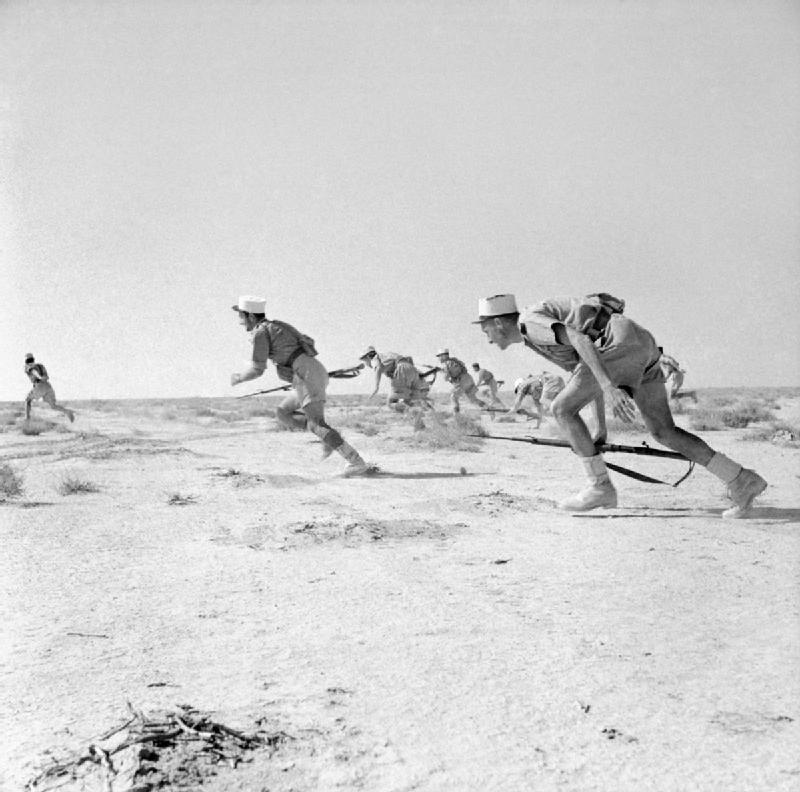
Having embedded with the French Foreign Legion, William Langewiesche describes life in their storied company:

I asked [a French officer] if there are national differences. Yes, he said. For instance, the Chinese make the worst legionnaires. Usually they angle for kitchen work—he didn’t know why. The Americans and British are almost as difficult, because they get upset about living conditions. They endure for a while, then run away. Not all, but most. You would think that the selection board by now would have figured this out. The French are flaky, the Serbs are tough, the Koreans are the best of the Asians, and the Brazilians are the best of all.

But whatever their attributes or faults, he felt like a father to every one them, he said, though the oldest were older than he. He told me that like other Legion commanders he spent every Christmas with the troops rather than with his own family because so many had no home to return to. He said this meant a lot to them. Frankly I doubted it, in part because legionnaires are not the type to care much about Christmas, and anyway do not usually like or trust their officers. But the officer’s conceit fit perfectly into the official paternalistic view.

(Photo: "Free French Foreign Legionnaires 'leap up from the desert to rush an enemy strong point', Bir Hacheim, 12 June 1942" via Wikimedia Commons)

The Walmart Strike, Ctd

Kathleen Geier calls the strikes a "a rousing success." McArdle disagrees. Among the reasons she expects them to do little good:

Walmart's $446 billion of revenue last year was eye-popping, but its profit margins are far from fat–between 3% to 3.5%. If they cut that down by a percentage point–about what retailers like Costco and Macy's have been bringing in–that would give each Walmart employee about $2850 a year, which is substantial but far from life-changing. Further wage improvements would have to come out of the pockets of Walmart's extremely price conscious shoppers. Which might be difficult, given how many product categories Amazon is pushing into.

Earlier coverage here. Update from a reader:

Is Megan McArdle really as out of touch as she sounds? This is truly frightening in its upper-class cluelessness.

Walmart employees are not looking for Walmart to win them the lottery or buy them a stay at the Four Seasons Maui or change their lives. They’re looking for a decent improvement to their current income levels. $2,850 a year would be HUGE to these workers. A $3,000 raise to someone making $20,000 a year or less amounts to a 15 percent plus raise. McArdle looks at the possibility of folks under the poverty line getting about $250 dollars extra per month – which could cover monthly grocery expenses alone – and basically says "bah, not worth it".

What The Hell Just Happened In Egypt?

GT TAHRIRSQUAREANTIMORSIPROTEST 20121126

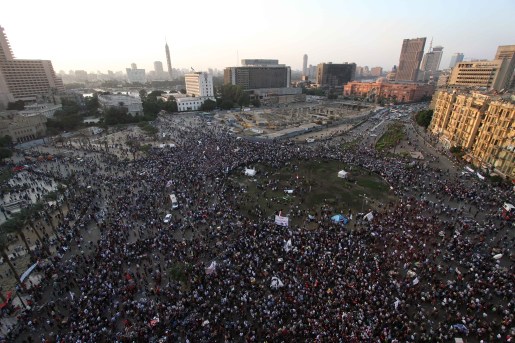
Last week's power grab by President Mohamed Morsi essentially nullified the Egyptian judiciary, a supposedly temporary move which nonetheless led to to wide-ranging protests and violence across the country.  Issandr El Amrani analyzes the situation:

Were Mr Morsi a beloved national leader of the stature of a Nelson Mandela, he might have pulled it off. But he is the backup candidate of an organisation – the Muslim Brotherhood – mistrusted by many of his countrymen. He was elected (narrowly) by a coalition brought together by the fact that his opponent was worse. And he made this decision at a time of unprecedented polarisation – over the constitution and religion's role within it, over the performance of the cabinet, and indeed over the poor excuse for a transitional framework to democracy that the country inherited from 16 months of disastrous military rule. Mr Morsi's political capital is simply not as plentiful as he seems to believe, as the furious reaction by opposition leaders and protesters on Friday showed.

Brian Ulrich doubts this is the beginning of a Morsi dictatorship. Instead, he thinks the Muslim Brotherhood "works on collaborative party rule as in China":

I can't picture this as a personal dictatorship of Muhammad Morsi the same way Mubarak sat atop his own system. Morsi was the back-up candidate for Muslim Brotherhood bigwig Khairat al-Shater, and it seems certain he still works in conjunction with the Muslim Brotherhood leadership as a whole.

Peter Hessler believes the Muslim Brotherhood's power is far from absolute:

I’m not convinced that we are seeing a Muslim Brotherhood attempt at dictatorship. Some of this is basic logic. The Egyptian army is still powerful, and after decades of opposition it retains a deep institutional distrust of the Brotherhood. I don’t believe that anybody can become a dictator here without the full support of the army. Meanwhile, the opinion of the public still matters a great deal—protestors can gather at any moment, sometimes violently, and the media is essentially free.

Mara Revkin notes that Egypt's judiciary is fighting back:

In a constitutional no man's land where power flows from revolutionary legitimacy, not law, Morsi's declaration is toothless without buy-in from the street, and more importantly, the judges who will make or break its enforcement. Picking fights with the arbiters of justice is usually a losing battle, and Morsi's assault on the judiciary is no exception. As Egypt's judicial authorities mobilize to defend their territory from executive overreach, Morsi is about to find out how untouchable his powers really are.  

Marc Lynch weighs in:

A case could have been made for Morsi's constitutional decree had he not pushed it too far. The judiciary has played an erratic, unpredictable, and politicized role throughout the transition, with its controversial decisions such as the dissolution of parliament. ItsCalvinball approach to the rules, in the absence of either a constitution or a political consensus, introduced enormous and unnecessary uncertainty into the transition and badly undermined the legitimacy of the process. Morsi was not the only one who despaired of Cairo's political polarization and institutional gridlock. But none of that can justify his assertion of executive immunity from oversight or accountability, declaring his decisions "final and binding and cannot be appealed in any way or to any entity." And then there was Article VI, asserting the power to do literally anything "to protect the country and the goals of the revolution." That Morsi was elected has nothing to do with his attempt to place himself above the law. Nor does the expiration date of his extraordinary powers (after parliamentary elections and the constitutional referendum) reassure in the slightest.

Nathan Brown adds:

Those who oppose these moves need not only unity but a strategy. And that has never been their strong suit. And if they do fail, then Egypt’s best hope for democracy may be a Morsi metamorphasis into an Egyptian Cincinnatus. Perhaps he will use his authority to protect a process that will build a functioning democratic and pluralistic system. That is not impossible. But it’s an odd way to build a democracy.

Large protests are planned for Tuesday.

(Photo: A general view shows thousands of protestors in Cairo's landmark Tahrir square during a demonstration against Egypt's Islamist President Mohamed Morsi on November 23, 2012. In a few cities Egyptian protesters set fire to Muslim Brotherhood offices, state television reported, as rival rallies were held nationwide the day after Morsi assumed sweeping new powers. By Ahmed Mahmoud/AFP/Getty Images) 

Fact-Checking Evil Schemes

Bilge Ebiri asked Jean-Jacques Dethier, a development economist at the World Bank, to judge the plausibility of various James Bond villain plans. For instance:

A View to a Kill

Plot: Max Zorin (Christopher Walken) wants to secretly trigger a massive earthquake that will destroy Silicon Valley. This will then allow him and his investor allies to monopolize the microchip manufacturing market.

Plausibility: "As far as I know, microchips aren’t actually manufactured in Silicon Valley," says Dethier. "They’re made all over the world, in China and other places, though the guys who commission the work may be in Silicon Valley." Therefore, while taking out Silicon Valley would obviously be cataclysmic for the tech industry, he notes, it also wouldn’t entirely remove your competitors, and wouldn’t ultimately affect manufacturing that much.