A popping and locking quartet:
Month: November 2012
The Nature Of Friendship
Jessica Vivian Chiu ruminates on friendship, which she claims "has never seemed both more important and less relevant than it does now." After examining the "curious, decades-long friendship between the writers Sherwood Anderson, Theodore Dreiser, and the sculptor Wharton Esherick," she concludes:
Friendship, Aristotle suggests, is the most immediate form of public personhood; it motivates a person for moral excellence, ennobles us to become a stronger unit for a social whole. And yet, the thing is this: the very material of friendship is the exchange of it. In friendship, sentiment is the relationship. Friendship may have a public aspect, but it is essentially a private exchange. If the letters between Anderson, Esherick, and Dreiser showed me anything, it is that friendship remains the special provenance of those who live it.
My own friendships go on changing, adjusting by degrees to demands that I won’t totally understand. A becomes a parent. B wrestles over what a career should look like. C’s stubborn nostalgia threatens to uproot what we still have in common. The reassuring thing is that no single law rules over us. Friendship is a return, as variable as we are.
Peak Starlight
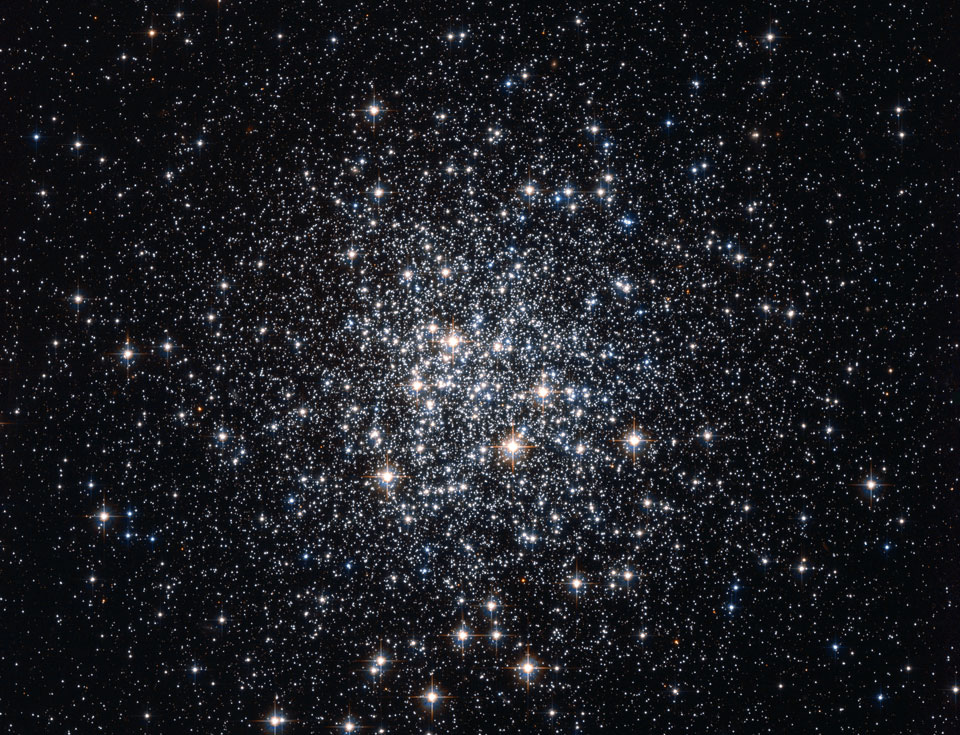
According to a new study, "the universe is apparently well past its prime in terms of making stars." Caleb A. Scharf summarizes:
First, 95% of all the stars we see around us today were formed during the past 11 billion years, and about half of these were formed between roughly 11 and 8 billion years ago in a flurry of activity. But the real shocker is that the rate at which new stars are being produced in galaxies today is barely 3% of the rate back 11 billion years ago, and declining. This indicates that unless our universe finds a second wind (which is unlikely) it will only ever manage to produce about 5% more stars than exist at this very moment.
This is, quite literally, the beginning of the end.
("A globular cluster of stars" from NASA's APOD)
The Locations Of Memories
Charles Simic explores how places can trigger old memories:
Henry James called them “traps to memory” in The American Scene, the book he wrote about his visit to the United States in 1904 after a twenty-year absence. Walking on West Fourteenth Street and Lower Fifth Avenue in Manhattan, he shuddered at how much the neighborhood had changed. His parental home, the massive stone church that stood nearby, the old building that housed the original Metropolitan Museum of Art, and much else in the city had now “vanished as utterly as the Assyrian Empire.” What remained were these “traps” which “baited themselves with the cheese of association,” and into which anyone who had once known the city might fall.
He adds:
Since we are ordinarily better at forgetting than remembering, it is often a mystery why some such sight has stamped itself on our memory, when countless others that ought to have far greater meaning can hardly be said to exist for us anymore. It makes me suspect that a richer and less predictable account of our lives would eschew chronology and any attempt to fit a lifetime into a coherent narrative and instead be made up of a series of fragments, spur-of-the-moment reminiscences occasioned by whatever gets our imagination working.
Face Of The Day
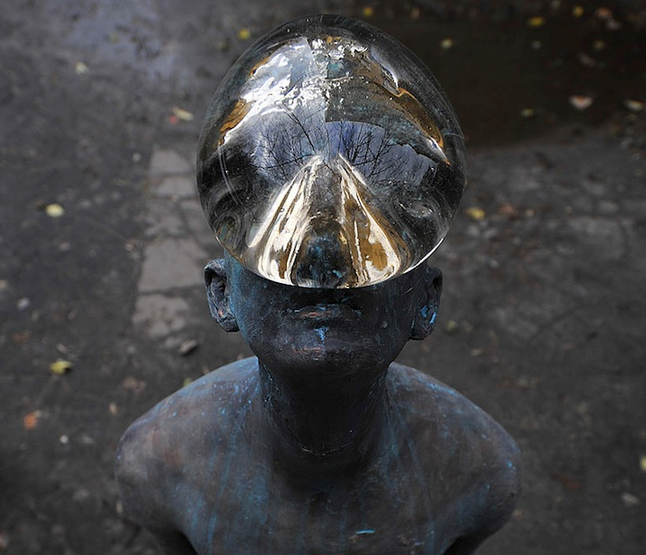
Alice Yoo admires the work of Nazar Bilyk:
Ukrainian artist Nazar Bilyk created this stunning 6-foot tall sculpture called "Rain" using bronze and glass. A huge raindrop stands suspended on the figure's face as he looks up toward the sky. The work has several meanings including representing man's delicate relationship with nature.
"Rain" is on view at the Peysazhna Alley (Landscape Alley) at the Kiev Fashion Park in Ukraine. See more of Bilik's work at his website.
Lincoln’s Barber
Matthew Bell ponders the impact of the almost unknown historical figure:
The wealthy, including the American President, had valets to keep them presentable and act as personal barbers — a highly coveted role for free blacks of the era. And of those valets, perhaps none was more important than William Johnson, the man in the service of our 16th president (and responsible for his famous quiff). It's conjecture, but it's not entirely out of line to venture that Johnson and Lincoln had the same kind of rapport you have with your barber today. In fact, it could well have been more intimate, given the expanse of Johnson's duties. Regardless, this much is clear: Johnson served as Lincoln's most personal and direct connection to black America at the time. And though there's few records of the conversations between the two … it doesn't take too much of a leap to understand that Lincoln's personal valet may have influenced more than Honest Abe's looks. A theory? Absolutely. But one to consider, nonetheless.
Bears Of The Future
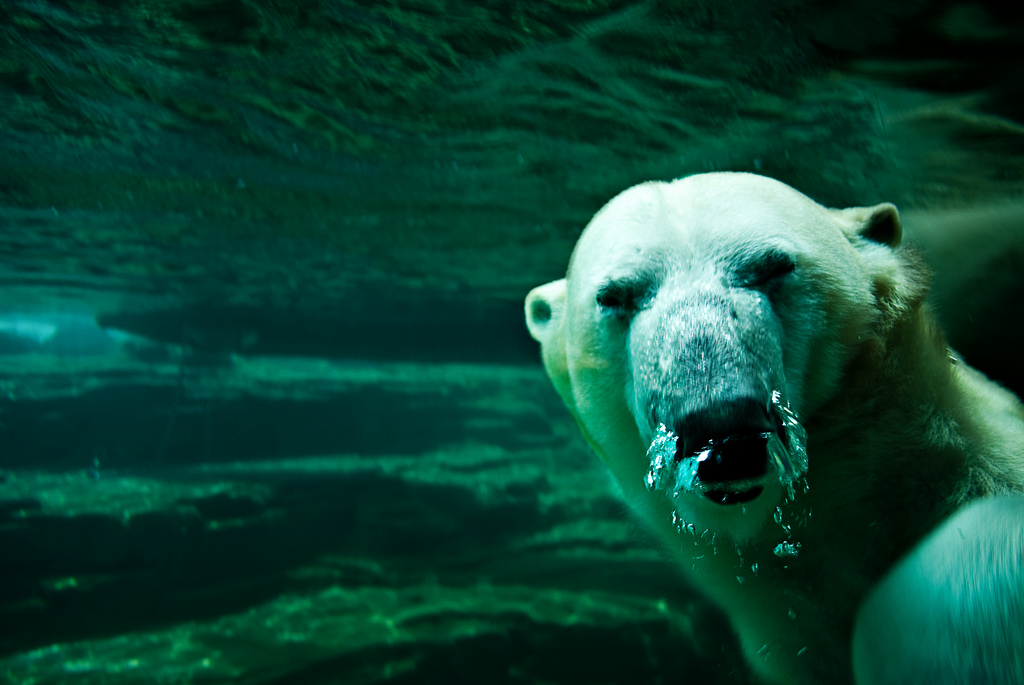
Jessa Gamble explains how bears are coping with a changing climate:
As caribou migration routes have moved North, grizzlies have followed and started mating with polar bears. Not only have they produced hybrid young, but those young are fertile. Polar bears and grizzlies only diverged about 150,000 years ago and haven’t developed many genetic differences, despite quite dramatic visual dissimilarities. Second-generation hybrids have now been confirmed in the wild. There have been a dozen sightings in only a handful of years, mostly by hunters, and most of those bears were identified after they were shot. It’s also a legal problem, in that you can’t shoot a grizzly with a polar bear license. Grolar bears, or pizzlies – I know, shudder – bring out the excitement of cryptozoology (Big Foot and the Loch Ness monster), but they’re very real.
The bigger picture:
I find myself scouring the photos, trying to tease out both species’ features in them, like a father staring intently at the faces of his children, looking for familial likenesses and possibly proof of paternity. What I end up seeing, in this quintessentially 21st century creature, is a glimpse of the future. Closely related marine mammals from the North Atlantic and the North Pacific are about to merge territories, and we’re likely to see more hybridizing in the years to come.
(Photo by Logan Hunt)
Death Knocks At 11am
Megan Garber keeps an eye on the Grim Reaper:
Particularly when you're older, you are 14 percent more likely to die on your birthday than on any other day of the year. Particularly when you live in certain geographical areas, you are 13 percent more likely to die after getting a paycheck. And particularly when you're human, you are more likely to die in the late morning — around 11 a.m., specifically — than at any other time during the day.
Yes. That last one comes from a new study, published in the Annals of Neurology, that identifies a common gene variant affecting circadian rhythms. And that variant, it seems, could also predict the time of day you will die. Even death, apparently, has a circadian rhythm.
The View From Your Window
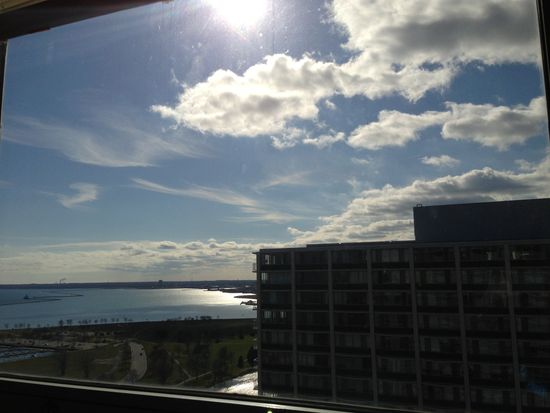
Milwaukee, Wisconsin, 12 pm
Poets Remembering Poets
Casey N. Cep, spurred by the recent death of Jack Gilbert, considers the way poets eulogize one another. Cep turns to Elizabeth Bishop's remembrance of Robert Lowell as a classic of the form:
Take Elizabeth Bishop’s “North Haven,” written for Robert Lowell one year after his fatal heart attack. Although she is looking at one of Lowell’s most beloved seascapes in Maine, she resists the pathetic fallacy. Bishop does not believe that nature is shedding tears simply because she is. “The islands haven’t shifted since last summer,” she writes, and then acknowledges, “even if I like to pretend they have.”
She also recognizes that the constancy of nature is illusory: “the goldfinches are back, or others like them.” Not even nature resists change, although it does repeat itself year after year, bringing new finches and growing different flowers even though the seasons themselves seem unchanging. “Nature repeats herself,” Bishop concedes, “or almost does: / repeat, repeat, repeat; revise, revise, revise.”
The qualification is most chilling: “almost” is the way in which the dead are “almost” but not quite alive. That concession forces Bishop to acknowledge what she has denied until the poem’s final stanza: “You left North Haven, anchored in its rock, / afloat in mystic blue … And now—you’ve left / for good.”
 The Dish