A Story For Thanksgiving

Below is another recording of master storyteller Ed Gavagan, a stand-alone second act to the story we featured over the summer. It has family, forgiveness and a surprising twist of thankfulness:

You can also watch Gavagan's TED talk about the medical efforts that saved his life. The post includes a reflection on his storytelling by The Moth's artistic director, Catherine Burns.

The Dark History Of Cranberries

Madeleine Johnson investigates the mysterious epidemic that wiped out 90% of the Indian population around Plymouth:

The symptoms were a yellowing of the skin, pain and cramping, and profuse bleeding, especially from the nose. A recent analysis concludes the culprit was a disease called leptospirosis, caused by leptospira bacteria. Spread by rat urine…. According to the hypothesis, infected ship rats landed in the New World and excreted leptospira, infecting raccoons, mink, and muskrats whose urine further contaminated any standing fresh water.

Johnson explains why the European colonists remained largely untouched by the plague:

Wampanoag have long had seasonal feasts of thanksgiving, one of which celebrates the cranberry harvest. There is some evidence that cranberries were also used medicinally – raw, ground into a poultice, and applied to open wounds. Although modern research suggests that cranberries can be a potent antimicrobial, that might not have been enough to slay the spirochete. The more leptospira that initially invade the bloodstream (possibly via direct contact with berries), the more likely the disease is to be fatal.
We Are How We Eat

In researching Consider the Fork, Bee Wilson learned that "the alignment of our jaws and teeth may be a product of how we use cutlery in our formative years":

A remarkable American anthropologist called C. Loring Brace noticed that the overbite — which orthodontists tell us is the normal arrangement for our teeth — only goes back around 250 years. Before that, surviving skeletons show an edge-to-edge bite, similar to apes. The best explanation for this change in our teeth is the adoption of the knife and fork, which meant that we started to cut food up into small morsels before eating it. Previously, in the West, we ate food using the "stuff-and-cut" method, clamping chewy bread or meat between our incisors. When we stopped using our incisors as a clamp — because of the knife and fork – the top layer of teeth continued to grow (or "erupt"), resulting in the overbite.

The clincher — I had goosebumps when I first read this — is that this change in human teeth can be observed 900 years earlier in China than the West. The reason? Chopsticks.

A Literary Feast

Maria Popova notes an episode in the "enduring" relationship between food and literature:

In late April of 1973, poet and self-taught chef Victoria McCabe … mailed form letter requests to 250 of the era’s leading poets, asking them to share their favorite recipes. Some 150 replied, 117 of whom made it into John Keats’s Porridge: Favorite Recipes of American Poets — a tiny yet enormously delightful little cookbook spanning everything from Edward Abbey’s Hardcase Survival Pinto Bean Sludge to Claire McAllister’s Baked Stuffed Sweet Oranges. 

Popova goes on to provide the recipes for Allen Ginsberg's borsch and Joyce Carol Oates' Easter anise bread.

Winning At Shopping

One reason Black Friday exists:

Some people delight over the idea of fighting over the last Nintendo Wii, or whatever the item of the year happens to be. This study found that "perceived competition … creates positive emotions and induces hedonic shopping value." Black Friday creates that kind of "perceived competition" in that it's not just a shopping day with a bunch of people. It's a shopping day with a bunch of people where discounts don't last and discounted products are scarce. "At certain levels, consumers enjoy arousal and challenges during the shopping process," researcher Sang-Eun Byun told The Washington Post's Olga Khazan. "They enjoy something that’s harder to get, and it makes them feel playful and excited." Given that bit of science, it's no wonder that shoppers have acted quite aggressive in recent years, as this Christian Science Monitor article notes.

Literary Gifts

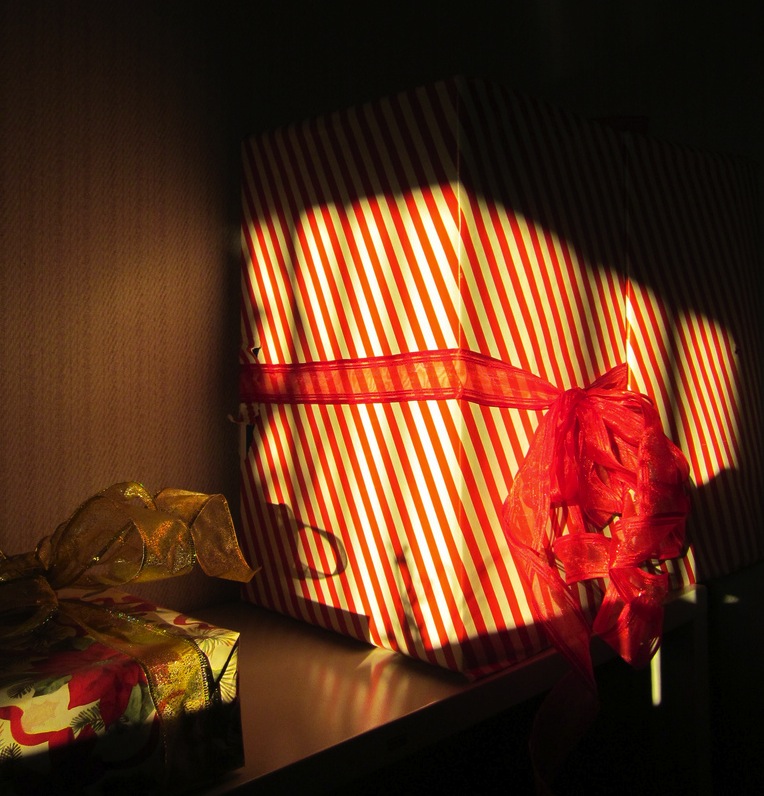
8034986473_27d8c5781a_b

Josie Leavitt, a bookseller, laments that no one gives her books anymore:

There is nothing quite like a good friend shopping for a book for you. I see tremendous thought go into book purchases by my customers. When you give a book you’re really thinking about someone. What do they like? What mood are they in and how can a book help that? Too often it is assumed that I know all the books in the land, therefore it’s pointless to get me a book. Oh, reader, this is not so.

I love being introduced to a book by a friend. Someone introducing me to their favorite author is a privilege. I like learning about my friends by what their book passions are. 

(Photo by Wayne Wilkinson)

“A Behavioral Economist’s Nightmare”

That's what Kevin Roose calls today:

The big problem with Black Friday, from a behavioral economist's perspective, is that every incentive a consumer could possibly have to participate — the promise of "doorbuster" deals on big-ticket items like TVs and computers, the opportunity to get all your holiday shopping done at once — is either largely illusory or outweighed by a disincentive on the other side. It's a nationwide experiment in consumer irrationality, dressed up as a cheerful holiday add-on.

Relatedly, Razib Khan outlines the limits of crowd wisdom:

[T]he economist’ faith on the power of mass market signals (“the crowd”) often strikes natural scientists as peculiar. When talking about elections it does seem that the “crowds” are going to be superior to the judgement of individuals or powerful quantitative models (after all, elections are aboutcrowds!).  But there is a long history of the crowd being wrong in the very specific areas of natural science which rely on contingent and formal fameworks to make non-obvious predictions on somewhat complex systems. But that’s because in some areas of the natural sciences humans have a systematic bias due to intuitive psychological tendencies. Aristotle’s model was just more intuitively plausible than those of his skeptics’ for a few thousand years. And quantum theory would never win a crowd-vote. One Bohr is worth a thousand other humans. I think this long history of the worthlessness of mass market intuition across large swaths of the territory of science is why many scientists find technocratic solutions very appealing. The formal reflections of the elect has worked miracles in physics, so why not “social physics” (i.e., economics)?

Face Of The Day

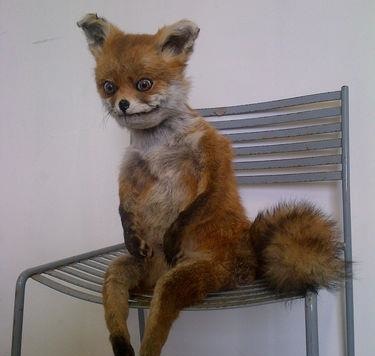
Not so fantastic Mr. Fox:

Fox

From Josh Kurp's roundup of terrible taxidermy:

Disfigured alive animals, not so funny. Disfigured dead animals, hi-larious. Now before calling me a serial killer (that's only half true), know that I'm referring to animals that have been taxidermied, specifically animals that have been taxidermied terribly, not unlike our good feline friend Helicopter Cat.

Ditch The Old Spice

Reddit has a lively thread on gifts that men are tired of getting. For example:

I own four flasks. I consider myself a moderate-to-heavy drinker, but this is overkill. Am I supposed to strap them onto some kind of bandoleer and keep it under my poncho when I go to a sporting event? (Actually, as I'm typing this, I realize this is not the worst idea ever.)

Another:

Cologne. I have an entire shelf in my medicine cabinet dedicated to the various colognes I've received as gifts. I do not need a bottle every single year.

And another:

I don't need another mug. Here's the proper tip: don't buy him a mug, buy him the liquids that go in the mug. Want to spend $5-10? A nice craft beer would be highly appreciated. $10-15? A pound of good coffee. Want to go over the top and spend $35-75? Buy the guy a damned bottle of Scotch.