Building A Better Beer Head

Science is hard at work:

As any beer drinker can tell you, a tall glass of lager without a white, foamy head on top just doesn't look right. And even if you start out with one, it can dissipate fast. And that's just sad. Now, microbiologists have identified the specific gene in yeast responsible for a beer's head and they say this discovery can lead to stronger, longer lasting, more aesthetically pleasing foam on your favorite brews.

It's called the Carlsbergensis foaming gene, or CFG1:

As [Tom] Villa and his colleagues write in the Journal of Agricultural and Food Chemistry, the gene resides in the yeasts used to ferment beer and it produces a protein that binds to the drink's CO2 bubbles, preventing them from escaping from the glass too quickly. … Now that we know exactly which gene is responsible for beer foam, Villa says it's possible to manipulate that gene to create beer with foam that lasts longer — potentially for hours and hours…

From Fiction To Truth

Chloe Schama reviews Alice Munro's new collection of short stories, Dear Life, the last three of which she describes "closer to my own life than the other stories I had written." After a lifetime of making things up, the forays into near-autobiography presented their own challenges:

When truth is stranger than fiction, how should the writer preserve her subtlety? "If I was writing fiction instead of remembering something that happened," Munro writes, in her description of the prostitute from "Voices," "I would never have given her that dress. A kind of advertisement she didn’t need." The prostitute wore "golden-orange taffeta"; Munro the fiction-writer would have had her in olive silk. In another story, the collective failings and misfortunes of her hapless father seem too woeful to be credible: "You would think that this was just too much. The business gone, my mother’s health going. It wouldn’t do in fiction." Even when she is hewing close to personal history, she is conscious of the particular kind of truth required by fiction—perfect pitch and proportion, and perhaps less verisimilitude.

According to Anne Enright, "a kind of absence is essential to Munro's work," the keeping of a distance between writer and reader, so she finds herself grateful for these more personal stories' "insight into Munro's formation as a writer":

It would be wrong to say there is an absence at the heart of it – that would sound aggrieved – but there is nothing wrong with holding yourself a little in reserve. A slight sense of withholding gives Munro's prose its gracefulness, and allows intimacy without danger. After many years, many collections and many wonderful stories, readers may feel they know everything about Alice Munro, especially as so many of her characters lead lives similar to her own. In fact, we know very little about her. This is one of the reasons readers become dizzy with love for Munro. This other reason is that she is so damn good.

Read one of Munro's short stories from the collection here.

A Poem For Saturday

This embed is invalid

This week, the great American poet, Jack Gilbert, passed away at age 87. John Penner's LA Times essay on Gilbert summarized the man and his writing this way:

Of Gilbert’s favored words, probably none conveys better the poet–his life, his work, his ambitions for both–than magnitude. "Poetry, for me," he declares in a 1965 essay, "is a witnessing to magnitude." In poems he sings of a "magnitude of pain, of being that much alive," and "a magnitude of beauty that allows me no peace."

Read his Paris Review interview here. When asked about the subjects of his poems, he responded not just with a comment on his literary preoccupations, but with a meditation on living:

Those I love. Being. Living my life without being diverted into things that people so often get diverted into. Being alive is so extraordinary I don’t know why people limit it to riches, pride, security—all of those things life is built on. People miss so much because they want money and comfort and pride, a house and a job to pay for the house. And they have to get a car. You can’t see anything from a car. It’s moving too fast. People take vacations. That’s their reward—the vacation. Why not the life? Vacations are second-rate. People deprive themselves of so much of their lives—until it’s too late.

This spring the Dish featured his remarkable poem, "Tear It Down," here. Our poetry editor, Alice Quinn, remembered him here. This weekend, to honor Gilbert's work, we'll be running three of his poems. The first of these is "Failing and Flying":

Everyone forgets that Icarus also flew.
It’s the same when love comes to an end,
or the marriage fails and people say
they knew it was a mistake, that everybody
said it would never work. That she was
old enough to know better. But anything
worth doing is worth doing badly.
Like being there by that summer ocean
on the other side of the island while
love was fading out of her, the stars
burning so extravagantly those nights that
anyone could tell you they would never last.
Every morning she was asleep in my bed
like a visitation, the gentleness in her
like antelope standing in the dawn mist.
Each afternoon I watched her coming back
through the hot stony field after swimming,
the sea light behind her and the huge sky
on the other side of that. Listened to her
while we ate lunch. How can they say
the marriage failed? Like the people who
came back from Provence (when it was Provence)
and said it was pretty but the food was greasy.
I believe Icarus was not failing as he fell,
But just coming to the end of his triumph.

(Reprinted from Collected Poems © 2012 by Jack Gilbert. Used by permission of Alfred A. Knopf, a division of Random House.)
War Correspondence A Click Away

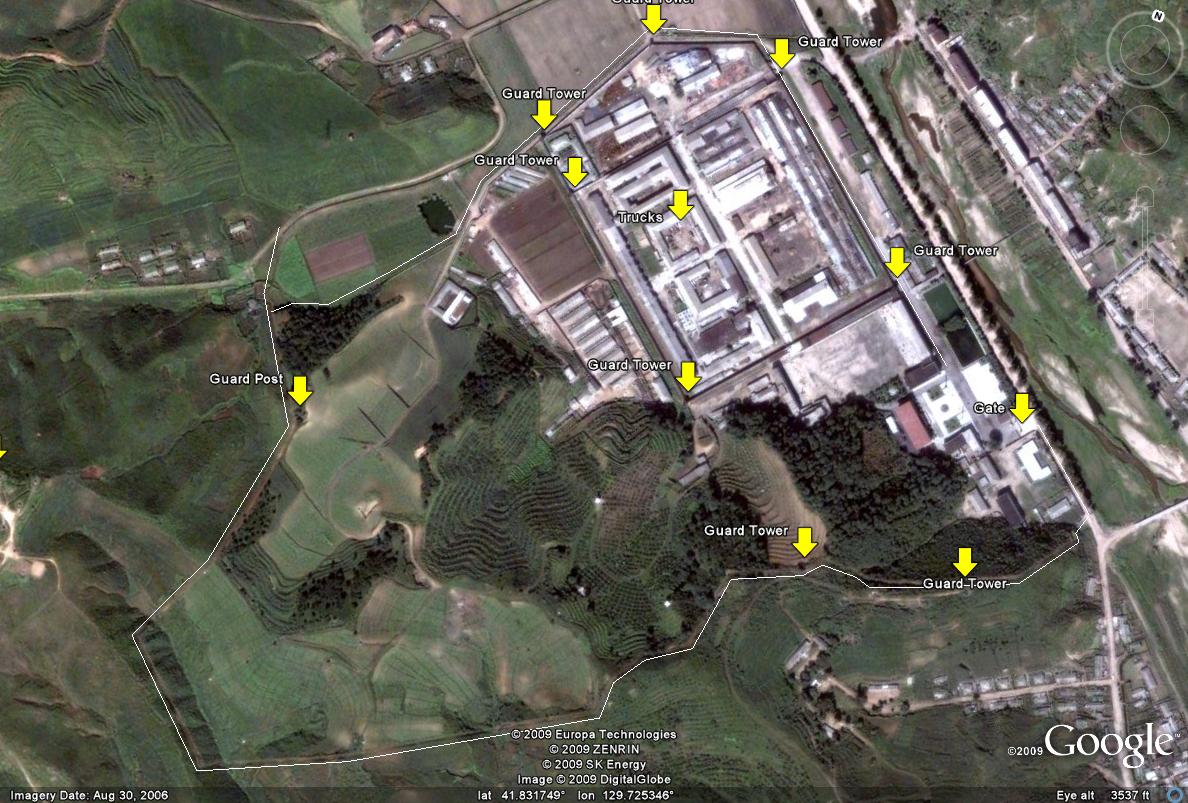
Chongjin-site

Mike Deri Smith contrasts himself to the giants of the journalistic past:

As idealistic young journalists, Ernest Hemingway, George Orwell, and William T. Vollmann each wanted to fix something: World War I, the Spanish Civil War, and the Soviet war in Afghanistan, respectively. As an idealistic young person, at a similarly nascent stage in my journalism career, I’d like to think I understand their drive. But I can’t say I’m idealistic enough to fight or die for the freedom of North Korea, if that option were available to me. The old idealists fought in the mountains; I scroll over North Korean mountains on Google Maps. They suffered on the front line; I read a little of the news from North Korea before going to a restaurant and gorging myself on beef ribs to the point of severe stomach pain.

But he nevertheless makes the case for his own cause of ending North Korea's gulag camps:

Concentration camps are a reality in the 21st century. Their existence in North Korea is an incontestable fact proven by hundreds of satellite images and the testimony of thousands who have escaped. A former camp guard and a defector who once worked within North Korea’s National Security Agency have suggested that approximately 200,000 people are currently in the camps. That's a number equal to the population of Tallahassee, Fla.

In North Korea’s concentration camps, there is no judicial system or right to appeal. Starvation-level rations kill thousands. Prisoners work 12-hour days, seven days a week, with time off only for national holidays. Forced abortions are carried out on pregnant women repatriated from China. Their young infants are often killed. Guards torture, murder, and rape. Almost every act classified as a crime against humanity is being carried out by the North Korean regime. This method of punishment has remained unchanged for more than 40 years. North Korea will eventually collapse. The horrors of the North Korean gulag will continue until that day.

(Image: From a series of Google Earth shots chronicling the death camps of North Korea)

Capote The Pariah

498px-TrumanCapote1959

Sam Kashner recounts the sad tale of Truman Capote's last attempted novel, a thinly-veiled expose of fixtures in New York's high society, revealing "their gossip, the secrets, the betrayals—even a murder":

[Capote] had boasted to his friend Marella Agnelli, wife of Gianni Agnelli, chairman of the board at Fiat, that Answered Prayers was “going to do to America what Proust did to France.” He couldn’t stop talking about his planned roman à clef. He told People magazine that he was constructing his book like a gun: “There’s the handle, the trigger, the barrel, and, finally, the bullet. And when that bullet is fired from the gun, it’s going to come out with a speed and power like you’ve never seen—wham!” But he had unwittingly turned the gun on himself: exposing the secrets of Manhattan’s rich and powerful was nothing short of social suicide.

Why did he do it?

"I wonder whether he wasn’t testing the love of his friends, to see what he could get away with. We had Truman around because he paid for his supper," [John] Richardson says, "by being the great storyteller in the marketplace of Marrakech. Truman was a brilliant raconteur. We’d say, ‘Oh, do tell us what Mae West was really like,’ or what did he know about Doris Duke? And he’d go on in that inimitable voice for 20 minutes, and it was absolutely marvelous, one story after another. And he loved doing it—he was a show-off."

Truman bristled at the idea that he was some sort of mascot or lapdog. "I was never that," he insisted. "I had a lot of rich friends. I don’t particularly like rich people. In fact, I have a kind of contempt for most of them. . . . Rich people I know would be totally lost … if they didn’t have their money. That’s why … they hang together so closely like a bunch of bees in a beehive, because all they really have is their money." In what would become a mantra of Truman’s, he often asked, "What did they expect? I’m a writer, and I use everything. Did all those people think I was there just to entertain them?"

In researching the piece, Vanity Fair stumbled upon a six-page manuscript of a chapter called "Yachts and Things," also unfinished. You can read it here.

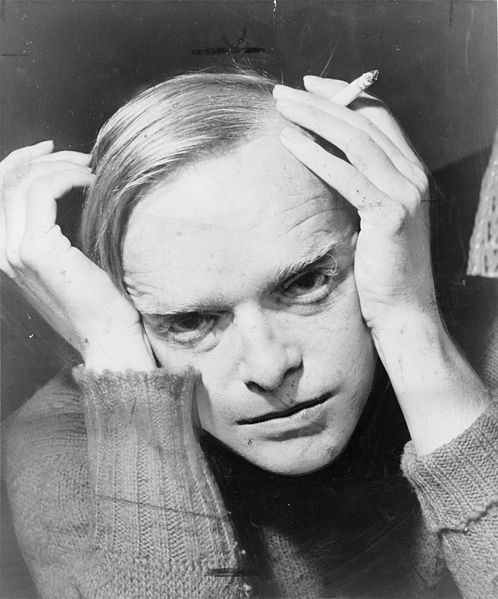
(Truman, in 1959, by Roger Higgins, via Wikimedia Commons)

Food As Fuel

E.J. Schultz takes stock of Americans' on-the-go eating habits:

"New Convenience Items Balloon Food Sales," stated an Ad Age headline in 1960. What was all the excitement about? Frozen meals, cake mixes and instant potatoes — foods that by today's standards would be considered a bit of a hassle. We are now living in a yogurt-and-snack-bar world, where the fastest-growing foods are those that often require little or no preparation. …

Indeed, of the 10 fastest-growing in-home foods and beverage categories over the past decade, only two are routinely heated (pizza and pasta), while the rest are pretty much open-and-eat, such as nuts and chips, according to NPD. Even staples such as soup and cereal — once considered easy — have lost momentum to items that can be scarfed down on the go.

The View From Your Window Contest

Vfyw_11-17

You have until noon on Tuesday to guess it. City and/or state first, then country. Please put the location in the subject heading, along with any description within the email. If no one guesses the exact location, proximity counts.  Be sure to email entries to VFYWcontest@gmail.com. Winner gets a free The View From Your Window book. Have at it.

Hello, My Name Is Protagonist

In a review of Alastair Fowler's Literary Names, Colin Burrow dissects the best and worst of character nomenclature:

Some fictional names are filled with semantic clues about the nature of their owners: you know that someone called Gradgrind will not be an advocate of child-centred learning, and that Luke Skywalker will not stay long on Tatooine. A character called Henleigh Mallinger Grandcourt is likely to be able to offer a girl a big house, though ‘Mallinger’ suggests it will come at a price. But there are still mysteries. Even ‘invisible’ non-significative fictional names can ‘seem right’. Quite how they do so is as mysterious as the reason why in any given year several thousand parents will simultaneously become convinced that their daughter ‘looks like’ a Joanna or a Niamh.

P.G. Wodehouse apparently took the name Jeeves from a Warwickshire cricketer. Did the name sound right for a valet simply because it rhymes with ‘sleeves’? Wodehouse became rich by sounding ultra-British to an American readership. Perhaps ‘Jeeves’ so well suits the ultimate English gentleman’s gentleman because his name coolly eschews early 20th-century US slang: ‘Jeeves’ is definitely not ‘Jeeze’ or ‘Gee’, but contains hints of both. Or is this just fantasy?

Getting Worse In Uganda

Yesterday, Ugandan Speaker of the Parliament Rebecca Kadaga renewed the push to pass the Anti-Homosexuality Bill, urging a vote by next Tuesday:

Jim Burroway summarizes the most appalling parts of the bill:

There has been considerable confusion over what would happen if the bill were to become law…. [I]t’s important to address the persistent false reports in the media that the death penalty has been removed from the bill. Those false reports have been reported as though they were fact since December, 2009.

He continues:

Most of the attention has focused on the bill’s death penalty provision, but even if it were removed, the bill’s other seventeen clauses would still represent a barbaric regression for Uganda’s human rights record. … There are a ton of "related offenses" in the proposed bill, including renting a room to a gay person, refusing to report a gay person to police, using the internet to advocate for the rights of gay people, donating to a pro-gay cause — and all of these offenses may be committed by straight people. A prior conviction on one of those clauses and then "touching" someone “with a part of a body” and "through anything" without anything even close to sex taking place … and you’re headed to the gallows under this bill.

Meanwhile, Melanie Nathan emphasizes that gay rights advocates in Uganda are "urging caution" from sympathizers abroad. Recent Dish coverage here and here.