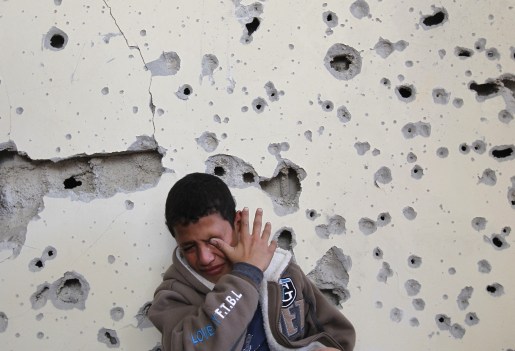
By Mohammed Abed/AFP/Getty Images
Friday on the Dish, Andrew agreed with Matt Steinglass about the GOP's Benghazi-fever, saw signs of a Conservative Spring, and found a little bipartisan sunshine near the fiscal cliff. He also reflected on the long road to gay civil rights and thought through the Catholic Church's disconnectedness.
For most of the day we focused on the crisis in Israel, as Andrew lamented the cross-radicalization of both sides, a scary moment in Jerusalem was live-tweeted, and Michael Koplow noted Israel's moral low ground on Twitter, which later got even lower. In addition, Alan Taylor curated yet another fine gallery, Israel's Iron Dome shot down some incoming rockets, and the IDF texted civilians to get out of harm's way. Looking at Gaza's regional effect, Marc Lynch worried about Egypt and Daniel Levy worried about Syria. Looking at Israel itself, several analysts considered the political consequences and intentions of war. Also, readers added their concerns about the ongoing violence, and Goldblog kept asking if Israel has had, or will ever have, an actual strategy. By the way, you can catch up on all this week's Gaza coverage right here.
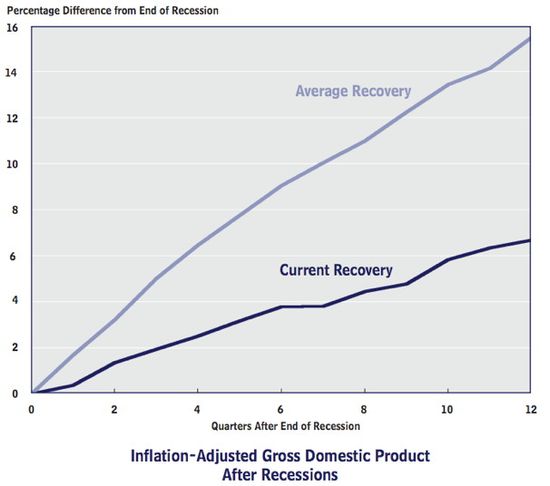
In political coverage, readers responded to Romney's moocher-paranoia while Nate Cohn championed an electoral Colorado, Neil Irwin tracked the economy's ever-so-gradual recovery, Alexis Madrigal profiled Obama's campaign-techies, and Ambers wondered if Petraeus had lost his nuclear trustworthiness. We also looked for the political divide between America's socio-economic classes, then let Elizabeth McNichol spell out some inequality trends before we counted up the financial-benefits of immigration reform. Oh and Bill O'Reilly somehow kept a straight face.
In assorted coverage, we acknowledged the deep pockets behind legal weed while Balko hoped the stuff would smarten up DC. The rising oceans worried us, wartime led to infidelity, Joel Keller walked lamb chops down the culinary red carpet, and astronomers almost outlined the screenplay to Armageddon II. Then Amit Majmudar heralded excess in literature, a veteran detailed his superfluous military medals, Japan sought regularity from cola, and year-ago Andrew remembered his Catholic childhood. Also, Kermit met Miles in our mashed-up MHB, we were happily distracted by useless websites, visited North Wales in the VFYW, and feared some malevolent boxes in our FOTD.
The rest of the week is after the jump:
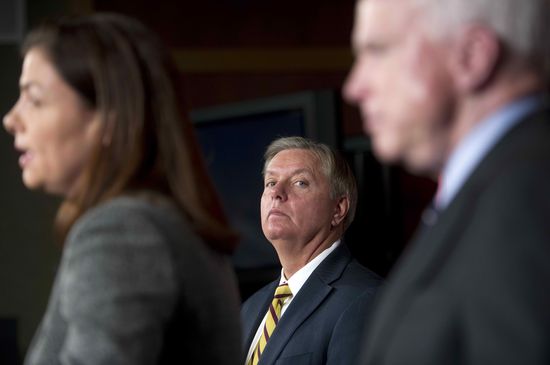
By Chris Maddaloni/CQ Roll Call
Thursday on the Dish, Andrew weighed in on the Gaza conflict as well as the IDF's macho posturing, then tore into Romney's "47 percent" redux, asserted the electoral power of gay voters, reminded us of McCain's doucheyness, and considered how a shirtless Fed might prove therapeutic for scandal-happy conservatives.
In political coverage, Adam Serwer and others got to the bottom of GOP gerrymandering, Bil Browning applauded the diversity of last week's winners, and Chait thought through the next 25 years of America's demography. Erica Grieder made it clear Texas won't become the Going-It-Alone-Star-State, Lee Drutman raised the cost of entry for future politicians, and Ramesh Ponnuru and Josh Barro analyzed the GOP's middle-class fantasies. Also, Rebecca Rosen helped us refute our whacky uncle's email forwards, Twitter users listed their #ObamaGifts, the Onion tried to out-crazy the right-wing tin-hat crowd, and we learned that, no, the auto bailout did not win Obama the election.
Looking internationally, our coverage of the violence in Israel continued as some anticipated a full ground war, while Michael Koplow and Eric Trager examined the responses from Turkey and Egypt, and Yousef Munayyer highlighted the disproportionate death toll in Gaza. Also in the Middle East, Nicholas Seeley doubted Jordan would get its own Arab Spring, while in the Far East, China went with conservatives for its new politburo.
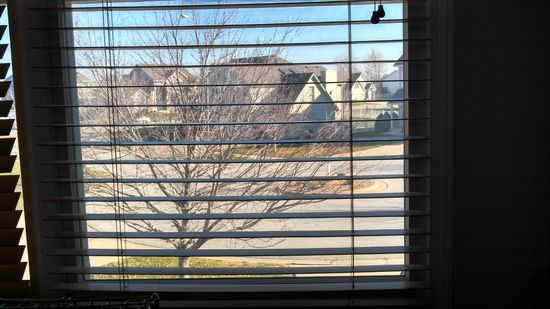
In other assorted coverage, a number of readers contributed their thoughts on America's over-medaled service members, while other readers worked through the idea that public transit wastes resources. Energy was also Jeffrey Leonary's concern as he warned us about our fragile power infrastructure, while Dylan Matthrews tried to recalculate the real number of poor Americans, and Betsy Woodruff tried to get conservatives behind the small government potential of new legal weed laws – laws which might also be coming to the five additional states we took a look at. We went over the depressing statistics regarding women who are denied abortions, checked in on prison reform efforts, and were the view from an angry bird's window. Kevin Kelly concluded that high-tech Bond villains would definitely need henchmen, Lydia Kiesling celebrated the big C criticism of James Wood, Alex Tabarrok used his TED Talk stats to back up online learning, and 'Big Beard' Andrew declined to break bad over legal hard drugs. Lastly, eggs had it coming in our slo-mo MHB, it was a calm Vancouver dawn in our VFYW, and our FOTD enjoyed some fake snow.

By Mahmud Hams/AFP/Getty Images
Wednesday on the Dish, Andrew mixed it up with some readers over the freedom of speech in private media, called out smear-mongerers who cry pedophile, admired the literate rant of a Times restaurant review, and anything-but-admired Dick Morris the self-professed propagandist.
In political coverage, we rounded up reactions to Obama's presser, Nate Cohn explored the black voter effect on this and future elections, Razib Khan noted that Asian-Americans are trending left, and Steven Malanga reminded the GOP that class, not race, was the main reason Hispanics don't support them. An argument along those lines earned Congressman Trey Gowdy an Yglesias as well. Massie explained how the decency of supporting marriage equality paid off with straight voters, Jonathan Bernstein broke down the chances for tax reform, and Douthat recommended that any Republicans with an eye on 2016 get their act together fast. Also, with the fiscal cliff looming, Neil Irwin worried about how the market would react if we fell.
Much of today's best posts belonged to readers: an Iraq vet shared his personal experience with the cult of Petraeus, another offered some apt analysis of Obama's approach to big generals, and another considered the effect of overloading today's servicemembers with medals and ribbons. A reader also noted last week's wide gains for progressive Coloradans while others offered myriad views on Texas' future as a swing state. Speaking of Texas, Paul Burka profiled "the most important thing that happened on election night" down in San Antonio. In continuing cannabis coverage, Yglesias raised the price of legal weed while Kleiman and Waldman wondered about its law and new order.
In international coverage, we went through reactions to, and the IDF tweeting of, the growing violence in Gaza, Christopher Dickey checked in on the uprising in Jordan, Ryan Avent anticipated the geopolitical impacts of a shifting oil market, and Christopher de Bellaigue argued that our sanctions on Iran would remain ineffective. Some readers pushed back on the idea that it was any less dangerous for gays in Uganda.
In assorted coverage, David Remnick pushed Obama to act on climate change, something that surely helped Sandy make 2012 a banner year for natural disasters. David Simon severed political greatness from sexual fidelity and Mary Beard found it hard to recognize the politics described by Cicero. Ian Leslie highlighted the productive mental difficulty of handwriting, Josh Wallaert lamented the declining shareability of online images, Christopher Mims decried ridiculous tech patents, ESPN outranked all other media properties, and we investigated the geography and possible solution to illegally-downloaded music. Archived Andrew excoriated the publishing industry while Lindsey Graham looked indignant in our FOTD. We took a geometric journey in our MHB and gazed at Philly brick in our VFYW.
By Mark Kolbe/Getty Images
Tuesday on the Dish, Andrew assessed the career of David Petraeus, a view that dovetailed Michael Cohen's. Bob Wright thought the militarization of the CIA was the most important Petraeus controversy, while Greenwald was outraged over the FBI overreach that brought the whole affair to light. Michael Gerson, meanwhile, continued to fall for the Petraeus BS while Podhoretz got giddy over a shirtless FBI agent.
In political coverage, Andrew and others pondered the possibility of a soonish Grand Bargain, explored the GOP's disfunctional marriage to the South, and guessed at the GOP's readiness to back down on taxes. Millman and Wick Allison questioned the math and morals of Republicans, whose campaign spending was exposed as a total debacle. Weigel pulled on the loose thread of party unity, Ryan Lizza anticipated the arrival of a purple Lone Star State, Americans continued to embrace Obamacare, and a bunch of pundits got tossed into a shame tumblr.
Lots of Yglesias nominations today: Bobby Jindal's murmurs of sanity earned one, as did Douthat for acknowledging the farce of Dick Morris, as did Gaza Gateway for critiquing some Chomsky support, as did Erick Erickson for aiming to drain the GOP's fever swamp. Archived Andrew reflected on what it's like to be gay and Catholic while JPod fired a pro-equality conservative. Noah Feldman tried to imagine how the SCOTUS would weigh legal weed, a topic Mark Kleiman worked to explain. James McGirk assembled a literature club for the far right while Daniel Foster encouraged conservatives to listen to the Boss.
Looking abroad, Tom Freston applauded the "new heroes" of Afghanistan's first professional soccer league, Hugh Sinclair shook his head at the terms and conditions of micro finance, and our FOTD celebrated Diwali. In assorted coverage, Kevin Dutton noted the surprising likelihood of psychopathy, Megan Garber watched the masculinity of pronouns decline, Eric A. Morris devalued the energy savings of rail transit, and Catherine Rampell saw young people start their own households. We visited Asthmapolis, previewed two new books on poverty, learned that plane crashes are very survivable, and gazed at the bacteria in our navels.
The Dish featured some skyscraper clouds in our VFYW from Tampa, while just to the south, two readers shared a victory in this week's window contest from Haiti. A cool ad we found blended classical art and ironing. We got to go dancing on our MHB, but nobody could top this parrot. Veterans Day weekend wrap here.

By Michael Loccisano/Getty Images
Veterans Day weekend on the Dish, we took an eclectic look at politics, both past and present. Readers provided their take on Romney's bureaucratic, bumbling campaign, Walter Olsen highlighted the Republicans who brought marriage equality to Maryland, Teenie Matlock unpacked the importance of grammar for how we think about candidates and elections, Bill Kristol earned himself an Yglesias Award, and Nicolas Pelham contemplated Gaza's political future. Andrew Hessel, Marc Goodman, and Steven Kotler considered the horrifying prospect of personalized bioweapons, Avi Steinberg ruminated on the political dimension of ancient flood myths, Clay Risen examined presidential drinking habits, Louis Masur explored the impact of Lincoln's Emancipation Proclamation, K.C. Cole tried to grasp the roots of epistemic closure, E.B. White explained democracy, and Louis Menand noted the indispensable part that rock and roll played in the liberation of Eastern Europe.
We also presented a plethora of literary and arts coverage. Landon Y. Jones offered a glimpse into F. Scott Fitzgerald’s summer in Montana, Anthony Daniels plumbed the depths of his obsession with books, Google Poetics turned our searches into verse, Vera Pavlova gave her thoughts on writing poetry, Jason Pontin wondered why more writers haven't adapted their work to the new ways we read, Leigh Bardugo praised her adolescent literary hero, John Lingan stumbled upon the critic Michael Dirda in a used bookstore, and Max Ross blamed Disney for taming the political message of fairy tales. Rachel Cohen divulged the art world's financial history, Hunter Oatman-Stanford asked Jon Crispin about his photographs of what patients left behind at a New York asylum, Ted Nyman imagined the invasiveness of social media while using the site sex.ly, and William Deresiewicz defined upper middle brow culture. Read Saturday's poem here, Sunday's here, and Monday's here.
In matters of faith, doubt, and philosophy, Chris Stedman reflected on coming to terms with his sexuality while attending a conservative, Protestant church, Alex Ross meditated on the shifting contours of religious belief and homosexuality, Mark Noll extracted political lessons for Christians from the Puritans, and Paul Baily found himself drawn to the gripping, heterodox portrait of the mother of Jesus in The Testament of Mary. Emily Eakin mused on the philosophy of Cloud Atlas, Tom Jacobs pointed to a brilliant passage from DFW on the beauty of boredom, Charles Mann asked if we are wired to destroy ourselves, Emily Badger welcomed the union of architecture and neuroscience, and David Wallace-Wells profiled Oliver Sacks and his experiments with hallucinogens.
In assorted coverage, Graeme Wood reviewed gay progress in Uganda, Ruth Evans reported on Japan's fascination with blood type, Christopher Ketcham claimed to uncover Monopoly's socialist origins, Leah Binkovitz deconstructed how to make perfect scrambled eggs, and Geoffrey K. Pullum deciphered the "language of phone numbers." Josh Begley visited Louisiana State Penitentiary's golf course, Jackson Landers advocated his philosophy about food, Michelle Dean traced the transformation of witches in the popular imagination, Hunter Oatman-Stanford investigated our relationship to prosthetic limbs, and Alex Tabarrok and Jordan Weissmann debated basing university fees on a student's major. A hilarious Hathos Alert can be found here. FOTDS here, here, and here; MHBs here, here, and here; VFYWs here, here, and here; and the latest window contest here.
– C.D. & M.S.


 The Dish
