A Kick In The Right Direction

Soccer_GT

Tom Freston praises Afghanistan’s first professional sports organization:

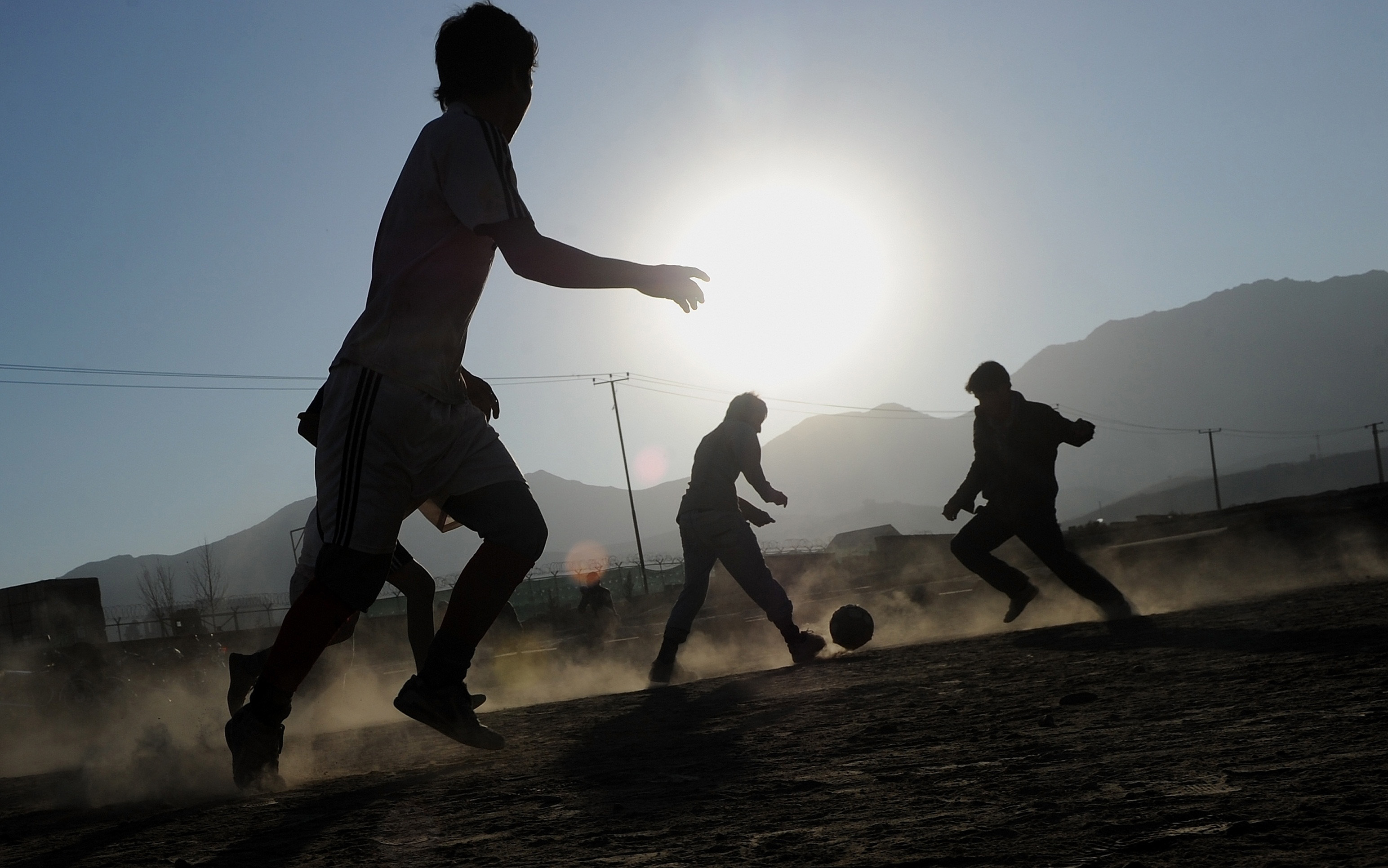
[The Afghan Premier League] is a great example of Afghan entrepreneurship. Afghans are good soccer players and have fielded a national team off and on since 1948. Games were primarily played outside the country, so few Afghans saw them. The genius of the A.P.L. was to recognize that, with 60 percent of Afghans now having access to television, soccer games could be broadcast nationally on the new networks and a proper league could be supported. Football fever has ensued. Here are some new heroes at last; buff, handsome, polite sportsmen with colorful uniforms and gelled hair.

A televised soccer league wasn't possible under the Taliban, which banned TV.

(Photo: Afghan boys play football in a field in Kabul on December 21, 2011. By Shah Marai/AFP/Getty Images.)

Are We Overselling Public Transit?

Yes, according to Eric A. Morris:

[Consider] autos with but one passenger and compare them to transit vehicles in which every seat is full. (For example, see this.) But in the real world, this is emphatically not the case. At any given time, the average auto has somewhere around 1.6 passengers, and the average (typically 40-seat) bus has only about 10. Rail vehicles typically have more passengers (on average about 25), but then again they are also typically much larger. Thus their average load factor (percentage of seats filled) is also not high, at about 46 percent for heavy rail systems (think subways in major cities) and about 24 percent for light rail (think systems that mostly run at street level).

It is not clear that moving around large and largely empty vehicles is much of an improvement over moving around smaller ones. In fact, it may be worse. According to the Department of Energy’s Transportation Energy Data Book, in 2010 transporting each passenger one mile by car required 3447 BTUs of energy. Transporting each passenger a mile by bus required 4118 BTUs, surprisingly making bus transit less green by this metric.

The Weekend Wrap

Wrap111

This Veterans Day weekend, we took an eclectic look at politics, both past and present. Readers provided their take on Romney's bureaucratic, bumbling campaign, Walter Olsen highlighted the Republicans who brought marriage equality to Maryland, Teenie Matlock unpacked the importance of grammar for how we think about candidates and elections, Bill Kristol earned himself an Yglesias Award, and Nicolas Pelham contemplated Gaza's political future. Andrew Hessel, Marc Goodman, and Steven Kotler considered the horrifying prospect of personalized bioweapons, Avi Steinberg ruminated on the political dimension of ancient flood myths, Clay Risen examined presidential drinking habits, Louis Masur explored the impact of Lincoln's Emancipation Proclamation, K.C. Cole tried to grasp the roots of epistemic closure, E.B. White explained democracy, and Louis Menand noted the indispensable part that rock and roll played in the liberation of Eastern Europe.

We also presented a plethora of literary and arts coverage. Landon Y. Jones offered a glimpse into F. Scott Fitzgerald’s summer in Montana, Anthony Daniels plumbed the depths of his obsession with books, Google Poetics turned our searches into verse, Vera Pavlova gave her thoughts on writing poetry, Jason Pontin wondered why more writers haven't adapted their work to the new ways we read, Leigh Bardugo praised her adolescent literary hero, John Lingan stumbled upon the critic Michael Dirda in a used bookstore, and Max Ross blamed Disney for taming the political message of fairy tales. Rachel Cohen divulged the art world's financial history, Hunter Oatman-Stanford asked Jon Crispin about his photographs of what patients left behind at a New York asylum, Ted Nyman imagined the invasiveness of social media while using the site sex.ly, and William Deresiewicz defined upper middle brow culture. Read Saturday's poem here, Sunday's here, and Monday's here.

In matters of faith, doubt, and philosophy, Chris Stedman reflected on coming to terms with his sexuality while attending a conservative, Protestant church, Alex Ross meditated on the shifting contours of religious belief and homosexuality, Mark Noll extracted political lessons for Christians from the Puritans, and Paul Baily found himself drawn to the gripping, heterodox portrait of the mother of Jesus in The Testament of Mary. Emily Eakin mused on the philosophy of Cloud Atlas, Tom Jacobs pointed to a brilliant passage from DFW on the beauty of boredom, Charles Mann asked if we are wired to destroy ourselves, Emily Badger welcomed the union of architecture and neuroscience, and David Wallace-Wells profiled Oliver Sacks and his experiments with hallucinogens.

In assorted coverage, Graeme Wood reviewed gay progress in Uganda, Ruth Evans reported on Japan's fascination with blood type, Christopher Ketcham claimed to uncover Monopoly's socialist origins, Leah Binkovitz deconstructed how to make perfect scrambled eggs, and Geoffrey K. Pullum deciphered the "language of phone numbers." Josh Begley visited Louisiana State Penitentiary's golf course, Jackson Landers advocated his philosophy about food, Michelle Dean traced the transformation of witches in the popular imagination, Hunter Oatman-Stanford investigated our relationship to prosthetic limbs, and Alex Tabarrok and Jordan Weissmann debated basing university fees on a student's major. A hilarious Hathos Alert can be found here. FOTDS here, here, and here; MHBs here, here, and here; VFYWs here, here, and here; and the latest window contest here.

– M.S.

(Photo: A World War II veteran takes part in the Veteran's Day Parade on November 11, 2012 in New York City. By Michael Loccisano/Getty Images)

Don’t Fear Flying

No matter how much the cinema tries to scare you:

Maggie Koerth-Baker assures travelers that surviving a plane crash is much more common than you think:

Looking at all the commercial airline accidents between 1983 and 2000, the National Transportation Safety Board found that 95.7% of the people involved survived. Even when they narrowed down to look at only the worst accidents, the overall survival rate was 76.6%. … In fact, out of 568 accidents during those 17 years, only 71 resulted in any fatalities at all.

On a related note, Jason Bailey reviews Flight, a film loosely based on Captain Chesley "Sully" Sullenberger's emergency landing on the Hudson:

In a brief, high-pressure situation, this pilot had to call upon all of his skill, all of his training, and all of his experience to save 155 lives. And afterwards, everybody called it a miracle. It wasn't a miracle—it was what the man was equipped to do. But that's the narrative that's stuck from that incident, and that's why it's disappointing that Flight couldn't find a way to correct it. They went to the trouble of making a loose dramatization of one of the most compelling stories of our era, and they went off and dramatized the wrong damn part of it.

“The End Of Men … English Pronoun Edition”

According to a study by gender theorist Brian Earp (pdf), male-dominated pronouns are in decline. Megan Garber summarizes:

"Across three domains–academic, popular, and personal–the results are clear," Earp writes. "He/man language is increasingly less used, and nonsexist alternatives are on the rise." Among the academic literature, Earp recorded a marked decline in the use of the term "mankind": from 3,149 instances in the span between 1970 and 1971 to 1,929 instances in the 1999-2000 span–a 38.8 percent decrease. "Humankind," on the other hand, saw a 1,890-percent increase: from 63 articles in 1970-1971 to 1,192 articles in 1999-2000. "He or she," for its part, saw a 1,194-percent increase.

It’s A Jungle Down There

Rob Dunn cultured the bacteria of people’s belly buttons:

One can imagine many factors that influence which bacteria are on your skin; whether you were born c-section or vaginally, gender, age, weight, whether you are an innie or an outie, whether you live in a city or the country, what climate you live in, whether or not you have a dog, and maybe even where you grew up or where your mother lived when she was pregnant with you. As we looked at belly buttons we saw a terrible, yawning, richness of life.

Philippa Warr describes the findings:

The Belly Button Biodiversity Project, which explores the bacterial ecosystems living in its participants' navels, has discovered that a small number of bacterial phylotypes (or "species") dominate the micro-landscape. The biologists' results show a "jungle of microbial diversity" with over 2,300 species of bacteria present and only eight of those recurring frequently — a similar diversity distribution to that of tree species in tropical rainforests.

Carl Zimmer's analysis:

It’s possible that the rare microbes are only visitors, dropping by for a short stay in our navels before dying out or traveling on. The most common species the scientists found may have long-term leases, having evolved adaptation that help them thrive in the bellybutton’s distinctive habitat. Dunn and his colleagues found that these abundant species were also closely related to each other compared to the rarer ones. It’s a pattern similar to the one found in rain forests, were only a few lineages of trees dominate, with many species only contributing a few trees. Your belly button, in other words, really is a jungle.

Are We Wired To Destroy Ourselves?

Victor_ash_platoon_seoul_2012_2

Charles C. Mann reframes our struggle with climate change:

In the name of nature, we are asking human beings to do something deeply unnatural, something no other species has ever done or could ever do: constrain its own growth (at least in some ways). Zebra mussels in the Great Lakes, brown tree snakes in Guam, water hyacinth in African rivers, gypsy moths in the northeastern U.S., rabbits in Australia, Burmese pythons in Florida—all these successful species have overrun their environments, heedlessly wiping out other creatures. Like Gause’s protozoans, they are racing to find the edges of their petri dish. Not one has voluntarily turned back. Now we are asking Homo sapiens to fence itself in.

What a peculiar thing to ask! Economists like to talk about the “discount rate,” which is their term for preferring a bird in hand today over two in the bush tomorrow. The term sums up part of our human nature as well. Evolving in small, constantly moving bands, we are as hard-wired to focus on the immediate and local over the long-term and faraway as we are to prefer parklike savannas to deep dark forests. Thus, we care more about the broken stoplight up the street today than conditions next year in Croatia, Cambodia, or the Congo. Rightly so, evolutionists point out: Americans are far more likely to be killed at that stoplight today than in the Congo next year. Yet here we are asking governments to focus on potential planetary boundaries that may not be reached for decades. Given the discount rate, nothing could be more understandable than the U.S. Congress’s failure to grapple with, say, climate change. From this perspective, is there any reason to imagine that Homo sapiens, unlike mussels, snakes, and moths, can exempt itself from the natural fate of all successful species?

But in examining our past accomplishments – women's rights, gay rights, and ending slavery at a time when it was still economically profitable – Mann has hope for our ability " to draw back before the abyss."

(Image by Victor Ash via Wooster Collective)

The Disneyization Of Fairy Tales

Max Ross reviews Jack Zipes's The Irresistible Fairy Tale, a cultural and social history of the genre. Ross examines the evolution of the stories' political meanings:

As an oral form, fairy tales have been around for millennia; it wasn’t until the 17th century that they were written down for the first time. Somewhat more recently, Zipes laments, they’ve been commercialized into TV and films and, with each new incarnation, the fairy tale’s ability to depict social struggles has diminished. Likewise, the fairy tale’s narrative edge has been continually dulled; whereas folklore was once rife with inventive murders, unwanted pregnancies, and the occasional cannibalistic feast, the various media have redacted, airbrushed, and photoshopped much of this content away. Which means, basically, the stories are less fun. It was Disney, Zipes says, that did the most damage, kidnapping the fairy tale and malnourishing it until it was nearly dead, editing out any edifying material in favor of listless princesses and happy endings.

The Limbs Of War

2226075066_ec4363a50d_b

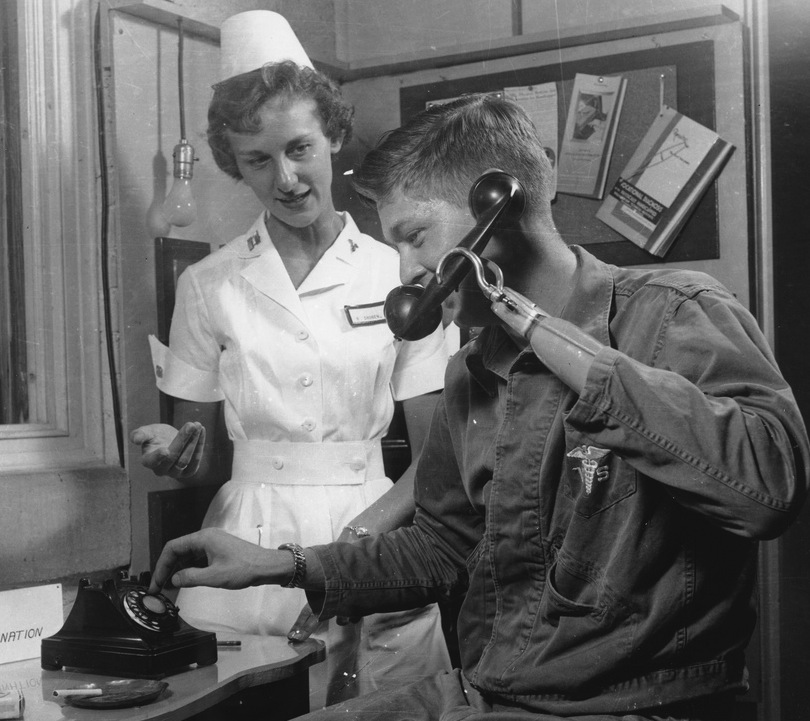
Hunter Oatman-Stanford investigates our relationship to prosthetic limbs:

“You hate to think that war is what drives technology, but it does,” says Kevin Carroll, the Vice President of Prosthetics for Hanger, a major artificial-limb producer founded just after the Civil War. Historically, the impulse to create functional replacement limbs has grown in parallel with the number of living amputees, whose ranks ballooned following periods of military conflict, especially the American Civil War and World War I.

However, the technology being developed today won't only benefit war veterans:

“It reminds me of NASCAR,” Carroll says. “You see those guys racing around the track at 200 miles an hour, and in the not-too-far-away future, the technologies in their cars will be in our regular cars. It’s the same way with prosthetics, with these high-performance feet that these young men and women are pushing to the limits. Grandma may very well be walking across the floor on them next year.”

(Photo from the Otis Historical Archives National Museum of Health and Medicine on Flickr)