The Value Of Art

Leonardo_b_818-600x462

Rachel Cohen explores the art world's financial history:

For as long as artists have made a living from their art, even if a meager one, some version of the art market has been negotiated between people with power and people with artistic talents. But in each era, what was held to be valuable was different. Though the art market has always measured value, that value was not always expressed in exclusively financial terms. Take, for example, fifteenth-century Florence, where the Medici banking family held sway. At that time, bankers worked in long-term partnerships with one another, and painters had workshops that were passed down from master to apprentice. Ongoing relationships with men of standing were very valuable. The exchange between, say, Lorenzo the Magnificent and Botticelli took the form of an enduring patronage relationship with large-scale commissions for churches and palazzi. Much of the value exchanged was not monetary but religious or reputational. Both the banker and the painter were understood to be more pious and significant men as a result of their relationship.

But in the Gilded Age, price was increasingly felt to be the measure of value which subsumed all others.

In 1825, a Botticelli of the Holy Family sold for £10 and 13 shillings. In 1898, when offered another well-known Botticelli, of Saint Jerome, for £500, the British National Gallery was content to turn it down. But in 1912 that Saint Jerome sold to the American collector B. Altman for about $50,000. And by the time Andrew Mellon, in 1931, bought a Botticelli, together with a Rembrandt, he felt he was getting a rapaciously good bargain at a mere $1 million. Works by Botticelli were becoming increasingly prized during this period, but prices for all of the most valued paintings leaped up almost shockingly in the years before and after the first IPOs and the first cubist pictures. Suddenly people began to see paintings as representations not only of age-old values but of future values. And once they began to look at them that way, it mattered less how much time they’d withstood the test of. What people became interested in was not what the pieces were worth a hundred years ago but what they might be worth tomorrow. All through the twentieth century, prices for contemporary artwork were rapidly catching up to prices for works by old masters. Now, the first time a Damien Hirst is sold, the price is at a level only the greatest works of the past have achieved after being sold and resold for a century or more.

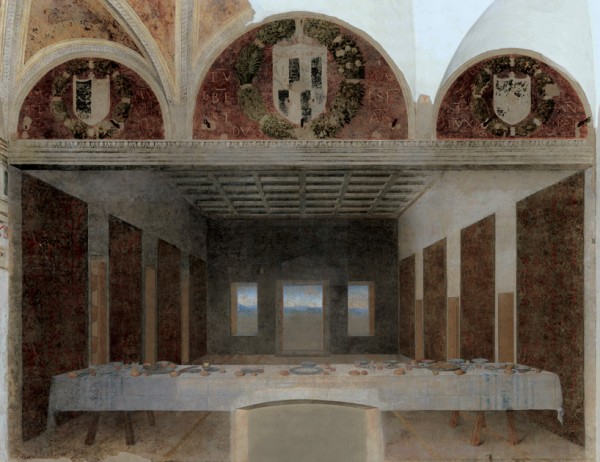
(Leonardo da Vinci’s The Last Supper, with the people digitally removed, by Bence Hajdu, via Hyperallergic)


“Abiding Love Cannot Be A Sin”

In a wide-ranging essay on the fate of gay culture, Alex Ross closes with a stirring meditation on the shifting contours of religious belief and homosexuality – and his own grappling with God:

It may be, as John Cardinal O’Connor once intoned, that the Catholic Church will be teaching that homosexuality is a sin “until the end of time.” Recent history suggests, however, that change can happen blindingly fast. I knew as much when, earlier this year, I found myself standing in the chapel at my high school, addressing a meeting of the school’s Gay-Straight Alliance. The existence of such a group was staggering enough; then, there was the fact that the gathering was held in a religious space. I struggled for words, not only because I felt like a visitor from the time of the Mattachine Society—the faces in front of me betrayed little of the dread I once experienced—but also because I was standing in front of an image of Christ on the Cross. I fought off the ancient sense of not belonging, here or anywhere. Eventually, I stammered out something along the lines of what [Bishop Gene] Robinson states crisply in his book: nothing in Jesus’ teachings prevents the recognition of devoted gay relationships. Indeed, Robinson’s title flatly suggests that God wishes it so. Linda Hirshman, in “Victory,” says that the gay movement conquered a fortress of hatred on the strength of its “moral certainty.” That certainty is rooted in the conviction that abiding love cannot be a sin.

Mind Your Manors

Garyfarlowglassanatomy2

Emily Badger welcomes the union of architecture and neuroscience:

If architects understood both fields, they might be able, in designing hospitals, schools, and homes for people with all manner of disabilities, to create places that would support the development of premature babies, the treatment of children with autism, the fostering of learning abilities of students. Imagine hospitals with such intuitive way-finding that no one gets lost (or stressed as a result); imagine an Alzheimer’s facility that could help its residents remember who they are.

The most famous example:

Early in his career, when he was still struggling to find a cure for polio, Jonas Salk retreated to Umbria, Italy, to the monastery at the Basilica of Assisi. The 13th-century Franciscan monastery rises out of the hillside in geometric white stone, with Romanesque arches framing its quiet courtyards. Salk would insist, for the rest of his life, that something about this place—the design and the environment in which he found himself—helped to clear his obstructed mind, inspiring the solution that led to his famous polio vaccine.

(Anatomical glass sculpture by Gary Farlow of Farlow's Scientific Glassblowing via My Modern Met)

A Poem For Sunday

Emptyapt2

"Cleaning Out Your Apartment" by Elizabeth Alexander:

A fifty-year-old resume
that says you raised delphiniums.
Health through vegetable Juice,
your book of common prayer,

your bureau, bed, your easy chair,
dry Chivas bottles, mop and broom,
pajamas on the drying rack,
your shoe-trees, shoe-shine box.

I keep your wicker sewing kit,
your balsa cufflink box. There’s
only my framed photograph to say,
you were my grandfather.

Outside, flowers everywhere,
The bus stop, santeria shop.
Red and blue, violent lavender.
Impatiens, impermanent, swarm.

(From Crave Radiance: New and Selected Poems 1990-2010 © 2011 by Elizabeth Alexander. Reprinted with the permission of The Permissions Company, Inc. on behalf of Graywolf Press. Photo by Flickr user puuikibeach)

The Anti-Holden Caulfield

Leigh Bardugo praises her adolescent literary hero, Paul Atreides of Dune:

While Holden Caulfield was moping and breaking windows, Paul Atreides (Dune's protagonist; Muad'Dib to the faithful) was equipping me with a junior-high survival guide. Paul is not a classic underdog. He's the son of a duke. He's been trained since birth in combat, diplomacy and general badassery by a cast of geniuses and battle-hardened weirdos with impossible-to-pronounce names. But when his world is turned upside down — when he leaves his home, loses his father and enters a physically and politically hostile environment — he doesn't whine and cry and brood. He adapts.

War As Teacher

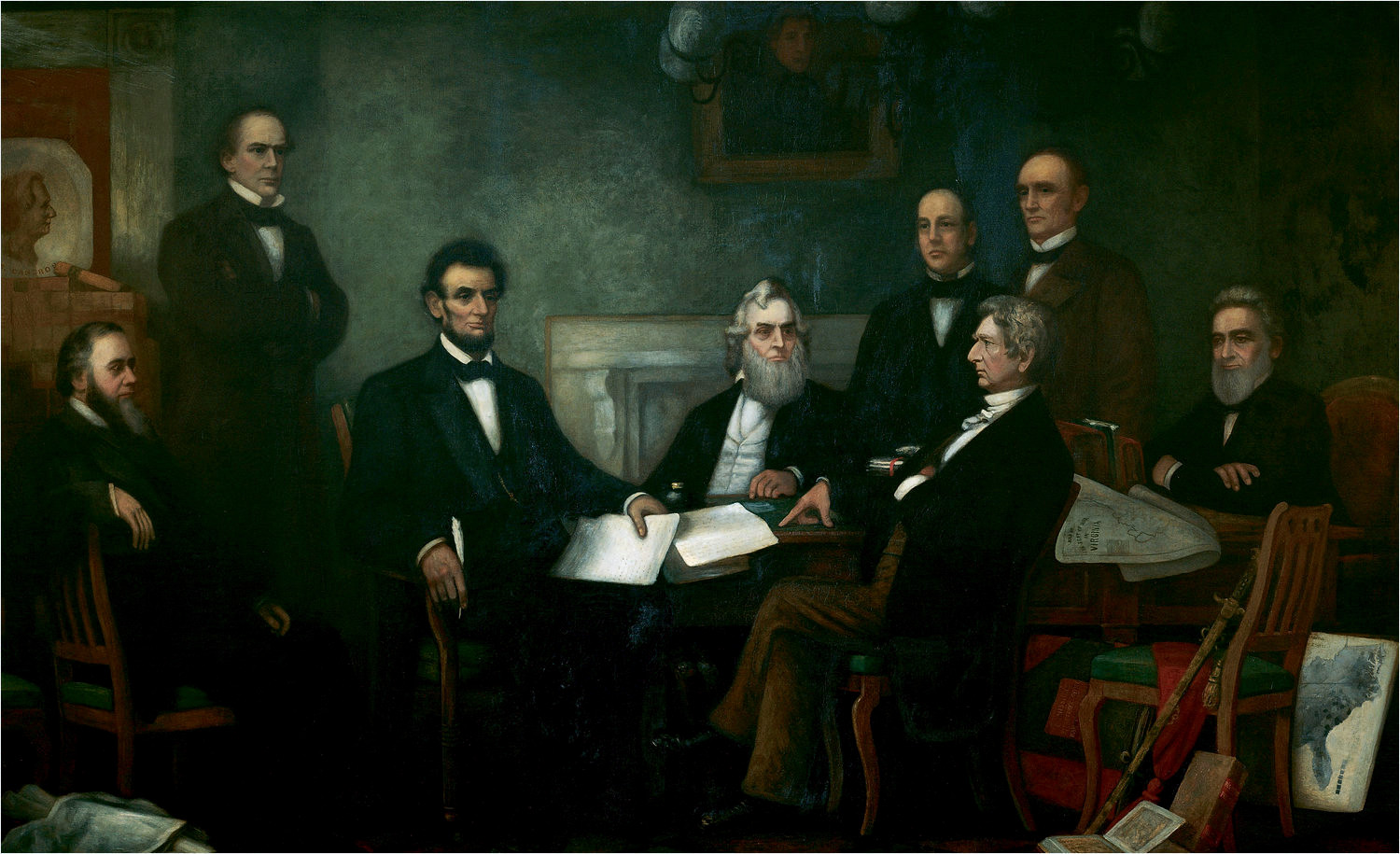
Emancipation

In a searching analysis of the history and politics behind the Emancipation Proclamation, Louis P. Masur describes one of the underappreciated consequences of Lincoln's decree – the impact it had on whites:

The Emancipation Proclamation and black military participation transformed the thinking of many white soldiers. Charles Wills, who enlisted as a private with the 8th Illinois and rose to be a lieutenant colonel with the 103rd Illinois, marveled at his own transformation. In summer 1863, Wills confessed, “I never thought I would, but I am getting strongly in favor of arming them [blacks], and am becoming so blind that I can’t see why they will not make soldiers. How queer. A year ago last January I didn’t like to hear anything of emancipation. Last fall accepted confiscation of rebel’s negroes quietly. In January took to emancipation readily, and now believe in arming the negroes.” Another soldier, Silas Shearer of the 23rd Iowa, had a similar experience. “My principles have changed since I last saw you,” he informed his wife. “When I was at home I was opposed to the medling of Slavery where it then Existed but since the Rebls got to such a pitch and it became us as a Military needsisity … to abolish Slavery and I say Amen to it and I believe the Best thing that has been done Since the War broke out is the Emancipation Proclimation.”

Wills’s letters illustrate what Lincoln and all Americans experienced: the war was a teacher. No one articulated this truth more than Ralph Waldo Emerson, the Concord philosopher. The outbreak of the war changed Emerson, who had disdained political parties, mistrusted philanthropic efforts, and once called himself “a seeing eye, not a helping hand.” He labeled the war “a new glass to see all our old things through.” It was “instructor,” “searcher,” “magnetizer,” and “reconciler.” Emerson the individualist and idealist may have bristled at the churning power of the machinery of war, but Emerson the patriot and realist welcomed the struggle for the birth of a new social order.

(Image: "First Reading of the Emancipation Proclamation of President Lincoln" by Francis Bicknell Carpenter from Wikimedia Commons)

Mother Mary

Paul Bailey reviews Colm Tóibín's latest novella, The Testament of Mary, and finds himself drawn to its heterodox but gripping portrayal of the mother of Jesus:

Tóibín's commonsensical Mary is possessed of many virtues, high among which is the capacity to doubt. She is instinctively a sceptic when pondering the behaviour of other people, including the men and women who besought her son to perform miracles. … Will this book upset, or even enrage, the thousands of Christians of all denominations who believe that the Virgin Mary is sacrosanct? It certainly failed to offend me, since the portrait this always scrupulous novelist presents is of a loving person who cannot bear the notion that the son she raised and nurtured should be so barbarically sacrificed for the world that was, the world that is, and the world that's yet to come. She writes, you might say, with the authority of loss. She stands for every grieving parent in history, mystified by the cruel fate meted out to her only child.