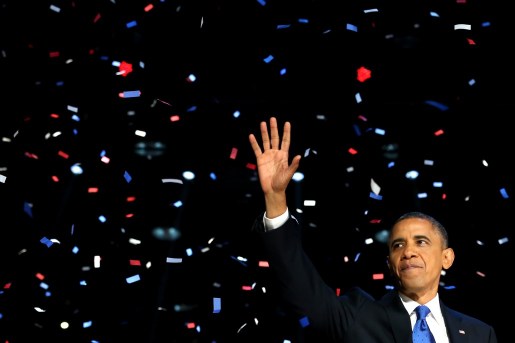
By Chip Somodevilla/Getty Images
Friday on the Dish, as the fiscal cliff loomed near, Andrew told Obama to get on with the governing. Readers chimed in on whether the Right will alter course after this week's losses, while Conor and Drum suggested the GOP find a less-racist path. Then, to Allahpundit's amazement, the Romney campaign's phones failed at being smart, while to all of our amazement Obama both cried and sang (in our Mental Health Break).
Kate Pickert and Judy Soloman previewed the state-level reactions to a now-inevitable Obamacare, and Elias Isquith and Dylan Matthews dug into how unfair the House popular vote was for Democrats. From the other side, the Right gave us whiplash with their new immigration stance to solve a demographic problem that Tim Scocca charted and McArdle claimed was overblown. In other demographics, Ann Friedman went glass-half-empty on "The Year Of The Woman" while Tim De Chant made some nifty maps to explore election day via population density. Not to be outdone, Buzzfeed mapped the Tuesday's results as if they had happened in 1850 (Romney should find himself a time machine).
Matt Glassman and Kerry Howley spelled out the return on investment Sheldon Adelson got, and a whopping nine conservative pundits threw their terrible predictions into the ring for this year's Dick Morris Award. Speaking of denial, Julian Sanchez explained why partisans are better off avoiding the reality of math. Sam Trende and Nate Cohn argued over whether or not millions of white voters disappeared on election day. Michael Moynihan blamed us for the prevalence of political dishonesty, but you should believe Marc Ambinder, who predicted a bleak future for anti-gay conservatives, while Dan Savage thanked pro-equality straights.
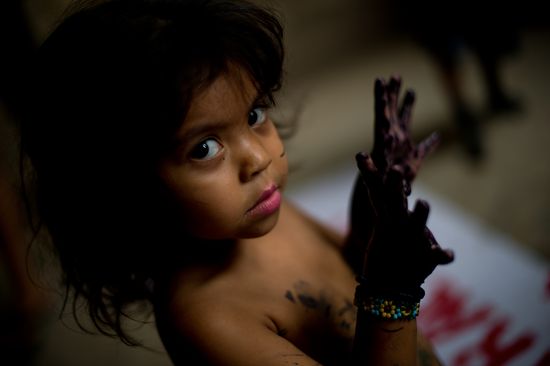
Michael Koplow insisted Tunisia couldn't have democracy without including its Salafists, while further east we looked at the upcoming election in China. Emily Drabant went looking for the gay gene, Josh Sanburn detailed how poverty can lead to suicide, Kevin Dutton suggested that kids read more to care more, and Lorin Stein recommended we all enjoy the tightly-packed meaning of short stories. Pat Robertson was shocked that women could "struggle with" porn. Elsewhere in that industry, Lux Alptraum and James Deen doubted that LA would be able to keep its new condom law up. Anthony Bourdain has a famous tongue and Noreen Malone admired it, and Spencer Woodman waxed lyrical on the benefits of hurricanes. Lastly, our Face Of The Day fought for her home in Rio De Janeiro and a reader in Cuba sent us a window view.
The rest of the week after the jump:
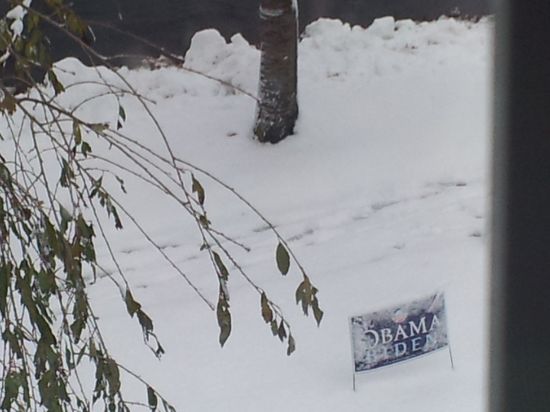
South Orange, New Jersey, 6 am
Thursday on the Dish, Andrew enjoyed a little Fox News Schadenfreude before diving into the Right's massive reality issues. He also wondered if George Will and his deluded brethren will ever have the integrity to find new professions, and then marveled at Romney's poor showing in CA and NY. After Massie checked on the post-election denial at The Corner, Michael Grunwald doubted the GOP would learn their lesson – not that Maddow and Heilemann didn't try to set them straight. Besides, as Larison noted, the Republicans have Chris Christie to inexplicably blame for Obama's victory.
Also, Ackerman, Sasha Issenberg, and Michael Scherer looked at the success of the Democrats' nerdiness, and Massie, Ruy Teixeira, and others dug into the GOP's big Hispanic problem. David Simon championed America's new racial and social hierarchy, while Drum poured cold water on this week's liberal glee. Then while Romney sang a ditty, Lauren Ashburn took Douglas Brinkley's temperature on Mitt's future (in short: good luck). On the rest of the ticket, Noam Scheiber let the air out of the Paul Ryan effect. Also, despite the overall accuracy of Nate Silver, #DrunkNateSilver and the other poll-aggregaters, Jason Zengerle worried that the current math-frenzy would make future elections even horse-racier. Jonathan Bernstein and Nate additionally pondered the Left's possible edge in the electoral college, which Florida finally made 332-206. Jennifer Victor broke down the spending splits of Teams Obama and Romney, while Karl "Crossroads" Rove and his ilk learned they'll have "holy hell to pay" to their disgruntled bankrollers.
Weigel and Ana Marie Cox remained happily astonished at Tammy Baldwin's victory, while efforts to bring marriage equality to Minnesota pushed forward. We also learned that – surprise – campaigning as a rape-philosopher is not the secret to electoral success. Later we loved to hate how Eric Dondero has sworn off his liberal acquaintances (except maybe Elton), and we laughed as Robert Stacy McCain posed as a grand historian to suggest "manful endurance" to the Right.
In suddenly-legal weed news, Jacob Sullum sketched the upcoming timeline for CO and WA, which Paul Campos hoped Obama would be laissez-faire about, and assuming that's the case Erik Voeten imagined American drug tourism. Remembering last week's storm, Eric Roston compared the clarion calls of Sandy and 9/11, while our Face Of The Day still doesn't have power in Brooklyn. A wistful Lauren Slater contemplated the unprovable love of pets – even a raccoon – and Quartz examined the economic implications of Brazilian dog-ownership. Radiolab explained the physics of coffee rings, Alexis Hauk visited the graves of dead writers and Josh Levin warned against the distractions of music-listening while biking.
Short men could jump in our Mental Health Break and there was Jersey snow for Obama/Biden in our VFYW.
Wednesday on the Dish, after Obama's speech reminded Andrew how "deeply American" the president is, Andrew hailed last night as a BFD for marriage equality, underscored Dick Morris' buffoonery, and read Rove's going rogue as a debacle for Roger Ailes. Readers reacted to the big win for Obama, Twitter captured the drama as results came in, and readers meep-meeped. Ezra Klein analyzed Obama's speech, Dan Savage reflected on the ground broken on gay equality, Alex Ross ruminated on Obama's role in delivering those colossal gains and, on the downside, most of New York's pro-equality Republicans fell. As we looked back at Andrew's views on pot legalization, the end of prohibition took root.
In other post-election analysis, Brian Beutler examined how the GOP lost the Senate, a reader philosophized on the formation of the new "America," and Weigel explained the arrival of the Republican minority. Frum cautioned against focusing solely on immigration, while George Will touted Rubio as the GOP's great Latino hope. As Douthat called last night a "realignment," Rush Limbaugh put it quite another way. The rest of the world's newspapers reacted, Puerto Rico bid for statehood, Drezner found Obama winning the foreign policy issue handily, and Marc Lynch reality-checked Fox's Benghazi obsession. Massie, meanwhile, rounded up The Corner's responses to Obama's re-election, Friedersdorf took GOP talking heads to task, and Nate Silver seemed to be a warlock. Jonathan Cohn cheered the survival of Obamacare, Kathryn Lofton argued Romney wasn't Mormon enough, and Henry Farrell worried about the decline of polling. Mary Matlin earned a Hewitt nod while Sasha and Malia appeared more mature than Matlin.
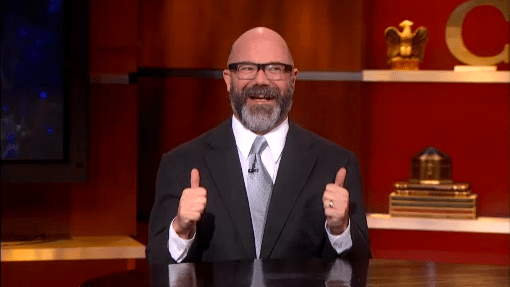
MHB here, a snowy NYC view here, and that lady with the American flag in her hair here. Andrew's appearance on Colbert is here if you missed it.

By Jewel Samad/AFP/Getty Images
Election Day on the Dish (Tues), Andrew and crew live-blogged the election returns from the Colbert studio. Initial blog reax here and Fox meltdown reax here. Andrew then absorbed Romney's concession speech, Obama's victory, and what another four years signifies about America. Earlier in the day, Andrew summarized his case for the president, highlighted Obama's closing argument, urged us here and here to hold pundits accountable, noted Romney's discomfort discussing his Mormonism, rejected cynical endorsements of Mitt, hoped for victories for marriage equality. We also reported the latest on how Sandy would affect turnout, asked readers to send us the view from their election, and, of course, prayed for resolution tonight. A final look at the ad war here.
Meanwhile, Nate Silver's projections grew more favorable to Obama, Henry Entend provided a guide for the eight swing states, Nate Cohn described how the votes will come in, Buzzfeed created a decision tree for the candidates' paths to victory, Jeff Weintraub wondered if the Democrats have lost the white vote for good, Blumenthal warned us about the exit polls, Nathaniel Rich met undecided voters in Virginia, John Heilemann checked in on how the Obama camp saw the race and pondered the likelihood of a Bush v. Gore repeat, Ruy Teixeira credited the Hispanic vote for Obama's electoral advantage, Jeffrey Toobin walked us through the mechanics of an Ohio recount, and Walter Kirn dyspeptically analyzed the Ohio electorate.
Furthermore, Ezra Klein critiqued the case for supporting Romney in hopes of divided government, Sophie Quinton betted against a mandate emerging from the election results, Kerry Howley tracked the success of female candidates in New Hampshire, Jonathan Bernstein endorsed party-line voting, Chris Kirk mapped voter clout by state, John Nelson examined gerrymandered congressional districts, Frum criticized the American voting system, Jodi Enda revealed where the party designations red and blue came from, and the question of where campaign cash goes was answered.
In matters of marriage equality and marijuana, we revisited Charles Murray's change of heart on gay marriage and a reader wrote a heartfelt paean to love that no longer is undetectable, while Matt Baume and Jacob Sullum kept tabs on the polls relating to marriage and marijuana, respectively.
The Dish also considered how and why we vote. We provided a primer on the history or voting rights, Ilya Somin defended not voting, Brad Plumer charted the reasons registered voters give for not voting, Stephen Squibb put voting in perspective, Maria Bustillos asked an expert if we should be worried about electronic voting machines, Samuel Goldman advocated making election day a federal holiday, Derek Thompson applauded America's ubiquitous voting stickers, Adam Clark Estes dissected why online voting isn't feasible, and Megan McArdle proffered an explanation of why it can be illegal to photograph your ballot.
In other assorted coverage, Bibi took Israel even further to the right, Heilemann and Larison debated what might come next for Paul Ryan, and Monty Python made an election day appearance on funny religions. Hathos Alert here, Hewitt Award here, Yglesias Award here, MHB here, VFYW here, and the latest VFYW contest results, from Tehran, here.
Monday on the Dish, Andrew took Peggy Noonan's feelings to task, condemned giving in to "pure partisan obstruction," and after he reminded everyone of Romney's penchant for lying, he wondered why Romney was so touchy about his Mormonism.
Andrew Cohen then marveled at how openly GOP leaders discuss their voter suppression ploys, Steve Schmidt called the voter fraud concerns "mythology," and while Beinart bet that a Romney loss would see Republicans fight about immigration policy, Lindsay Graham pretty much backed him up. Plus, Mike Allen and Jim Vandehei broke down why the support of blacks, Latinos, single women and educated urban whites didn't equal a governing mandate.
The GOP spun Sandy, New York and New Jersey improvised on voting plans, and Matthew E. Kahn made the case against FEMA's moral hazard. Meanwhile, Nate Cohn believed Obama's odds were good and expected a wait for the popular vote. Sam Wang then ran the numbers for a EC-popular vote split, Pew analyzed media tone of the candidates, and while Maryland's marriage equality ballot measure outlook remained tight, Minnesota looked worse. Paul Ryan then spewed Christianist rhetoric, Massie derided the idea that the GOP would embrace Bloomberg in 2016, and, overseas, only fundamentalist religious state allies supported Romney over Obama. Plus, Barney Frank shared early impressions of Romney and Andrew expanded the vocabularies of many.
Romney went positive on the ad front, Jeffrey Goldberg defined pro-Israel and as the death penalty in California looked set to die, Andrew Sprung encountered a new anti-Obama conspiracy theory. The Economist then looked at public debt and summarized the threat of marijuana legalization to Mexican cartels, as Glen Weyl proposed buying votes. Plus, election FOTD here.
In hurricane discussion, Justin Fisher imagined a New York that embraces nature, Charles Kenny reviewed who dies in natural disasters and Craigslist met hurricane demand – at a price. Readers then weighed in on the marathon, Taylor Berman asked whether the funding for the 9/11 museum shouldn't have gone to flood prevention and an unemployed Floridian edited out climate change on Sandy's Wiki.
And in assorted commentary, Dina offered holiday jift tips, Michael Specter defended the safety of GMO foods, and as CK did SNL, Walter Russell Mead bet on a growing trend in part-time retail. Plus, Gangnam-style VFYW here. And tomorrow, Andrew live live-blogs.
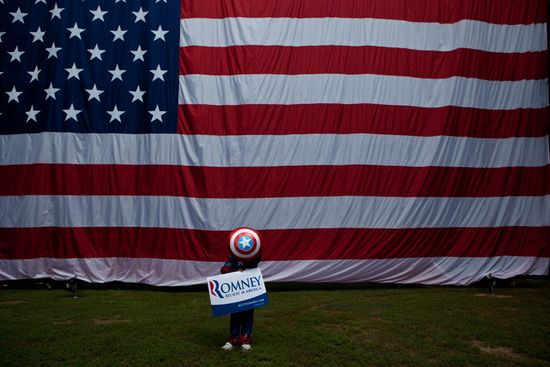
By Jez Coulson
Saturday and Sunday on the Dish, Andrew tracked the latest developments in the presidential horse race. He declared that Tuesday will be a reality check for pollsters and pundits here and here, noted the "chaos" that marked absentee voting in Florida, highlighted the views of Romney supporters in Ohio, asked if independents were moving back to Obama, reiterated Romney's uabashed support for torture, and provided election-related quotes of the day here, here, and here. Andrew also asked if Iran blinked, appreciated Michael Signorile's apology to a gay Republican, ran a reader's thoughts on the NYC Marathon cancellation, pointed to a photograph of another reader's post-Sandy cleanup efforts, and aired a debate over price-gouging in the wake of natural disasters.
It wasn't all politics at the Dish, though. In literary news, Dorian Lynskey resisted the tyranny of the must-read, Ian McEwan extolled the novella, Frank Cassese remembered writing advice from David Foster Wallace, and Stephen Marche pondered Google Books and the digitization of literature. Jane Martinson explored India's new wave of gay writers, Richard Russo divulged the origins of his new memoir, Drew Toal reviewed the letters of Kurt Vonnegut, and Patrick Ross lamented the arrival of Frankenwords. Read Saturday's poem here and Sunday's here.
In matters of faith, doubt, and philosophy, Theo Hobson described what he learned from Rowan Williams' theology, Clancy Martin reported on the schisms among gay evangelicals, Maria Popova recommended another recording of Alan Watts, George Scialabba considered the meaning of progress, and William Deresiewicz worried about the loss of solitude and privacy in the modern world.
In assorted coverage, Jerry Saltz summarized the devestation Sandy caused to the New York art world, Dominique Browning provided tips on growing safer trees, Michael Specter wondered about geoeningeering our survival of climate change, Matthew Teague profiled a repo man, Meehan Crist and Tim Requarth documented the ambiguities of rising IQ scores, Eric Barker explained the effects of sleeping pills, Robert Ito fretted about social robots, Heidi Julavits contemplated love and lust on reality matchmaking television shows, and Ben Reininga culled a list of strange sex advice from Cosmopolitan. MHBs here and here, FOTDs here and here, VFYWs here and here, and the latest window contest here.

 The Dish