Leonard A. Jason finds the overlap between artist and scientist:
[L]earning, experimentation, feedback, and refinement are the backbone of both the sciences and the arts. Decades of painstaking analysis and observation were critical in the development of Darwin’s grand theory of evolution. The dissection of corpses and countless sketches polished and unleashed Michelangelo’s genius in capturing the human spirit in exquisite detail. Sweat and toil nurture the fertile imagination and fine tune the ability to peer through nature’s veil and uncover eternal truths that lead to Eureka moments of exhilarating discovery. … True research has a soul of an artist.
Along the same lines, Priscilla Long argues that science and poetry are related. One big difference:
Poets love words for their sound and shape and feel on the tongue. They rub words together and watch the resulting conflagration. The word fire emits heat and light. The word energy is dead as a dead dog. Poets want fire, not energy. They want the poems they write to burn. They want the layers of meanings, the visions, the connotations.
For the sciences, Holub continues, "[W]ords are an auxiliary tool." In the science paper or report, each word must mean as close to one and only one thing as possible. It has a function. That’s why hard science can be so terrible to read. Dry and replete with necessary terms, figures, charts, and diagrams.
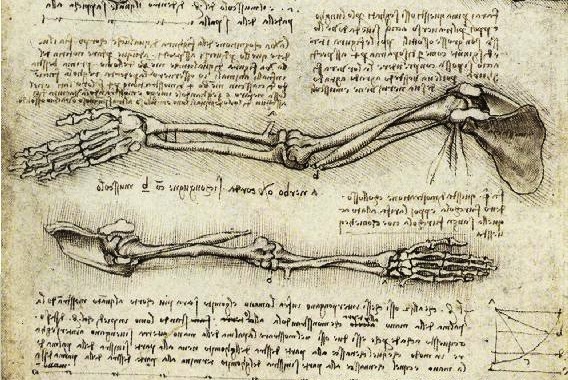
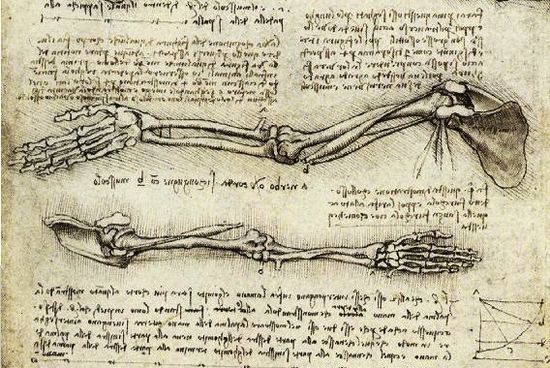
(Image: Detail from Leonardo da Vinci's sketches of arm anatomy from Wikimedia Commons)
 The Dish