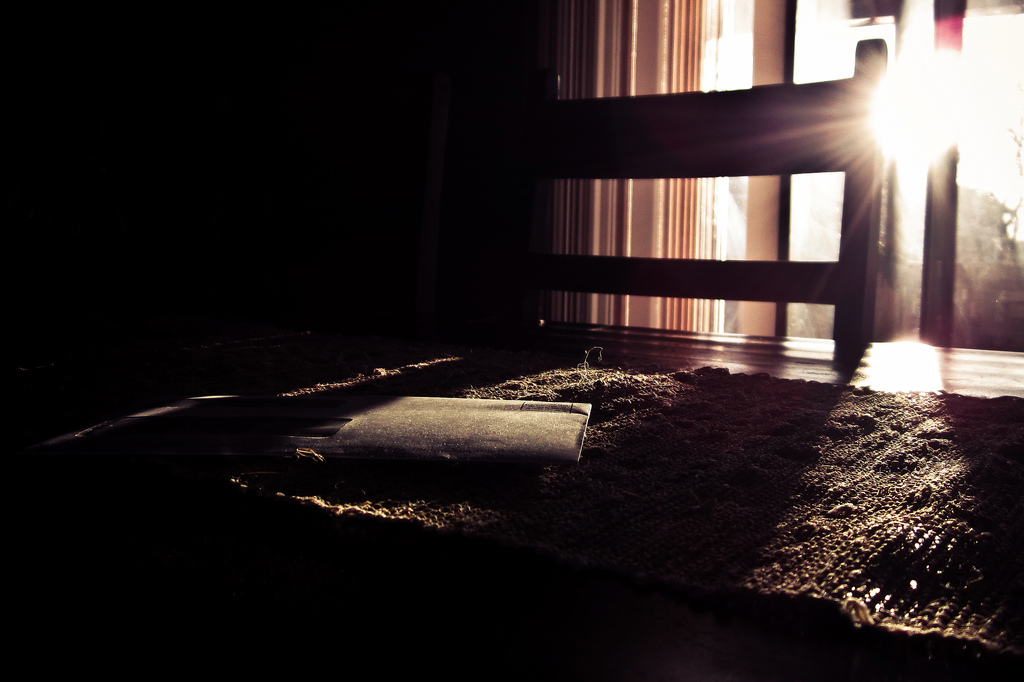
David Wood dissects our romantic notions of the writer's workspace – and why they often aren't as idiosyncratic as we'd like to imagine:
For the most part, these buildings are small, plain, unprepossessing and sparsely furnished. This poses a problem for my first hypothesis — that the fascination of these dwellings rests on the hope that we may glean something of the secret of the writer’s genius from the creative space to which they habitually retreated. For we might well conclude from Wittgenstein’s famously almost empty college room in Cambridge (in which he had a deck chair), and indeed from the plainness of so many of these huts, that far from giving expression to, or feeding in some revealing way, the otherwise inaccessible inner workings of the brilliant mind, they reflect a disdainful resistance to the importance of surroundings, an asceticism, an architectural tabula rasa. This would explain why some people work well on planes, in hotel rooms, library carrels, even monastic and indeed prison cells. (Boethius, Bunyan, Gramsci and Negri all wrote significant works while imprisoned.) They are relieved of distraction. Sartre was famous for writing in the corner of Les Deux Magots – cafe privacy, where the white noise of conversation and cutlery damps down distracting input, fashioning a creative cocoon in the midst of the world.
Mira Ptacin's pilgrimmage to E.B. White's rather plain writing shed furthers that view:
The cabin is plain and encloses only what a writer truly needs: the urge to communicate something, the means to record words, and solitude. There is the woodburning stove White used during the cold winter months, and in a very old Abercrombie & Fitch box, now used as a shelf, are a pair of loafers that were there before the new tenants moved in, a box of sharpened pencils, and an old tin can full of rusty paperclips.
(Photo by Nomadic Lass)
 The Dish