 By Ryan Pierse/Getty Images Friday on the Dish, Andrew announced that not only was the GOP unfit for government, but that “the Republican slide into total epistemic closure and political marginalization has now become a free-fall.” He also defended Hagel over his 15-year-old anti-gay comments (later highlighting Hagel’s apology) and thoroughly enjoyed Pareene’s takedown of MSNBC. In political coverage, we rounded up many reactions to Speaker Boehner’s inability to get his Plan B passed (a train-wreck he seemed to deny). We also considered Scott Brown’s chances of filling John Kerry’s Senate seat, readers responded to Andrew’s epic anti-GOP rant, Jeff Madrick believed the economy would fall off a cliff whether there was a fiscal deal or not, David Kuo hoped for the return of compassionate conservatism, David Sirota questioned the extent of the CIA’s involvement in Zero Dark Thirty’s script, and Kleiman and Friedersdorf got in the mix over Frum’s weed naivety, while Tim Dickinson mapped the next states likely to legalize it. In ongoing coverage of the Newtown aftermath, the NRA head’s “meaningful contribution” was to stay true to character regardless of what happened last week, and readers unloaded on him for it — twice. Then Noah Millman and J.L. Wall discussed how we imagine mass murder and Firmin Debrabander explored how a society being armed can pose a threat to its freedom of speech. In assorted coverage, Benjamin Breen brought us back to the age of the curiosity cabinet, J.J. Gould surveyed the state of contemporary slavery, Christopher Robbins found out where we bury the homeless after they die, and readers weighed in on the violence in the book version of The Hobbit. Babbage explained a major reason we won’t be able to use our phones on airplanes anytime soon, Claire L. Evans detailed the self-inflicted awe of viewing planets through a telescope, Derek Thompson compared the digital ad divide between Google and newspapers, Paul Myers looked at the Twitter effect on comedy writing, and readers added their takes on IUD birth control. Then while Tim Parks struggled with the Englishness of his writing, we contemplated the possible corruption of the Internet’s original principles, celebrated the non-apocalypse by learning how to start a fire at Ikea, heard about one of Robert Lowell’s most famous poetry seminars, saw the Palisades through the VFYW, met a solstice unicorn (at Stonehenge!) in our FOTD, and nodded our heads as the Urban Dance Camp brought Michael Jackson back to life in our MHB. The rest of the week is after the jump:
By Alex Wong/Getty Images
Thursday on the Dish, Andrew believed the country was in the middle of a constitutional crisis at the mercy of an irresponsible GOP, responded to the new and apparently-damning report on CIA-led torture that we’re not allowed to read, and tore into Bill Kristol for spreading yet more of his poison, this time about Chuck Hagel. Andrew also challenged Obama to use a possible Hagel nomination as a demonstration of his second-term backbone (as did Beinart), noticed that Obama’s high approval ratings appear to mirror Reagan’s, and explained how Robert Bork’s confirmation hearing helped lay the foundation for today’s partisan rancor.
In continuing coverage of the Sandy Hook shooting, Adam Gopnik, Douthat and Ponnuru debated the potential effectiveness of gun control, Lisa Lambert explained how the parents the mentally ill often hide their concerns from others, Christopher J. Ferguson added more evidence to the argument that video games don’t lead to violence, and Jeff G was sarcastic about his gun collection. Also, we investigated the Congressional chances for new gun control laws, Molly Redden debunked John Lott’s case for higher gun ownership, more readers thought through whether or not to rush an active shooter, Cillizza pointed out the NRA’s massive spending, and Aaron Carroll sounded the alarm over insufficient mental health services for children.
In political coverage, we looked at the latest analysis of the fiscal cliff negotiations, while David Kuo shared his feelings about the Bush Administration, Michael Moynihan dismantled Joe The Plumber’s Holocaust facts, Bob Wright highlighted the bigotry of ADL head Abe Foxman, Clyde Prestowitz reminded us that America shouldn’t let Israel drive drunk, and Susan Crawford lobbied for better American internet access. Also, Greta Van Susteren rebuked those who have questioned Hillary Clinton’s concussion, Patrick Sharma drew out a game plan for filibuster reform, a reader in the military alerted us to how DOMA is screwing them out of benefits, and looking overseas, Stuart Staniford caught us up on the Eurozone crisis.
In assorted coverage, Chris Kelly compared Zero Dark Thirty to Legally Blonde II, David Michael explained the origins of Norway’s Swedish workforce, Thomas Rogers got sick of the over-advanced computers in TV shows, Simon Garfield showed us a map of America’s literary giants, Gabe Habash shared a playlist of literature-inspired songs, and Megan Gambino told us about a mummy’s possibly-therapeutic tattoos. We also tried to figure out if eagles actually could steal babies or not, learned pollution from cars and obesity were the fastest growing causes of death, saw Dubai’s extravagance through the VFYW, met a therapy dog in our FOTD, and there was lots of added %$#@ in our MHB.

Milwaukee, Wisconsin, 4.10 pm
Wednesday on the Dish, Andrew challenged Frum’s assertion that there was nothing redeemable about marijuana, fisked WaPo’s attempted smear of Chuck Hagel, and nominated John Boehner for a Malkin Award after the Speaker turned his bullshit cannon on the press.
In continuing coverage of the aftermath of last week’s school shooting, more readers joined our discussion regarding mental illness, Massie took a historical view on America’s gun-violence problem, Google searches for “gun control” increased dramatically compared to other shootings, a Mormon-owned classifieds site stopped allowing the listing of firearms, Adam Lankford explained how a mass-shooter’s likelihood of committing suicide went up with their death toll, and Charlotte Allen channeled her inner Malkin to point out how “feminized” Sandy Hook Elementary School was. Also, readers shared their ideas on how to talk to children about the tragedy, considered the logistics of crowd-rushing an active shooter, and chimed in on the media’s failures while reporting on the shooting, as did the NYT’s Public Editor. Andrew J. Rotherham hoped the NRA would become more moderate as well as more environmentally focused, a reader was newly offended by the gunplay in A Christmas Story (only to be quickly rebuked by other readers), and we read a hearbreaking letter from a young boy in Newtown.
In political coverage, Chait claimed we would fall off the fiscal cliff due to the lack of rational players involved, Thomas Jefferson believed that our institutions should keep pace with the progress of the human mind, David Kuo shared his gratitide for Obamacare, Lucianne Goldberg got a Malkin nod for accusing Hillary Clinton of faking a concussion, and Richard Kahlenberg foresaw the end of affirmative action. Also, S.J. Culver wished more people understood the reality of America’s prison system, Ezra and Suderman decoded entitlement reform efforts, Jacob Sullum explored the social history of weed, Victor Menaldo told us why dictators bother to have legislatures, and James McPherson rejected some criticism of Lincoln’s Emancipation Proclamation.
In assorted coverage, a reader added to our thread on digital journalism by considering alternative paths for advertisers, David Vinjamuri checked in on the battle over ebook lending, Ramin Setoodeh found fault with the excessive lengths of modern films, Noah Berlatsky objected to the added violence in (the 169-minute film version of) The Hobbit, and Silvia Killingsworth panned the Inbox Zero productivity system for its reliance on good memory. Gary Marcus pushed back the arrival of sophisticated household robots, Alan Cumming let us know what it’s like to have a very big foreskin, Hilton Als penned an essay about (the maturing) Prince, and we dug into the backlash over Instagram’s new terms of service. DJ Earworm mash-recapped the year’s pop in our MHB, a BBC executive took some heat in our FOTD, and there was Milwaukee snow through the VFYW.

Tuesday on the Dish, Andrew caught us up on the fiscal cliff negotiations and responded to how Speaker Boehner seems unwilling or unable to accept a deal. He also took on the Greater Israel Lobby’s smearing of Chuck Hagel (which Beinart later detailed) and was troubled by the rising popularity of reality TV shows that seem to show the decline of the middle-class.
In continuing coverage of last week’s school shooting, we reviewed the political affiliations of gun owners and considered stats that suggested mass shootings weren’t increasing, while Hanna Rosin and others debated the ethics of publicizing your child’s mental illness, Danny Hayes anticipated a decline in press coverage, Douthat suggested more police, Max Fisher debunked the linking of American gun violence to video games, and we looked at achieving gun control through bullet control, later adding analysis from Weigel and Ambers. Also, Shafer offered his explanation of last Friday’s journalistic screw-ups, Nate Cohn recommended that Obama stand back on gun control, Kevin Roose reviewed a private-equity firm’s decision to ditch the firearm business, McArdle earned a Malkin for suggesting that we teach kids how to gang-rush shooters, and readers wrote in with their personal reflections on the potentially negative profile the shooting has given those with Asperger’s Syndrome.
In political coverage, Nicola Abé passed along the story of an Air Force drone operator, a reader responded to the morality of those depicted in Zero Dark Thirty, we rounded up reactions to Obama’s latest fiscal cliff offer, and we parsed polling that showed a rising acceptance of climate change. Looking abroad, Eric Trager expected Egypt’s Muslim Brotherhood to prove an almost impossible ally for the US, Olivia Solon reported on the private radio network being used by Mexico’s drug cartels, and a reader explained how Finland’s automated welfare-system results in people’s deaths sometimes going unnoticed for years.
And in assorted coverage, readers mistook Burma for Kerala and Hoboken in their quest to win this week’s VFYW Contest, David Samuels explored the pitfalls of winning the lottery, Zara Kessler thought Apple’s Mapocalypse would result in even greater love for the company, Ambers tried to be realistic about what we can do to combat obesity, Grant Cogswell detailed the history of cockfighting, and Jodi Ettenberg told us to stick to the lines if we wanted to eat safely abroad. Readers also continued to discuss the varied ways to wish someone a season’s greetings, while Micha? Oleszczyk highlighted the best seven movie-minutes of the year, Korn + Taylor Swift equalled our MHB, we visited Ecuador in the VFYW, and David Kuo shared his fears (and hopes) regarding death, as well as starred in our reader-submitted FOTD.
By Emmanuel Dunand/AFP/Getty Images
Monday on the Dish, we focused most of our day on the aftermath of last week’s school shooting in Connecticut. Andrew believed that the nation didn’t just need to tackle paramilitary weaponry, but also had to work equally hard to help those with mental illness and their families, sharing his first-hand experience growing up with a mother who was consistently in and out of mental hospitals.
We also examined the shocking level of US gun ownership compared to other countries and wondered why regulations for those guns weren’t more like those we have for cars. We thought through how best to design new gun laws and checked the polls to see how much support there would be for them. We tried to determine how effective gun control actually was and whether it had worked before, as well as what effect tougher laws have had in Australia. We also noted the massive journalistic failures that took place on the day of the shooting, something readers chimed in about as well. Scott Lamb passed along assault-rifle manufacturer Bushmaster’s “shockingly awful” ad campaign, Amy Sullivan counted up the alarming number of mass shootings since 1982, Alan Jacobs spoke out agains the idea of arming teachers, Mark Oppenheimer wanted parents to protect their children’s innocence with regards to how much to tell them about the tragedy, and a Newtown resident decried the ownership of assault weapons there, announcing that, “We live in a town, not in a war.” Meanwhile, Chait doubted that much would get done in Washington as a result of the shooting, Joyner hoped for weapons that could be safer as a result of smart-gun technology, a Republican reader threw away his NRA card, and Ron Fournier and others defended those with Asperger’s from accusations that the syndrome might make them violent, while readers responded at length on how the nation handles those with mental illness, and another reader detailed their own personal battle to reach good mental health.
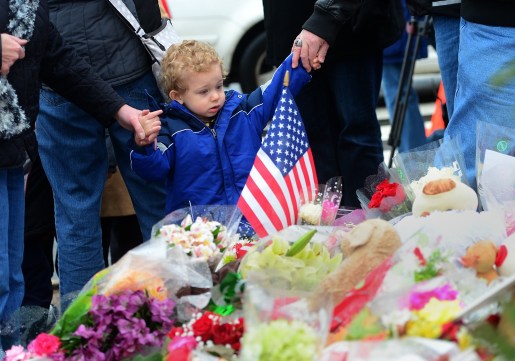
In other coverage, Andrew again contemplated the meaning of Zero Dark Thirty, this time responding to whether or not casual viewers would interpret it as anti-torture. He also alerted us to Christianist Pastor David Dykes’ un-Christian campaign to get gay Ugandans executed. Then friend-of-the-Dish David Kuo reflected on what it was like to learn he had a brain tumor, Peter Maass worried Zero Dark Thirty let the government off too easy, Andy Towle put together the year in coming out, filmmaker Jeff Orlowski explained the mission behind Chasing Ice, and Ben Tausig let us know how little he gets paid to create crossword puzzles. Also, Starbucks got in the tea game, Bruce Schneier argued for a more flexible US security policy, Michael Meyer summed up the growing e-singles market for journalism and fiction, an emergency physician debunked the correlation of blood alcohol level to intoxication, and our thread on acts of sudden heroism continued with a reader sharing their experience being rescued. Lastly, we rounded up more reactions to Obama’s seemingly-softer stance on legal weed, watched a montage of motion-pictured Christmas in our MHB, admired a bay bridge in the VFYW, and witnessed a mother’s love in our Newtown FOTD.

By Spencer Platt/Getty Images
Last weekend on the Dish, Andrew provided somber reflections on the Sandy Hook shooting, linked to the video and transcript of the President’s speech in Newtown, and further discussed the place of torture in the film Zero Dark Thirty.
In matters of faith, doubt, and philosophy, Ruth Franklin revealed the religious life of Madeleine L’Engle, Walter Russell Mead pondered how we read the Bible, Stephen Mansfield detailed Lincoln’s religion-inflected last words, and Mark Vernon asked if we’re living in a second Axial Age. Tim Falconer noticed an uptick in elaborately planned funerals, Adam English reported on the real St. Nicholas, Joe Hanson marveled at our place in the cosmos, and Leonard Jason investigated the various sources of human creativity.
In literary coverage, Katherine Powers considered Dickens the dad, Dan Duray panned John Updike’s art criticism, David Wood dissected our romantic notions of the writer’s workspace, Anthony Gardner ranted about our increasing use of the plural, and Talitah Stevenson connected depression and writer’s block. Keith Verones spiced up Latin lessons, Alan Jacobs ruminated on fiction’s decline, Sunny Sea Gold explored why we re-watch films or re-read books, and both Michael Moynihan’s “Ask Anything” videos touched on writers – he commented on Noam Chomsky here and Christopher Hitchens here. Read Saturday’s poem here and Sunday’s here.
In assorted news and views, Rachel Adams interviewed the author of Uganda’s anti-homosexual bill and EJ Graff was confident that marriage equality will win in the end. Dan Savage applauded Amelia Earhart’s monogamish take on marriage, Kat Stoeffel appraised the benefits of IUDs, and Brian Blickenstaff disrobed at a co-ed naked bathhouse in Germany. The Spectator nominated 2012 as the greatest year ever, Swati Pandey mediated on the fate of modern women, and Lapham’s Quarterly tackled the theme of intoxication. Cool Ad Watch here, MHBs here and here, FOTDs here and here, VFYWs here and here, and the latest window contest here.
– C.D. & M.S.
 The Dish