The Broken American Polity

Senator Ben Nelson said recently that many Republicans have yet to accept the presidential election of 2008, let alone the re-election of 2012. I see no real evidence to the contrary. Whether this is due to race, or culture, or fanaticism (they regarded Georges_DantonBill Clinton as illegitimate as well) I do not pretend to know. We know also, of course, that the corrupt gerrymandering of House districts allows those with power to rig the system so they can retain power – even when they have no broad public support. And we know that the whitest, rightest part of the Republican base controls the primaries and is determined to destroy any member of Congress who votes against the religion of permanent insolvency – which is what "no-revenue-increases-ever" means as we near a demographic wave of older folks. What a perverse cause: a party dedicated above all to the permanent, chronic insolvency of the American government. The cuts they need without any new revenues would simply end the welfare state in America and would never be tolerated by the middle classes in practice. And tax reform will only get us so far.
This, then, remains a country in a Cold Civil War – not far off the geographical contours of the first, but with the inheritors of the Confederacy concentrated in the South and now also with serious pockets of absolutists in the more rural parts of the country as a whole. Maybe it was precisely because Barack Obama campaigned against partisan polarization that the GOP has decided to ratchet it up. The right-wing media-industrial complex – from Limbaugh to Hannity to Drudge – earns money from conflict, not compromise. And these lucrative media institutions have taken over from what's left of the conservative intelligentsia (three decades ago a flourishing, growing and open group, now shrinking fast into calcified, partisan hacks).

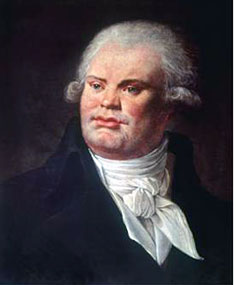
None of this is news to Dish readers. We've been covering this Republican meltdown for years. It feels like I've been watching it for much of my adult life. And it's true that if they simply retain total unity and resist any compromise on anything, they can help destroy this country's economy – and the world's. The Constitution gives them that power, even though the founders warned precisely against the kind of purism and factionalism that now threatens the stability of the entire country. Since their ideology is all about creative destruction ("Il nous faut de l'audace, et encore de l'audace, et toujours de l'audace!" is the fanatic Bill Kristol's rallying cry, proudly citing Georges Danton, a fellow revolutionary), what do they have to lose by wreaking havoc?

We can hope that public opinion exerts its pressure. But when the popular will is exactly what the gerrymandering is supposed to inhibit, there are limits to controlling this rogue faction, refusing to accept the legitimacy of a re-elected president or the urgency of compromise for the sake of the country as a whole. All to protect the very wealthy and successful from providing an ounce of extra sacrifice in tackling the debt, even as they demand everyone else, especially the poor and vulnerable, take a hit.

Jeff Weintraub has some typically sober reflections on all this:

Is it purely a coincidence that I just happened to run across the following passage from J.R.R. Tolkien?  A film based on The Hobbit is coming out, and at one point the review in the New Yorker quotes directly from Tolkien's book.  When the dragon Smaug discovers that one cup has been removed from his vast golden hoard, how does he respond?  He falls into

"the sort of rage that is only seen when rich folk that have more than they can enjoy suddenly lose something that they have long had but never used or wanted."

It is one thing to sacrifice the general good on the altar of ideological purism, but to do it solely so that the very rich can keep their toys? I'm reminded of Robert Bolt's words put in the mouth of Thomas More (my confirmation saint), upbraiding his betrayer:

Why Richard, it profits a man nothing to give his soul for the whole world… but for Wales?

A Poem From The Year

Sun

"A Memory" by Charles Baudelaire:

All this was long ago, but I do not forget
Our small white house, between the city and the farms;
The Venus, the Pomona,–I remember yet
How in the leaves they hid their chipping plaster charms;
And the majestic sun at evening, setting late,
Behind the pane that broke and scattered his bright rays,
How like an open eye he seemed to contemplate
Our long and silent dinners with a curious gaze:
The while his golden beams, like tapers burning there,
Made splendid the serge curtains and the simple fare.

Please consider supporting the work of the Poetry Society of America here.

(From Flowers of Evil by Charles Baudelaire, 1857. Translated by Edna St. Vincent Millay ©1936 by Edna St. Vincent Millay and Norma Millay Ellis. Reprinted by permission of The Permissions Company, Inc., on behalf of Holly Peppe, Literary Executor, The Millay Society. Photo by Flickr user jeremyfoo)

Fragile Enough To Fail

In his new book, Nassim Taleb argues for "antifragility" because "the opposite of fragile is something that actually gains from disorder." He elaborates in an interview with Linda Geddes:

The largest "fragilizer" of society is a lack of skin in the game. If you are mayor of a small town, you are penalized for your mistakes because you are made accountable when you go to church. But we are witnessing the rise of a new class of inverse heroes—bureaucrats, bankers, and academics with too much power. They game the system while citizens pay the price. I want the entrepreneur to be respected, not the CEO of a company who has all the upsides and none of the downsides.

Tom Bartlett, who notes various criticisms of Taleb's body of work, rounds up Taleb's various vendettas:

Antifragile feels like a compendium of people and things Taleb doesn't like. He is, for instance, annoyed by editors who "overedit," when what they should really do is hunt for typos; unctuous, fawning travel assistants; "bourgeois bohemian bonus earners"; meetings of any kind; appointments of any kind; doctors; Paul Krugman; Thomas Friedman; nerds; bureaucrats; air conditioning; television; soccer moms; smooth surfaces; Harvard Business School; business schools in general; bankers at the Federal Reserve; bankers in general; economists; sissies; fakes; "bureaucrato-journalistic" talk; Robert Rubin; Google News; marketing; neckties; "the inexorable disloyalty of Mother Nature"; regular shoes.

Grabbing The Audience By The Horns

Calf_Rodeo_Hogtied

Brian Phillips files a dispatch from the National Finals Rodeo, held in Vegas since 1985:

Although it's still plenty exciting, watching rodeo on TV turns out to be less exciting than watching it live. You lose the sense of animals' sheer mass, the interplay of weight and speed. You know how the camera adds 10 pounds to a person? It subtracts 500 pounds from a bull. 

Still, there are things it's delightful to notice in close-up: the way the bareback riders' hats go flying off Willie Mays–style, the way the handlers hoist themselves up over the yellow fences when one of the animals comes charging in close. There's also more visible violence on TV. A clown takes a blunt horn right in the face during the bull riding, and you can see the blood pouring out of his nose.

There's (obviously) a whole animal-welfare case that exists against the rodeo, which basically says Why should a calf be slammed to the ground and hogtied for your entertainment? I had a cheeseburger for lunch, so I'm aware that there are layers here. But the case seems stronger when you're watching on TV. The bulls are genuinely tormented. Maybe it's an acceptable level of suffering, I don't know; there are safeguards. But whatever counts as a happy eight seconds for a bull, it is not this.

(Photo: Herbert Theriot throws a loop around a calf during the eighth performance of the National Finals Rodeo on December 12th 1998 in Las Vegas, NV. By John Gurzinski /AFP/Getty Images)

The Year In Cannabis

Alex Seitz-Wald reviews progress made against prohibition:

[W]hile difficult to quantify, there is a marked shift in the media coverage of the issue. No longer does every story on marijuana get snickering treatment and puns about the munchies or Bob Marley. Google Trends shows an enormous spike in news coverage of medical marijuana and legalization around the election, matching a jump in general web searches. There were 2,830 news stories written and broadcast about legalization in the past year, according to Nexis, up from just 812 in 2011.

He goes on:

2012 was the year that Pat Robertson, of all people, said, “I really believe we should treat marijuana the way we treat beverage alcohol.” It was also the year that Bill Clinton, a leading drug warrior in his time in the White House, said the drug war “hasn’t worked” and called for dramatic reform. At the same time, it was almost impossible find pundits or other voices who strongly opposed legalization. The silence was almost more surprising than the support.

The Master Taxidermist

Adriana Widdoes shadowed some serious contenders in Maine's taxidermy competition:

"Did you ever have a cat?" Tom Berube asks as I sit next to him in his workshop in Poland, Maine. When I arrived at Tom’s Avian Taxidermy at around ten in the morning, Tom had a small red squirrel half skinned and hanging by its feet from hooks on a moveable arm. But now, less than thirty minutes into our first meeting, Tom has the squirrel’s skin completely separated from the body. The hide is turned inside out and pulled taught over a large flat wooden stick, while the squirrel’s carcass, red and sinewy, lies gleaming on top of the Sports section of the Lewiston Sun Journal.

At sixty-two, Tom Berube is five feet eight inches tall, slim, and balding. … He whistles intermittently to Celtic music as he scrapes away at the squirrel’s hide using a heavy metal "fleshing" tool. "Fleshing," I am told, is an integral part of the taxidermy process; it involves stripping away the fat and muscle from an animal’s hide. Forget to "flesh" and your mount will start to smell, the excess tissue rotting slowly beneath the pelt. I watch as Tom carefully removes all traces of the squirrel’s flesh, leaving behind only the soft, buttery skin.

"Yes, I have a cat," I say. "My family’s Persian is not much bigger than a Maine red squirrel," I think but do not say out loud. Tom looks at me mischievously, then continues. "You know how when you rub a cat sometimes you can see the muscle rippling underneath the skin?" I try to remain detached. "Yes. Of course," I answer.

"That’s what this is!” Tom explains. "Underneath the skin is where all the muscle and fat is. You want to get rid of it."

And then there's "the world's hottest taxidermist," seen above.

Fetch, Roll Over, Diagnose

Laura Blue reports on a beagle trained "to sniff out deadly pathogens that plague hospitals":

Doctors spent two months training a two-year-old beagle named Cliff to learn to lie down or sit whenever he smelled the presence of Clostridium difficile, stubborn bacteria that cause severe, hard-to-treat diarrhea and sometimes life-threatening colitis. Cases of C. difficile have reached historical highs in recent years, claiming 14,000 lives in the U.S. each year, primarily in hospital or long-term care settings. Reporting in the BMJ, the researchers say the hound accurately detected C. diff in nearly all of 50 stool samples, and accurately did not respond to another 50 samples that were negative for the bacteria.

That success justified testing Cliff’s sense of smell around patients in a hospital, and indeed he correctly identified 25 of 30 people who were sick with the infection, and also identified 265 of 270 who were not sick – a remarkable rate of accuracy for a diagnostic tool that’s almost instantaneous and completely non-invasive.

Typo Of The Day

Original (1)

Emma Carmichael sighs:

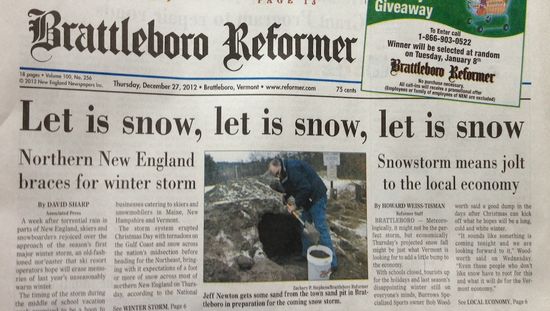
There are lots of wonderful things about spending a week in my hometown, Brattleboro, Vt. There is a stocked kitchen, two dogs, a fireplace, and maple syrup flows from the sink faucets. And as of this morning, there is lots of snow. So much snow that the local newspaper, the Brattleboro Reformer—which is wonderful but like any local newspaper has a history of making unfortunate typos—led with it on page one.

Is Christmas Inefficient?

McArdle defends the gift-giving holiday:

Having another person buy you a gift stretches your consumption possibilities beyond the limits of your own imagination.  Yes, often they will buy you something you don't like as much as the thing you would have bought.  On the other hand, sometimes they'll buy you something that you like even better than the thing you bought with your own money.  Last year my in-laws got us a motion-activated soap dispenser which turned out to be the absolute perfect thing for our powder room.  I'd never have bought it myself, but I know I like it better than whatever we'd have bought if they'd given us cash instead.