Extinction At The Top Of The Food Chain

Zac Unger reports on the likelihood of polar bear extinction:

When I asked [polar bear biologist Steven] Amstrup point blank whether the polar bears would go extinct, he was quick to demur. The consensus was that for a long time there would be ice somewhere in the high Arctic. And where there is ice, there will be bears. Not very many bears, but not complete extinction either. "There are likely to be small pockets of bears," Amstrup said, in "places where walrus are going to increasingly haul out on land as the sea ice retreats. … Some polar bears will figure that out. So there may be some small pockets of bears that figure out some kind of an equilibrium where they can survive the ice-free period. But it’s not very consistent with what we know about polar bears to suggest that whole populations of bears … are likely to survive in the terrestrial environment.”

Unger ventures as to why the bears' vulnerability resonates – "they're a lot like us":

They’re smart and tough and they nurture their young. They’re cute and cuddly and unpredictably ferocious. They’re the top of the food chain, they’re without natural predators. This isn’t some red-legged frog, warty and swamp-dwelling, that faces annihilation. This is a master predator, a carnivore, with hands and feet and hair. This bear is the boss. So when we think about polar bears going extinct, it’s not their absence that worries us; it’s our own. And because it’s our fault—and because it may be our future—the bears have become the most important animals on earth. After ourselves, of course.
The Democracy Of Time

Maria Popova excerpts from William J. Reilly's 1949 manual, How To Avoid Work:

Time is the only permanent and absolute ruler in the universe. But she is a scrupulously fair ruler. She treats every living person exactly alike every day. No matter how much of the world’s goods you have managed to accumulate, you cannot successfully plead for a single moment more than the pauper receives without ever asking for it. Time is the one great leveler. Everyone has the same amount to spend every day.

The next time you feel that you ‘haven’t the time’ to do what you really want to do, it may be worth-while for you to remember that you have as much time as anyone else — twenty-four hours a day. How you spend that twenty-four hours is really up to you.

A Poem For Christmas

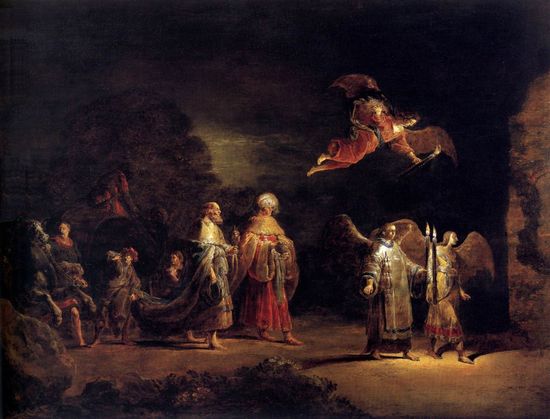
Leonaert_Bramer_-_Journey_of_the_Three_Magi_to_Bethlehem_-_WGA03081

"The Magi" by William Butler Yeats (1865-1939)

Now as at all times I can see in the mind's eye,
In their stiff, painted clothes, the pale unsatisfied ones
Appear and disappear in the blue depth of the sky
With all their ancient faces like rain-beaten stones,
And all their helms of silver hovering side by side,
And all their eyes still fixed, hoping to find once more,
Being by Calvary's turbulence unsatisfied,
The uncontrollable mystery on the bestial floor.

(Image: "Journey of the Three Magi to Bethlehem" by Leonaert Bramer, circa 1639, via Wikimedia Commons)

Blinking Humanity

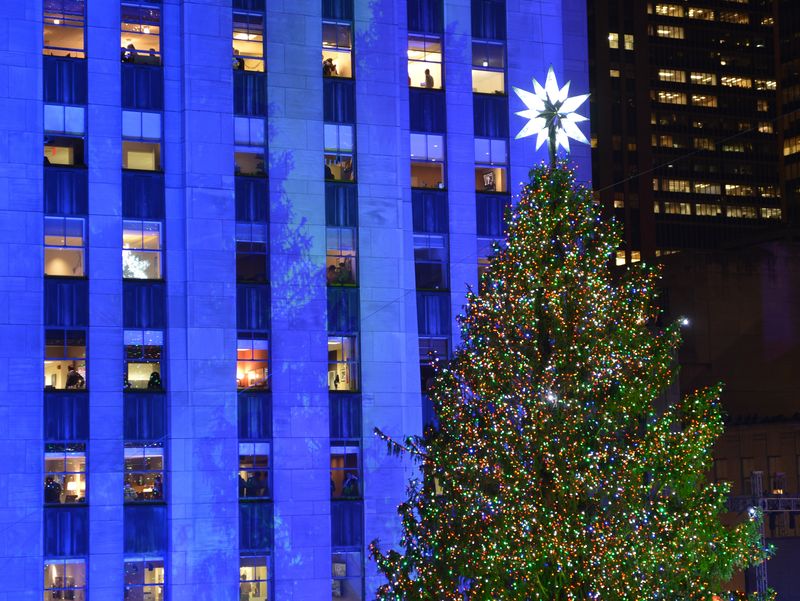
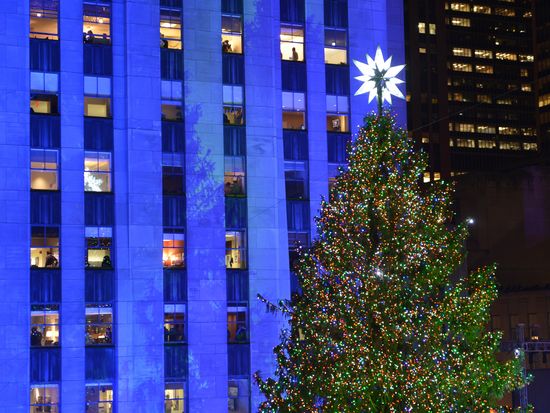
Rockefeller_Tree

How Paul Ford understands our impulse to string up Christmas lights:

There’s a whole class of human communication that happens through decorational lights. New York City does a lot of this. They light up the tree in Rockefeller center. That moment when it goes from dark to gleaming, that’s a big moment for humans. There’s a lot of ceremony involved. What is actually being communicated, then? What is the difference between the dark tree and the light tree?

He compares it to fireworks and the lights of the Empire State Building:

It’s a way of talking at a distance. Flags and towers, short signals. Hello everyone. Here are our explosives. Hello. Here are our rainbow-colored lights hung from the balcony. Hello. Christmas lights work for the same reason that people on shore wave to people in boats.

(Photo: The Rockefeller Center Christmas Tree is lit November 28, 2012 in New York. By Stan Honda/AFP/Getty Images)

Do We Always Like What We Want?

Screen shot 2012-12-21 at 7.39.49 PM

Tom Stafford looks at some science:

Normally wanting and liking are tightly bound together. We want things we like and we like the things we want. But experiments by the University of Michigan's Kent Berridge and colleagues show that this isn't always the case. Wanting and liking are based on separate brain circuits and can be controlled independently. …

But in addiction, the theory goes, the circuits can become uncoupled, so that you get extreme wanting without a corresponding increase in pleasure. Matching this, addicts are notable for enjoying the thing they are addicted to less than non-addicts. This is the opposite of most activities, where people who do the most are also the ones who enjoy it the most. (Most activities except another Christmas tradition, watching television, where you see the same pattern as with drug addictions – people who watch the most enjoy it the least).

(Sad holiday portion sizes from Jordan Shakeshaft, via Gizmodo)

Kentucky Fried Christmas

K. Annabelle Smith sheds light on Japan's taste for KFC:

Christmas isn’t a national holiday in Japan—only one percent of the Japanese population is estimated to be Christian—yet a bucket of “Christmas Chicken” (the next best thing to turkey—a meat you can’t find anywhere in Japan) is the go-to meal on the big day. And it’s all thanks to the insanely successful “Kurisumasu ni wa kentakkii!” (Kentucky for Christmas!) marketing campaign in 1974.

When a group of foreigners couldn’t find turkey on Christmas day and opted for fried chicken instead, the company saw this as a prime commercial opportunity and launched its first Christmas meal that year: Chicken and wine for … 2,920 yen($10)—pretty pricey for the mid-seventies. Today the christmas chicken dinner (which now boasts cake and champagne) goes for about 3,336 yen ($40). And the people come in droves. Many order their boxes of  ”finger lickin’” holiday cheer months in advance to avoid the lines—some as long as two hours.

Merry Merry

IMG_0005

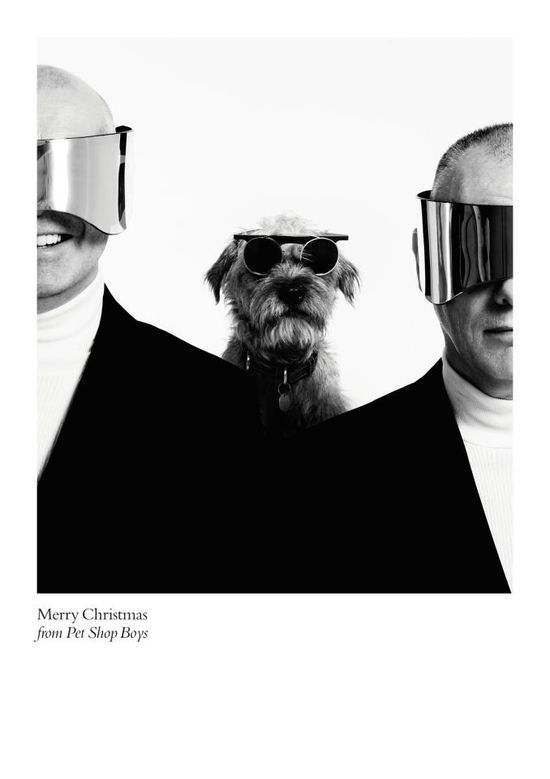
From all of us at the Dish – Patrick and Chris, Matt and Zoe, Alice and Chas – and yours truly, and the hounds, a very merry Christmas, and a happy new year. It's been a formative, creative one for us – and we could not have done it without you. So thanks for creating in this space one of the liveliest and smartest conversations going on online.

And because it's my blog and I can do what I want, a special greetings to you all from you know who:

Psbxmas

Christmasy Stories

Michael Dirda runs through some of his favorites:

For years, publishers brought out an Agatha Christie whodunit just in time for holiday gift-giving and, one assumes, post-holiday reading. But all sorts of genre writers have traded on the association of Christmas with cozy chills, Dickens being the pioneer and the story of Ebenezer Scrooge remaining the undisputed champion.

Yet there are many other fine, lighthearted Christmasy works, including the wonderful Dingley Dell chapters of Dickens’s own Pickwick Papers, P. G. Wodehouse’s "Jeeves and the Yule-tide Spirit," Damon Runyon’s "The Three Wise Guys," and Jean Shepherd’s "In God We Trust: All Others Pay Cash" (the basis for that nostalgia-rich and hilarious film A Christmas Story). To this day I am still moved by those two old-fashioned, sentimental classics, O. Henry’s "The Gift of the Magi" and Henry Van Dyke’s "The Story of the Other Wise Man."