Ruined By Winning

David Samuels tells the story of Jack Whittaker, who in 2002 won "the biggest single undivided jackpot in lottery history" – $314.9 million. Whittaker was a successful businessman before the win, but ten years later he had lost most of his family to drugs, alcohol or divorce and wished he'd never won: 

Whittaker’s transformation from successful businessman and loving grandfather to disheveled and obnoxious strip-club patron took less than two years and alienated many of his friends and family members—beginning with his wife, who soon filed for divorce. While a reflection of Whittaker’s own flaws, such personal upheaval is more common than not among jackpot winners, according to Mike Kosnitzky of Boies, Schiller & Flexner, a law firm in New York. Kosnitzky has been involved in the representation of half a dozen large lottery winners; his clients include a former attendant at a parking garage in Midtown Manhattan named Juan Rodriguez, who in 2004 won a Mega Millions jackpot worth $149 million.

In his experience, Kosnitzky says, most lottery winners suffer tremendous guilt as the result of their good fortune; they’re also troubled by family members and friends who feel entitled to their winnings and who become angry when they don’t get what they feel they deserve. Without access to financially and psychologically sophisticated advice, winners quickly find themselves easy marks for every kind of manipulation and often take refuge in preexisting addictions, which are compounded by seemingly inexhaustible wealth.

An American Holiday, Ctd

Readers continue the discussion over the proper greetings of December:

I'm Jewish, but I don't really think the majority of people who wish me "Merry Christmas" are assuming I'm Christian or associate that greeting in any kind of religious sense. For those folks, it's synonymous for getting together with family, giving loved ones gifts, and having time off work. I'm still surprised by the number of Christians I talk to who assume everyone celebrates Christmas because many of them don't equate Christmas with going to Church, Jesus' birth etc.

That said, the idiots on Fox and others who decry the "war on Christmas" when companies make it a policy to say "Happy Holidays" instead of "Merry Christmas" do offend me. They're equating Christmas very squarely with Christianity, and they're offended because they think "Happy Holidays" is an affront to Christianity. They don't seem to give a shit that millions of Americans aren't Christians. Actually, they seem to be quite bothered by it, so maybe that's the point.

Another:

I was born into a Jehovah's Witness household, and we weren't allowed to say either, since Christmas and all the other holidays were looked at as pagan-based and deeply unChristian.

Another:

In the grand scheme of things, this whole "Happy Holidays" vs. "Merry Christmas" thing is not that big a deal.  

I mean can any Christian really be that upset with someone wishing you a "Happy Holidays" during a time we should be especially focused on "Peace on Earth, Goodwill to Men"?  By the same token, if someone wishes a non-Christian a "Merry Christmas", is that someone arrogantly foisting their Christian religious beliefs on them?  Or is it merely someone wishing you happiness on a holiday that they happen to celebrate? Why is this offensive? I have never been offended by one of my friends wishing me a "Happy Hannukah" or a "Happy Diwali", even though I don't celebrate those holidays.  I respect that those holidays are meaningful to them and that them sharing their holiday with me should be seen as a blessing.  

Another:

I'm with you on this one. I usually remember to default to "Happy Holidays," but I'm not entirely sure I understand why people get so upset about it. I'm a white Catholic, but I wish my friends, no matter their ethnic or religious backgrounds, gung hei fat choy ("Happy Chinese New Year" in Cantonese) and shana tova umetukah ("a good and sweet year," the typical Hewbrew Rosh Hashanah greeting) on the appropriate days. When I was living in Indonesia I wished my family and friends back home a happy Eid; now that I'm living in England I'm sending these same people "Happy Guy Fawkes Day" emails. Hell, I frequently say "Happy Tuesday!" (or whatever) to my officemates as we leave for the evening. Whatever you're doing on December 25th, I honestly couldn't care what it is, I just hope you have a merry time doing it.

Another:

As a Catholic you should know that the Immaculate Conception (Dec 8), Solemnity of Mary (Jan 1), and Epiphany (Jan 7) are all holidays and Holy Days of Obligation in addition to Christmas.  Isn't "Happy Holidays" a more appropriate greeting, then?  In Italy, where I'm from, there aren't PC hangups about wishing people the wrong holidaysince the vast majority of the population celebrates Christmas regardless of whether they're a practicing Catholic, yet the Italian equivalent of "Happy Holidays" is used all the time without positive or negative connotations.

Another:

It's the season. Literally. Winter Solstice. Seriously. Winter Solstice has been around since the Earth got its tilt. The oldest and most traditional of celebration traditions. Look at the history of Solstice and see that "Christmas" and many other holidays of this season stem from piggy-backing off the pre-existing Solstice celebrations (as well as Saturnalia festivities and others) in an approach of "if you can't beat 'em, join 'em". But that's fine. Any excuse for a party will do. 

One more:

So glad to see someone mentioned Festivus. Perhaps you should post a small clip reminding everyone of the holiday.

Here to serve:

Fond Of Imperfection

Zara Kessler believes that the Apple Maps debacle will only make Apple stronger:

There's a concept in psychology called the "pratfall effect." Put simply, we like competent people more than incompetent people, but the people we like best are competent people who occasionally falter. The classic pratfall experiment shows how individuals find a competent person who spills coffee on himself more attractive than a competent person without slippery fingers. So Apple Maps may enable Apple Inc. to benefit from the pratfall effect.

Our ADD Media

News_Attention_Span

Danny Hayes expects Newtown to soon be forgotten by the press:

Not surprisingly, each incident resulted in a spike in articles about gun control. For instance, in the week of the Virginia Tech shooting, 945 news stories in the database mentioned the issue. But as time went on, gun control received less and less attention. Within five weeks, coverage was nearly back to where it had been before the shooting. The pattern is similar for the Tucson and Aurora attacks.

This phenomenon – the media’s intense interest in, and subsequent boredom with, a public policy problem – is known as the "issue-attention cycle." A dramatic event, such as a shooting, brings an issue to the media’s attention, prompts an avalanche of news, and then an inevitable decline in coverage.

What If You Died And No One Knew? Ctd

A reader writes:

My girlfriend is from Finland and she tells me this is a common occurrence in her country, especially among people on public assistance, which is very generous there. One guy had been dead for six years before they found him. From what I can tell it's the result of three aspects of Finnish society:

1. Some welfare applications are front loaded. Extensive interviews are conducted upfront to verify eligibility but once an individual is accepted, the system takes over.

2. They have a highly-automated, electronic system for all financial transactions. You want to write a cheque, it's going to cost you 20 euros. It's been like this for over a decade. For welfare recipients, the state deposits the money in the account and rent payments are set up on a schedule.

3.  Mail delivery is done through a slot in the apartment door and not the pigeon-hole messageboxes that are typically found in North American multi-unit dwellings. The entire apartment would have to fill up before the mailman would notice that no one was collecting the mail.

The Daily Wrap

GT NEWTOWNSHRINE 20121217

Today on the Dish, we focused most of our day on the aftermath of last week’s school shooting in Connecticut. Andrew believed that the nation didn’t just need to tackle paramilitary weaponry, but also had to work equally hard to help those with mental illness and their families, sharing his first-hand experience growing up with a mother who was consistently in and out of mental hospitals.

We also examined the shocking level of US gun ownership compared to other countries and wondered why regulations for those guns weren’t more like those we have for cars. We thought through how best to design new gun laws and checked the polls to see how much support there would be for them. We tried to determine how effective gun control actually was and whether it had worked before, as well as what effect tougher laws have had in Australia. We also noted the massive journalistic failures that took place on the day of the shooting, something readers chimed in about as well. Scott Lamb passed along assault-rifle manufacturer Bushmaster’s “shockingly awful” ad campaign, Amy Sullivan counted up the alarming number of mass shootings since 1982, Alan Jacobs spoke out agains the idea of arming teachers, Mark Oppenheimer wanted parents to protect their children’s innocence with regards to how much to tell them about the tragedy, and a Newtown resident decried the ownership of assault weapons there, announcing that, “We live in a town, not in a war.” Meanwhile, Chait doubted that much would get done in Washington as a result of the shooting, Joyner hoped for weapons that could be safer as a result of smart-gun technology, a Republican reader threw away his NRA card, and Ron Fournier and others defended those with Asperger’s from accusations that the syndrome might make them violent, while readers responded at length on how the nation handles those with mental illness, and another reader detailed their own personal battle to reach good mental health.

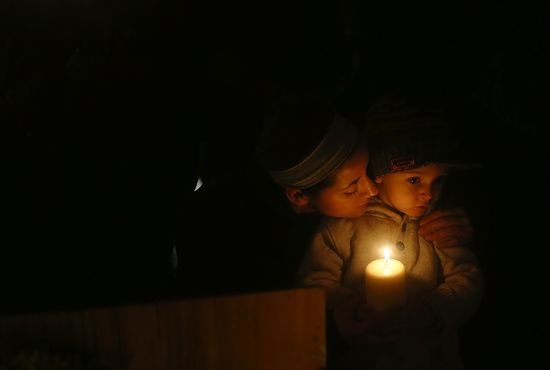
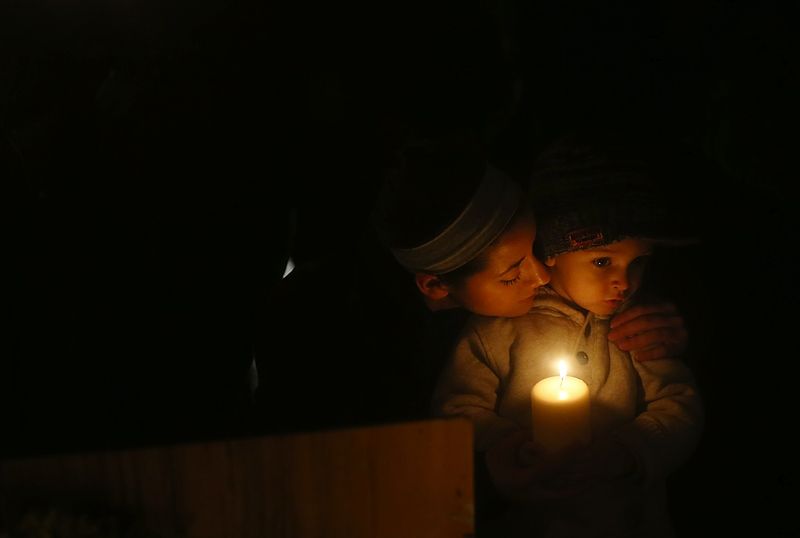
In other coverage, Andrew again contemplated the meaning of Zero Dark Thirty, this time responding to whether or not casual viewers would interpret it as anti-torture. He also alerted us to Christianist Pastor David Dykes’ un-Christian campaign to get gay Ugandans executed. Then friend-of-the-Dish David Kuo reflected on what it was like to learn he had a brain tumor, Peter Maass worried Zero Dark Thirty let the government off too easy, Andy Towle put together the year in coming out, filmmaker Jeff Orlowski explained the mission behind Chasing Ice, and Ben Tausig let us know how little he gets paid to create crossword puzzles. Also, Starbucks got in the tea game, Bruce Schneier argued for a more flexible US security policy, Michael Meyer summed up the growing e-singles market for journalism and fiction, an emergency physician debunked the correlation of blood alcohol level to intoxication, and our thread on acts of sudden heroism continued with a reader sharing their experience being rescued. Lastly, we rounded up more reactions to Obama’s seemingly-softer stance on legal weed, watched a montage of motion-pictured Christmas in our MHB, admired a bay bridge in the VFYW, and witnessed a mother’s love in our Newtown FOTD.

The Weekend Wrap is here.

– C.D.

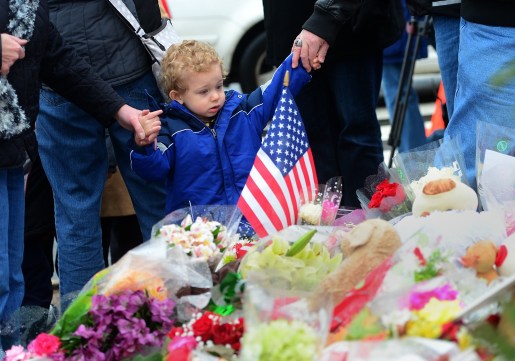
(Photo: People pay their respects at a makeshift shrine to the victims of an elementary school shooting in Newtown, Connecticut, December 17, 2012. Funerals began Monday in the little Connecticut town of Newtown after the school massacre that took the lives of 20 small children and six staff, triggering new momentum for a change to America’s gun culture. By Emmanuel Dunand/AFP/Getty Images)

“They Hate Reality”

Dark

A reader writes:

There are many ways to suffer a mental illness. I have spent half my years mentally ill; the other half getting well.

It requires a stretch of empathy to detect the sense in the senseless rampage; after the Virginia Tech killings my first inkling was that this is a human being who hates reality. Not just life, not just people, but reality. Part of this hate is from the paranoia, but part is from the sinking feeling of the abyss.

Because my father was wealthy, well connected, wise and willing to help, I had the best care available; and still it was, and is, a struggle. But I see those who got left behind, and I see what havoc they wreak. There was something within me; maybe the inability to execute a plan, maybe this (perhaps Jewish) revulsion to violence that kept me from the outbursts we see too much of these days.

But not everybody has the care, requiring human and financial resources, that I had.

Thank you for giving me a part in your conversation.

“I Love My Son. But He Terrifies Me” Ctd

A reader writes:

Your story resonates with me because my mother suffered from post-partum depression after my birth (I am the fourth of seven children), which eventually plunged her into depression – and ultimately she suffered from bi-polar disorder. She was "treated" with electro-shock therapy and was hospitalized several times. My father was mostly able to shield us from her illness, but her nervous breakdown in our kitchen on a Sunday morning when I was about 15 years old is seared into my memory.

And then three years ago, my 21-year-old son died by suicide.

Since then, my wife and I have started a non-profit organization to help parents deal with their children who struggle with mental illness. So many of the issues now being discussed have been tossed around in my household for several months.

I largely agree with your assessment on how the issue of mental illness should be addressed within our society. Our attention should not focus on preventing massacres or suicides, because the incidence of these events is relatively rare. Rather, our focus should be saving people from the hell of mental illness. If we can achieve some success in that regard, then the numbers of tragedies will decrease as a by-product, and we'll realize the additional benefit of a portion of our society becoming more productive. How much is the right amount to invest in mental health? That question should be answered by a serious public discussion that should be led by the President and by Congress.

Another:

I worked as a teacher for the  past three years at a charter school that attracted a disproportionate number of antisocial children, so we spent a fair amount of time researching what we could do as a school to help these kids.  We determined from the research that the most effective programs screen kindergarten or first grade children for antisocial behavior using objective tools designed for this purpose. These screening tools not only identify children who act out, but also those who are withdrawn and tend to be overlooked. Just as we know that early intervention is necessary for academic concerns, it is also necessary for behavioral and emotional problems.

So, did we actually implement this program? No. Some members of the school board were concerned that children of color would be disproportionately identified by the screening tools. Mind you, there was no proof that the tools were biased and we had not even determined which screening tool we would use. I think they were really uncomfortable about identifying Kindergarteners as "antisocial," although any Kindergarten teacher will tell you that some of their students are- they'll just use nicer words. The research says that we tend to minimize social problems in small children, so kids don't get help until they are older and the patterns are ingrained, if they get helped at all.

Another:

I was a legal clerk in 2011, representing the county in mental health probate court in informal hearings to adjudicate citizens with mental illness. The county always won the case. Always. The judges are afraid of not committing a person for fear that they might harm someone. Sounds great right? A mentally ill person is given the treatment they need and they are no longer a risk to the community or to themselves.

This is where the deficiencies of the system were glaring. The order to commit a person is usually good for 30 to 90 days (typically 30 days). During those 30 days, the institution would medicate and work with this person and try to improve their mental state to a point that they are no longer a threat to themselves and others. Then? They are released. If the person is lucky, they would have someone to be released to. Usually, they are just unleashed on the public.

The public wants an easy fix. There is no easy fix. Just like every other societal issue, the public looks to the government to solve this problem but doesn’t want to pony up the money it takes to fix this problem. There is no way to sugar coat this, it is a big problem.

I tried an elderly woman who believed she was pregnant with President Obama’s child after she ran away from her nursing home and was almost struck by a car on a main road at 3 a.m. I tried a middle-aged man who exposed his genitals to children at a park because he believed he needed their attention to keep his bones from melting. One of the people I tried was a 24-year-old pharmacy school student who had no mental health problems until a sudden onset of schizophrenia caused him to shoot the local NBC affiliate because the voices in his head told him he had to get on TV to save young people from gun violence.

These folks are black, white and Latino. They are mothers, fathers and sons. They really are a risk to themselves and others. I thank God that only one of them had access to a gun; and that he only managed to shoot a glass door.

Scarborough Multiplied?

A reader writes:

Andrew, my NRA card is in the trash this morning.  I'm with Joe Scarborough–all my previous beliefs have been upended.  Allowing such easy access to these military-style weapons is madness–how could I have not seen it before?  And no one needs hollow point bullets and high-capacity magazines.  I am a committed Republican.  But if they can't do the sane thing here, they've lost me.  And I know you don't know me, but if they've lost me, they are truly doomed. I couldn't give a damn right now about my taxes going up.  (I have two six year old kids).

But the Left must come to grips with the fact that even if we do enact some sensible restrictions, there will be a lot of guns in this country still.  Having responsible, armed citizens isn't an inherently bad idea. There are police officers in every school in New York City, and guess what?  No mass shootings there. Trick is to make sure the right people have them and the wrong ones don't.  Also, if this debate stops and starts with guns, that will be its own tragedy.  Mental illness and the depravity of our popular culture (seen the last episode this year of Boardwalk Empire?) must also be addressed.

I voted against Obama twice, but I'm praying for him to give us true, non-partisan leadership on this one.

What Should Kids Be Told About Newtown?

Newtown_Memorial

Mark Oppenheimer urges parents to stay silent:

[A]s long as our children are alive, we can refuse to terrorize them with worst-case scenarios. We can decline to let a random act of violence goad us into treating Connecticut as if it were Gaza, Afghanistan, or Mali. I understand that there are parents in the world who have to teach their children about bomb shelters. But I don’t, not yet. My daughter is just five years old, and her school is as safe as we can make it without imprisoning ourselves in our own fear. My heart breaks for what happened 25 miles away; I’ve cried twice already today. But I’ve done it far from my children, who are still very young and, yes, innocent. So please: Don’t tell them a goddamned thing.

(Photo: New London, Connecticut residents Rachel Pullen and her son Landon DeCecco hold candles at a memorial for victims on the first Sunday following the mass shooting at Sandy Hook Elementary School on December 16, 2012 in Newtown, Connecticut. By Mario Tama/Getty Images)