Ask Moynihan Anything: Glenn Beck’s Media Empire?

Read Michael’s writing for the Beast here, where he recently tackled Glenn Beck’s rising success after his departure from Fox News:

With the dystopian sermons now quarantined behind a paywall, and media watchers no longer cataloging his every utterance, Beck has quietly expanded his menu of services beyond chalkboard scribbling. Visitors to his various websites will find a wide array of products on sale, from treacly Christmas books and didactic political fiction to an online marketplace where his followers can purchase a 14-ounce bag of Dark Chocolate Pecans ($10) or, if you desire to be stylishly warm when imprisoned in a FEMA camp, an alpaca barn jacket ($229). And now Beck is migrating back to television screens, having signed a deal with Dish Networks to broadcast TheBlaze TV programing—for a $5-a-month fee.

But don’t fear, Beck’s politics are still reliably bonkers (see his latest “Beautiful Mind”–style chalkboard chart here) and his aspirations slightly delusional (he expects TheBlaze TV to assist in “rebuilding the media”). He loves his country, he fears for his country, and wants to separate his fellow paranoiacs from their money while attempting to save his country.

Watch Michael’s previous videos here and here.

Kathyrn Bigelow, Torture Apologist?

Bigelowboal

I'll see the movie tomorrow. But yesterday, when I was commenting on Spencer Ackerman's benign take, I wrote:

Spencer has, of course, seen the movie. I haven't. And I respect his judgment and reserve my criticism until I've seen it. But I'm troubled by those last sentences:

What endures on the screen are scenes that can make a viewer ashamed to be American, in the context of a movie whose ending scene makes viewers very, very proud to be American.

But if the shameful actions are intrinsically connected to the proud actions, then Spencer may be relying on his own moral compass, rather than the movie's.

Spencer knows a lot about this area and he has grappled with the intricacies of the war crimes detailed in the movie. But someone who isn't as informed as Spencer? Take the rave review in Entertainment Weekly by the very talented writer, Owen Gleiberman. Here's the money quote:

The suspect finally gives up a name: Abu Ahmed al-Kuwaiti, whom he claims works as a courier for bin Laden. Part of the power of Zero Dark Thirty is that it looks with disturbing clarity at the ''enhanced interrogation techniques'' that were used after 9/11, and it says, in no uncertain terms: They worked.

"In no uncertain terms". But we know that this is a lie, if we are to trust the most exhaustive examination of the subject, the Senate Committee.

Ag13

Bigelow's and Boal's latest response to their direct linkage of the capture and killing of Osama bin Laden with torture (something that has no basis in truth) is revealing:

Boal, a former journalist, has defending the decision, arguing that “it’s a movie, not a documentary,” and the film’s main principals stood behind their work at last night’s Los Angeles premiere. “We had to compress a very complicated debate and a 10-year period into two hours,” Boal said. “It doesn’t surprise me that people bring political agendas to the film but it doesn’t actually have a political agenda. Its agenda is to tell these people’s stories in the most honest and factual way we know how, based on a ton of interviews and research.”

But if the movie shows that torture got us information critical to the capture and killing of bin Laden, it absolutely does have a political agenda. It is rendering a lie as truth that justifies war crimes as an essential part of fighting our Jihadist enemies. Notice also the complete contradiction: this is merely a re-telling of facts "based on a ton of interviews and research" and yet it is also "a movie not a documentary." So is it true or false? Or does he even care? Boal needs to own his assertion that torture helped get bin Laden. And defend it against the facts. Or disown it. He can't play the "I'm just a journalist" card, when he's making a pro-torture movie.

Here's Bigelow, parsing carefully:

“There’s definitely a degree to which I wish the torture and interrogation techniques weren’t a part of this narrative, but they were a part of history. This is the hunt for this wanted man and these techniques were used along the way. It was part of the research, and had I not included it I would not be telling the full story of this manhunt.”

She evades the question. Of course barbarism by the US government was part of the story after 9/11. Of course these techniques were used along the way. But they were not instrumental in capturing and killing Osama bin Laden – which is the premise of the movie – and certainly the conclusion in a mass market magazine like EW. And to credit torture with this national triumph is absolutely to take a pro-torture political statement, and to sink it into the public consciousness in emotional ways that will be very hard to displace. Tomorrow, I'll be able to review it in detail. But I fear that the better a movie it is, the more evil it will foment and justify.

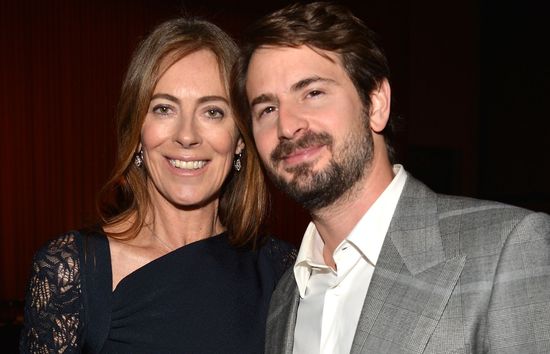
(Photos: Director Kathryn Bigelow (L) and Writer/Producer Mark Boal the 'Zero Dark Thirty' Los Angeles Premiere- After Party at Dolby Theatre on December 10, 2012 in Hollywood, California. By Lester Cohen/WireImage; and a victim of the torture techniques defended in Boal's and Bigelow's movie.)
Can Tablet-Only Journalism Work?

John Gruber believes so:

When it comes to media, what strikes many as The Daily’s cardinal sin is eschewing the open Web for the closed garden of a subscriber-only iOS app. The idea being that you can’t win without a web-first strategy. But that’s what “everyone” said about social networks too — until Instagram came along and became a sensation with an iPhone-only strategy.

Felix Salmon is skeptical:

[W]e’re going to see universal journalism, which can be accessed — and possibly edited — in different ways on different devices. It might be free on the web, for instance, while costing a couple of bucks in the form of a simple iOS app. Maybe it will only be available on iOS, but for business-model reasons, not because it couldn’t work on the web. Or maybe, as in the case of Matter, it will be available in any format you like, for a single flat price.

How Obama Could End The War On Medical Marijuana

Dylan Matthews explains what the president could do if he were serious about drug reform:

[T]here’s a way for the Obama administration to decriminalize medical marijuana without even involving Congress. The Controlled Substances Act, the 1970 law that governs federal drug policy, is based on a system known as "scheduling," in which drugs are sorted into categories based on their potential for abuse and usefulness in medicine. Marijuana, along with the likes of heroin and DMT, is a schedule I drug, meaning it is judged to have a high potential for abuse and little medical value. By contrast, cocaine, oxycontin and PCP are all schedule II drugs, and can be prescribed.

Rulings on scheduling, however, are not permanent. Upon petition from private citizens, the DEA can initiate a process that results in a drug being rescheduled. In effect, that means that the attorney general can direct the DEA to act on a petition for marijuana rescheduling. In effect, Eric Holder could direct the agency to remove marijuana from the list of scheduled drugs, decriminalizing it for medical use federally. That doesn’t help recreational users, but it would let medicinal users and suppliers breathe a lot easier. While states could still ban it for medicinal use, those that opt not to would no longer run afoul of federal law.

Letters From Millennial Voters

A reader writes:

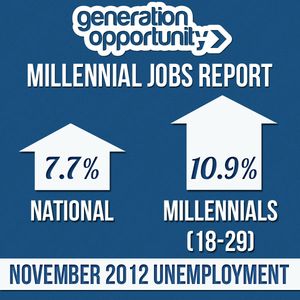
I've been reading your "FB_DEC_Numbersalmost all of them (except the one that said we tend to lean more libertarian … but that's a long discussion for another time). It got me thinking about a story from The Atlantic called "The Cheapest Generation", which inspired a LOT of blowback in the comments section. The thing is, we ARE a cheap generation, not necessarily because we want to be, but because we see the giant fucking mess that the Boomers got into thinking they could have anything and everything.

I graduated from grad school last year, and am currently unemployed after my latest "contract" job was terminated. I live in a house with five other people, two of whom are in their 30s. Even if I could afford a house and a car and all those things, I don't want them. Owning a house just doesn't have the same significance to Millennials (in my opinion). It's a symbol of being tied down, of having to pay for something for the rest of your life, which we all have to do already with student loans. Unlike previous generations that either never had debt (our grandparents) or didn't discover it until they were well on their way to being settled (our parents), we've learned from an early age that we're screwed for the rest of our lives, and there's nothing much we can do about it.

Another:

Am I the only Millennial Dishhead who can't get a decent fucking job?

I was also born in 1984, I lived abroad for three years, started a nonprofit (which failed), graduated from a fairly good university with a liberal arts degree, volunteered for the Gore, Kerry, Obama campaigns, and various local campaigns (a very liberal and political family) and well …  I was going to write you from my personal email, but since I'm at work, I thought- why not. Notice it's receptionist@ – not even my name. I have tried for two years to get into anything, anything fulfilling that could possibly turn into a career.

But I have the problem that so many people in my generation have. We want to help people. We want to do something that is worthwhile and that contributes to the greater good. Perhaps we feel this because of our parents, the Internet, whatever. And the motivation to do good is good. But Jesus, it's discouraging. So discouraging. There are people of my generation who are thriving, and then there are people of my generation that are not, who are living with parents. That are going back for a second masters, a third, a career shift into "the medical field" because that’s where jobs are.

I don't know, man, but I feel too discouraged with putting out over 800 applications, constant networking events, informational interviews and rejection to be concerned with how great my generation is.  I don't really care that we all support gay marriage or that a stupid majority of us support torture. They'll figure it out, or not. But, I am figuring out that the things I cared so much about (Darfur anyone?) in high school and college don't do it for me anymore.  We need healthcare. We need to get out of debt. And I can't just believe that it will all work out.

Thanks for the space to rant. That felt good.  Now I'm going to go make excel spreadsheets mauve.

(Graphic from Generation Opportunity)

The Electric Car Is Still Dead

According to Vaclav Smil:

Technical success of electrics comes down, most fundamentally, to batteries. The lithium-ion battery, with its many flaws, is still the only relatively lightweight commercial option and Edison’s dream of a perfect car battery is now more than a century old. Bold plans come and go: a 1980 report on the introduction of electric vehicles in the United States predicted 1–2 million units in sales by 1985 and as many 11–13 million fully electric cars by the year 2000. But by the end of 2012, the United States had about 50,000 electrics on the road, no more than 0.03 percent of all light-duty vehicles licensed to operate in the country. Undaunted, a campaigning President Obama did not repeal his 2011 State of the Union goal of putting 1 million electric cars on the road by 2015.

Clearly, electric hopes never die — but electric realities keep intervening. 

Weighing Weight Loss

Enhanced-buzz-wide-9047-1354303796-3

After many years on Weight Watchers, Laura Beck argues that "the vast majority of dieters, Weight Watchers, and calorie restriction diets like it, just aren't long-term effective" – they tend to miss the structural problems that affect us all:

WW is outmoded, they don't get it, they're trying to stay modern with their new features, but they're living in the past. The company started in 1963 — WW being the future of health in America is like IBM-Packard being the future of home computing: they tried that shit, it didn't work, and the world has moved on. The future isn't about size shaming and obsessive control, it's about enriching lives and staying healthy.

A commenter objects:

This article really irritates me. Like a lot of Jezebel articles, it INSISTS that health is possible at every weight (get real – it just isn't) and IMPLIES that anyone who seeks out a lower weight is just kidding themselves that they can do it, are reprehensibly vain, or of some lesser echelon of intelligence because they wish to be thin.

(Image: Award-winning French Weight Watchers ad via Copyranter)

North Korea’s Underground Railroad

Melanie Kirkpatrick compares it to Harriet Tubman’s:

The way it’s set up is similar. The safe houses and transit routes are kept secret and vary a lot. There is another similarity in that many of the people who operate on the underground railroad are ethnically Korean, just as many of the operators on the original underground railroad were free blacks. Another similarity is that the enslaved person has to make that initial decision to leave. It’s very difficult to get access to a person in North Korea and talk to him about getting out. In many cases the North Korean has to make that decision on his own and make his way to China. That’s changed some in the past couple of years. There are now brokers and missionaries that have contacts that help them reach into North Korea and get people out. And once they get to China another set of operators take over.

Ask Kuo Anything

Ask Kuo Anything

[Re-posted from yesterday with several questions added by readers]

I've known David Kuo since he worked in the Bush White House as Deputy Director of the Office of Faith-Based and Community Initiatives. When he was working there, he suffered a brain seizure while driving and, without his extraordinary wife, Kim, taking the wheels from him, they might both never have survived. But they have. David was diagnosed with brain cancer and left the Bush administration, reflecting in his conscience on his work there. The result was a book, Tempting Faith, that came out at almost the same time as The Conservative Soul. We found ourselves estranged from modern Republicanism and united by faith in Jesus. Thus a friendship was born, and it's one I have treasured deeply. We have talked together, joked together, laughed together and prayed together. And the cancer has come and gone and come back again. When I saw him last, he had difficulty walking very far. And then I got an email from him eleven days ago with the following news:

In the last four weeks two new tumors have grown. Both are in the same area as previous tumors. One is located directly on the motor pathway that controls my left leg. The other is at the front of the cavity created by previous surgeries. The news knocked the wind out of us, gave us vertigo. Frankly we are still spinning. In all the scenarios we could come up with this wasn't one of them. My physical state, even taking into account the blood clots and bleeding brain, was on the upswing. Those sensory seizures had stopped. We were crushed. All the suffering from the surgery and it did nothing but weaken me? All the hope for the viral treatment and nothing?

It occurred to me that David would be a great candidate for our Ask Anything series, and is so honest and open that he could be a wonderful interlocutor on issues of politics and religion, conservatism and its discontents, the power of faith in confronting mortality, and any number of other questions. He has helped me so much over the years in my own spiritual journey; and it would be true to say simply that I love him and am proud to have him here. So ask your questions here. He'll answer them as only he can, at this moment in his life.

Is Homework Necessary?

Louis Menand sketches out the cases for and against. He notes two elements in "the standard argument against homework don’t appear to stand up":

The first is that homework is busywork, with no effect on academic achievement. According to the leading authority in the field, Harris Cooper, of Duke University, homework correlates positively—although the effect is not large—with success in school. Professor Cooper says that this is more true in middle school and high school than in primary school, since younger children get distracted more easily. He also thinks that there is such a thing as homework overload—he recommends no more than ten minutes per grade a night. But his conclusion that homework matters is based on a synthesis of forty years’ worth of research.

The other unsubstantiated complaint about homework is that it is increasing. In 2003, Brian Gill (then at rand) and Steven Schlossman (Carnegie Mellon) showed that, except for a post-Sputnik spike in the early nineteen-sixties and a small increase for the youngest kids in the mid-nineteen-eighties, after the publication of "A Nation at Risk," by the Department of Education, which prescribed more homework, the amount of time American students spend on homework has not changed since the nineteen-forties.